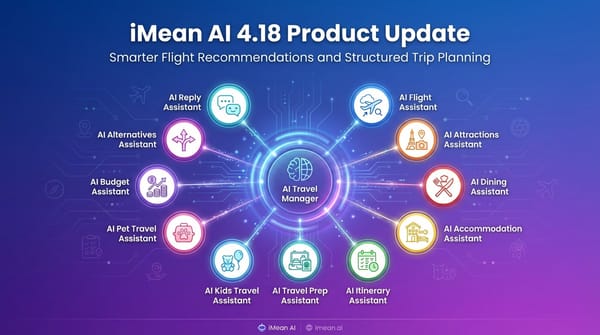
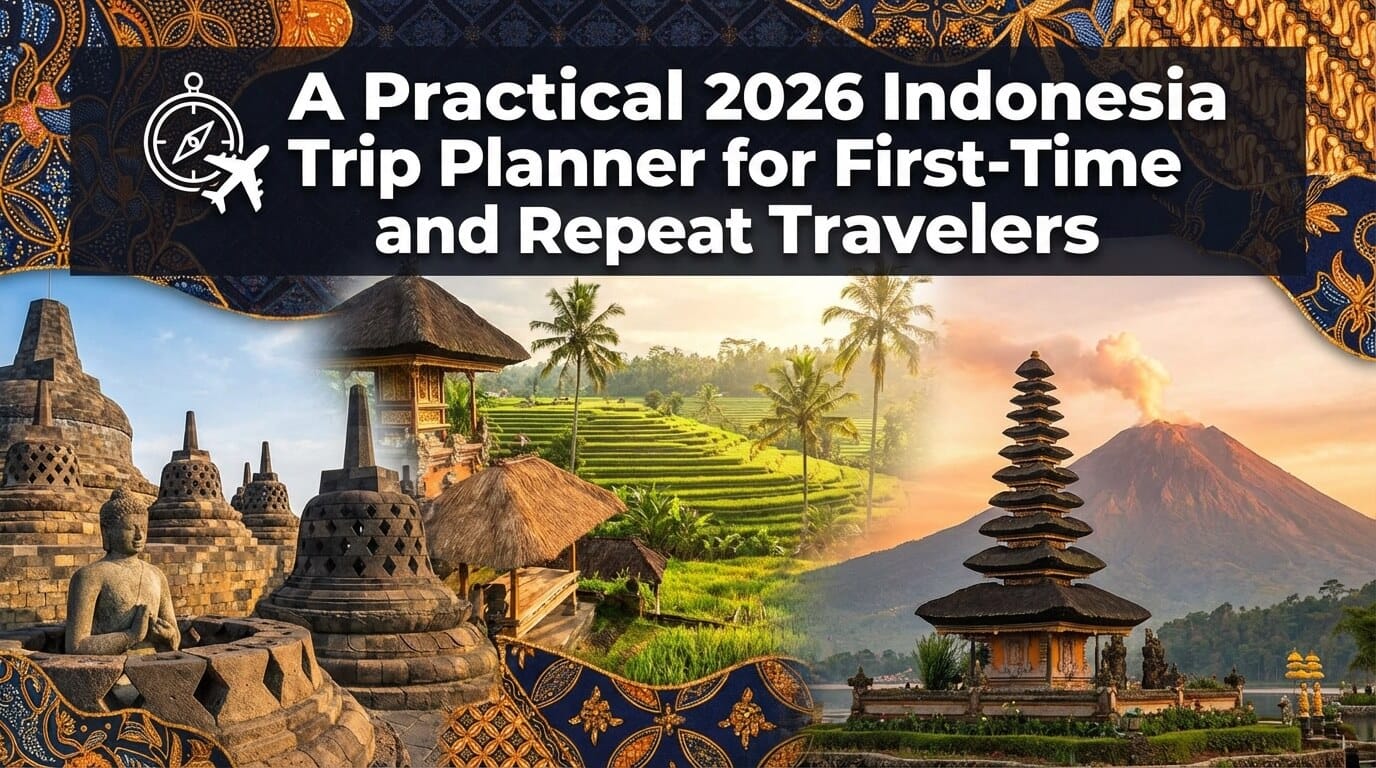
As all Indonesian trip planners know, the breadth of activities there matches the sprawling scale of the more than 13,000 islands in the world’s biggest island nation. Rich wildlife zones extend across both land and sea for bountiful hiking, diving, climbing, and sailing. It takes a lot of energy to build an itinerary, but with the assistance of our AI trip planner, iMean AI, everything will be different, while basic trip planner websites are not powerful enough.
In this guide, I’ll walk you through a clear, step-by-step roadmap, including the information you need, with the guidance of iMean AI and my practical experiences.
Best Time to Visit Indonesia
Basically, there’s never a bad time to visit Indonesia. Not too long ago, Indonesia had but two uncomplicated seasons: wet and dry. But then climate change teamed up with El Niño and La Niña to turn the weather upside down.
- Dry season(from May to September)
It is the most popular time to visit. Days are sunnier, seas are calmer, and outdoor activities like hiking, diving, and island hopping are more predictable. Bali and Lombok are especially pumping, with packed beaches and bars. This is also the prime time for trekking, surfing, diving, and outdoor wilderness adventures in most areas, except West Papua and Maluku, which see heavy rains in July and August.
The Indonesian peak season falls during the sweet spot of July and August, when perfect sunny weather coincides with the European summer holidays and the Australian winter, bringing a surge of tourism across the archipelago.
- Wet season(from October to April)
It doesn’t mean constant rain. Showers are usually short and intense rather than all-day events. During the wet months, especially January and February, tourist numbers plummet, which brings a more relaxed vibe and discounts across the board. Traveling in the off-season is a great time to immerse yourself in local culture without the usual crush of tourists.
It’s not a good time if you’re planning on hiking, however, with most volcanoes off-limits from December to March. Orangutans and other wildlife can also be harder to spot in the rainy months. If you’re seeking somewhere less rainy, West Papua and Maluku experience their dry season at this time of year.
- How Many Days Do You Need?
For most travelers, I recommend:
- 5–7 days if you’re focusing on one main area (for example, Bali only)
- 10–14 days if you want to combine two or three regions, such as Bali + Java or Bali + Komodo
Indonesia rewards slower travel. Trying to “see everything” in one trip usually leads to more time in transit than actually enjoying where you are.
How to Plan Your Trip with an AI Trip Planner
Here’s exactly how I plan an Indonesia trip using iMean AI, step by step.
Step 1: Define the Trip You Actually Want
Just begin by entering the basics: travel dates, budget, cities or regions you're interested in, the pace you want, anything you need or avoid, etc. This part feels less like filling out a form and more like explaining my plans to a well-informed travel partner.
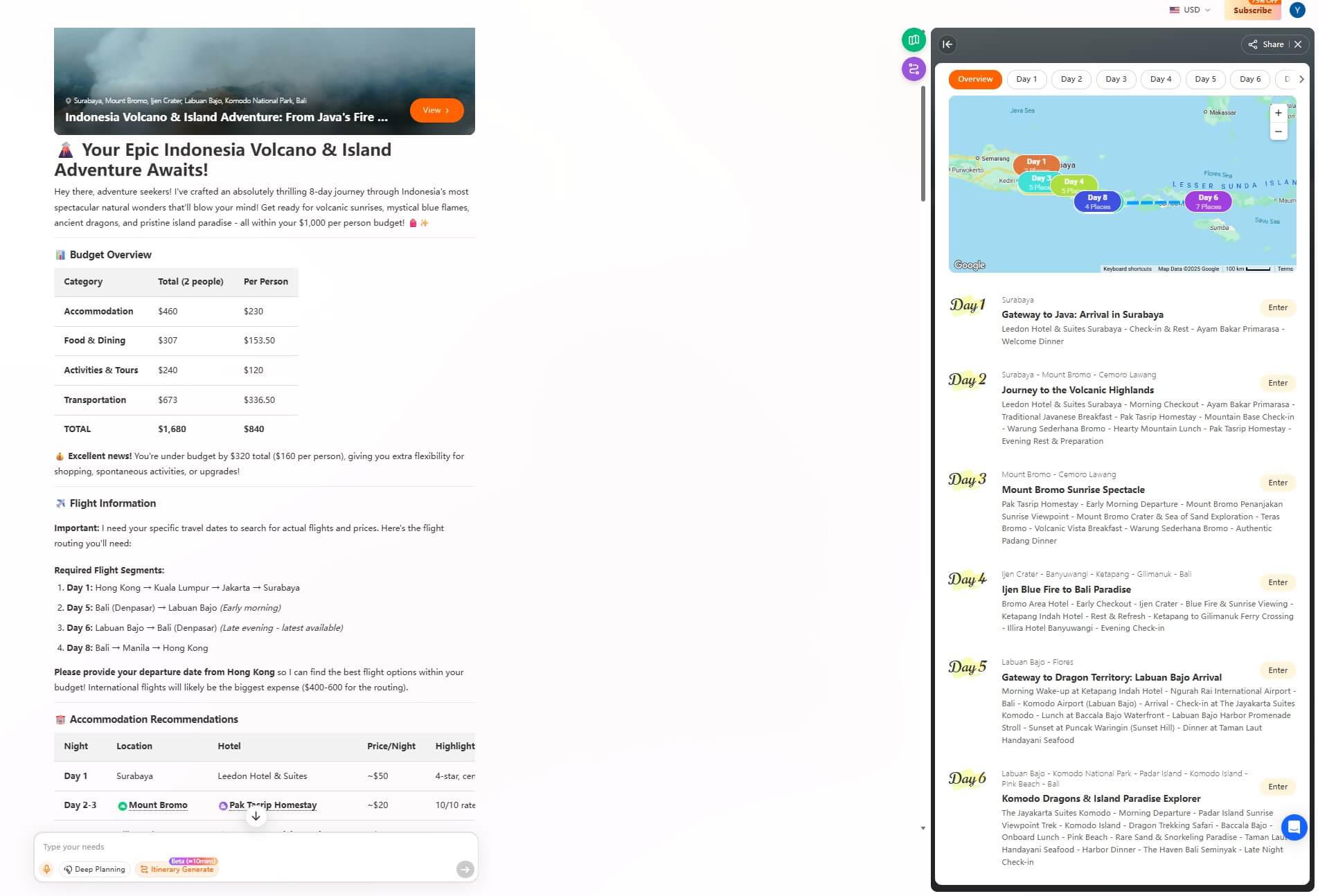
Step 2: Get a Day-by-Day Itinerary That Actually Makes Sense
In minutes, the AI trip planner can generate a full daily itinerary. It gets the flow with realistic travel times, logical city order, and days that aren’t overloaded, instead of just a long checklist. iMean AI recommends attractions, activities, restaurants, and landmarks that exist and are geographically realistic, avoiding common planning errors.
Step 3: Edit, Share, and Use It Anywhere
You can edit the plan freely by chatting with iMean AI, then share the Indonesia itinerary link with travel companions so everyone stays aligned. The key is flexibility.
Where to Stay in Indonesia
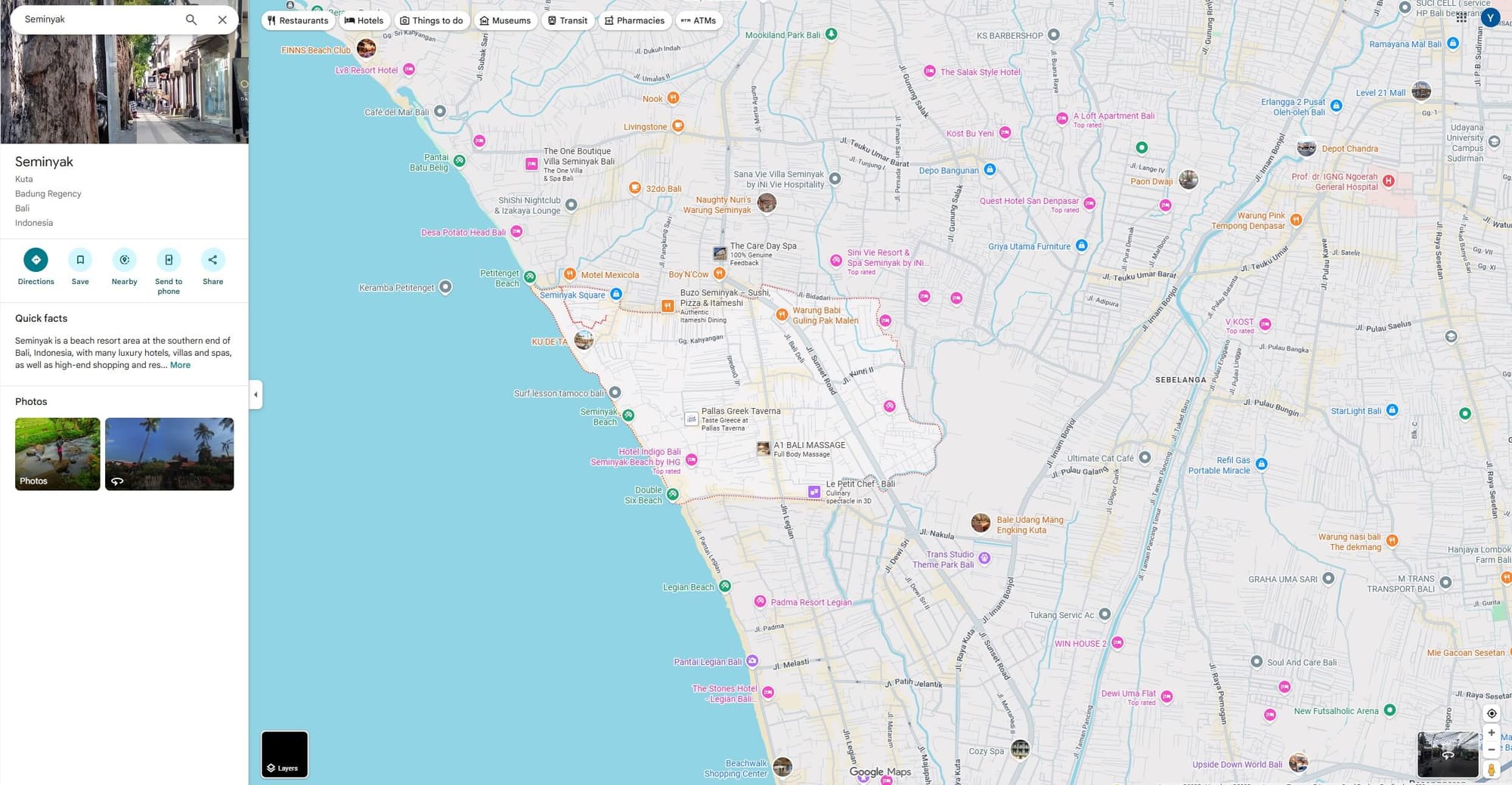
- Seminyak, Bali
Seminyak suits travelers who want convenience and variety. Most people choose Seminyak on the southwest coast of Bali. Seminyak is an upmarket coastal town with high-end resorts, restaurants, and boutiques. It is relaxing and has great surf,f along with excellent beach bars and clubs, and a thriving arts scene. You’ll also find lots of yoga and wellness options here.
Its central location makes it easier to explore different parts of southern Bali, but it also means busier streets and a more commercial feel. If you enjoy being close to everything and don’t mind crowds, Seminyak is a practical choice.
- Central Yogyakarta, Java
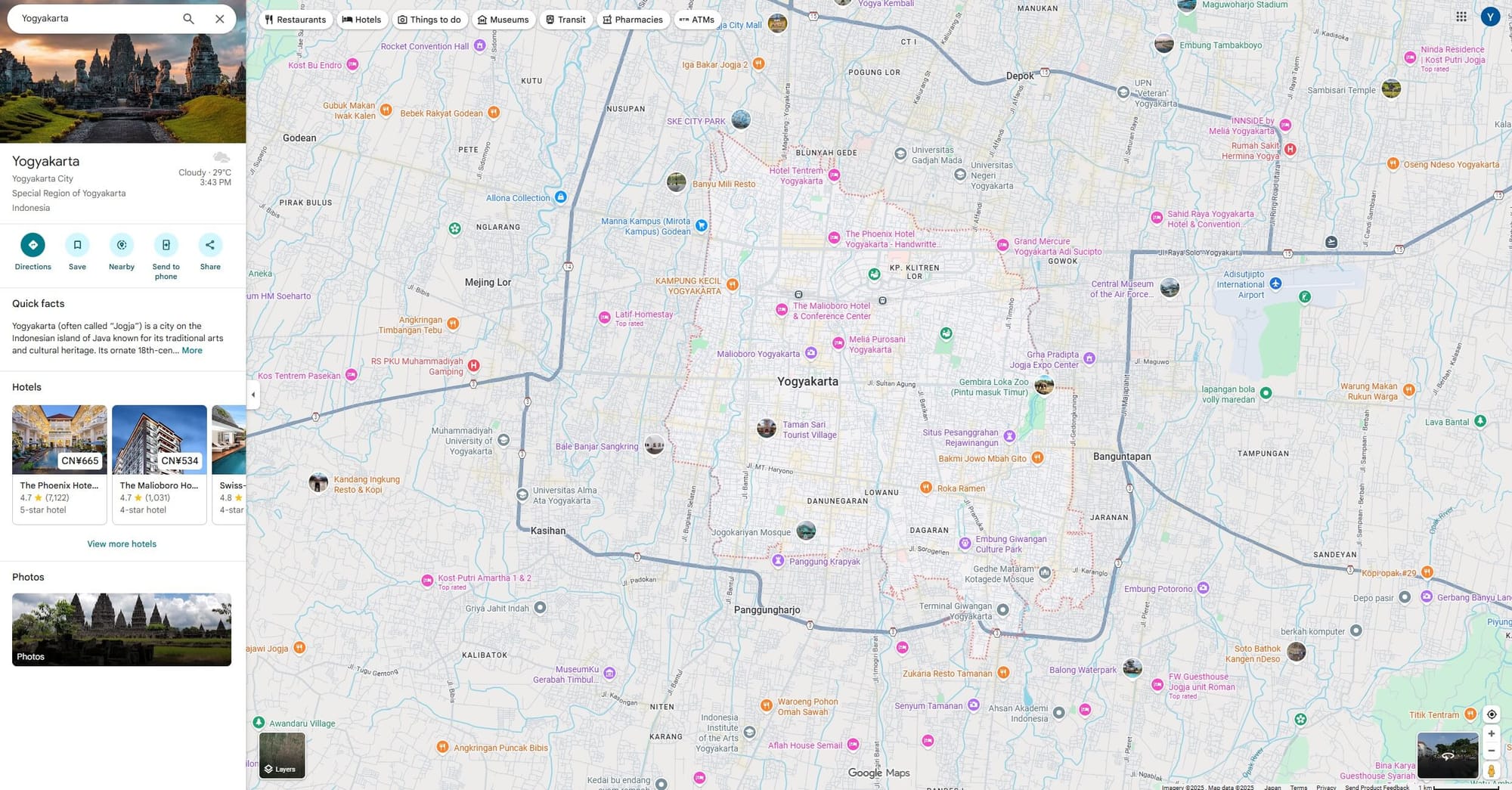
Yogyakarta is often overlooked, but it’s one of Indonesia’s most culturally rich cities. Staying in the city center puts you close to Borobudur and Prambanan, as well as local markets and traditional neighborhoods.
It’s more affordable than Bali and offers a deeper look at Indonesian history. The trade-off is fewer resort-style accommodations and a less polished tourism infrastructure—but for culture-focused travelers, that’s part of the appeal.
Top Things to Do in Indonesia
Here are the routes designed to minimize unnecessary transfers while still showing very different sides of the country, including the top things to do in Indonesia.
Route 1: Bali → Nusa Penida → Nusa Lembongan
This route is ideal for travelers who want a balance of comfort and dramatic scenery. Bali works well as a starting point because of its international connections and infrastructure. From there, heading to Nusa Penida and Nusa Lembongan adds a more rugged, less developed island experience without committing to long-haul domestic flights. You can enjoy raw landscapes, iconic viewpoints, cultural sites, delicious food, and flexibility following this route.
Tips: Don’t try to visit both Nusa Penida and Nusa Lembongan as rushed day trips—at least one overnight stay makes a huge difference.
Route 2: Yogyakarta → Borobudur → Prambanan
This route is for travelers who want to understand Indonesia beyond beaches. Yogyakarta is one of the country’s cultural centers and serves as a logical base. Plus, staying in Yogyakarta allows you to experience local neighborhoods, markets, and food scenes while keeping travel times short. Then early mornings at Borobudur offer a completely different atmosphere, and ending the day at Prambanan provides a strong visual contrast in architectural style and setting.
Tips: Plan temple visits carefully. Timing matters more here than squeezing everything into one day.
Route 3: Labuan Bajo → Komodo Islands
This route is best for travelers who want something truly unique to Indonesia. Labuan Bajo is the gateway to Komodo National Park, where island-hopping becomes part of the experience rather than just transportation. Boat-based routes combine snorkeling, short hikes, and wildlife viewing over multiple days. The appeal here isn’t checking off stops but spending time in remote landscapes that feel untouched. Conditions vary depending on the season, so flexibility is important.
Tips: Boat quality, crew experience, and weather matter more than adding extra islands to the route.
Transportation Tips for Indonesia
Transportation in Indonesia often looks complicated on paper, but once you understand the basics, it becomes manageable. The key is planning realistically and allowing extra time between major moves.
Getting Around Cities
In most Indonesian cities, walking works well for short distances, especially in central areas. Ride-hailing apps are widely used and usually the easiest option for visitors. They’re generally more reliable than street taxis and help avoid language barriers. Scooter rentals are common in Bali and some other tourist areas, but they’re not for everyone. Traffic can be unpredictable, and road conditions vary. If you’re not experienced, using cars or ride-hailing services is safer and often less stressful.
Traveling Between Cities and Islands
Indonesia’s size makes domestic flights an important part of many itineraries. Flying often saves an entire day compared to overland or sea travel. That said, not every island connection is well served, so routes need to be planned carefully. Ferries and boats connect many islands, but schedules can change due to weather or demand. It’s wise to avoid tight connections on ferry days. In regions like Java or Bali, hiring a car with a driver can be more efficient than renting and driving yourself.
Essential Passes and Practical Tips
There are no universal transport passes that cover the whole country, so planning tends to be route-specific. Airport transfers are worth arranging in advance, especially for late arrivals. For boats and ferries, always confirm departure locations locally, as ports can be spread out. One common mistake is underestimating travel fatigue. Even short distances can take longer than expected, so building buffer time into your itinerary makes the trip far more enjoyable.
Final Thoughts
Indonesia does demand thoughtful planning. A well-structured route, realistic transportation planning, and flexible daily pacing make a bigger difference here than hotel stars or packed schedules. Once those foundations are in place, Indonesia becomes surprisingly easy to enjoy.
If you want a personalized, editable day-by-day itinerary for Indonesia, try iMean AI, your free AI trip planner.