
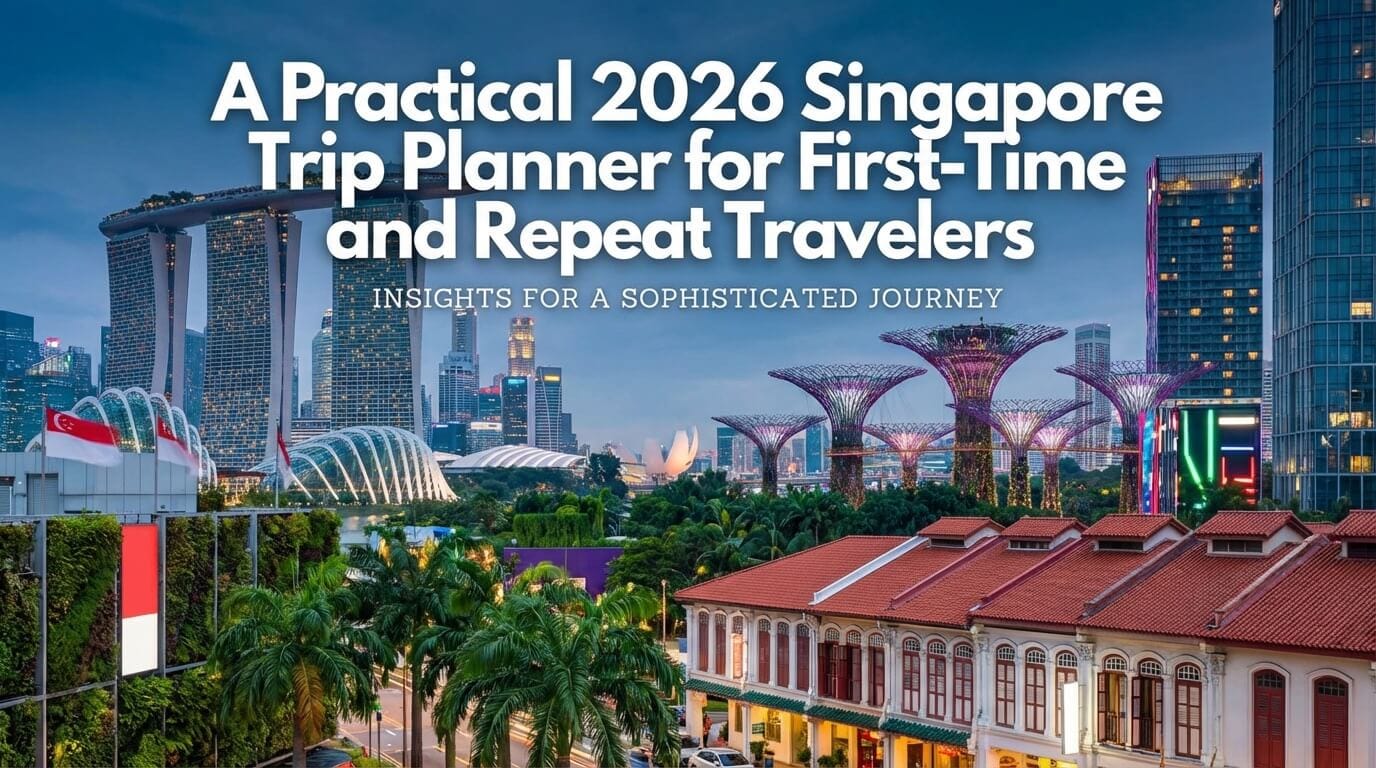
If you need a Singapore trip planner for convenience, this guide is for you to discover on your Singapore adventure. Singapore is a city, an island, and a country all at once, but it sure packs a punch when it comes to cultural sights and attractions. To help you make the most of your time there and see as much as possible, our best AI trip planner, iMean AI, can make itineraries including the best of the city, while regular trip planner websites only give you simple lists.
In this guide, I’ll walk you through a full, step–by–step roadmap that shows you when to visit, where to stay, what to do, and how to plan your own itinerary without stress.
Best Time to Visit Singapore
The best time to visit Singapore is anytime. The island nation has a warm, tropical climate year-round with daytime temperatures ranging from 30°C to 34°C (86°F to 93°F). Evening temperatures stay warm, usually around 24°C to 26°C (75°F to 79°F). By the way, February to April is a peak tourist season due to the favorable weather so you might encounter higher prices for accommodations, flights, and certain attractions.
- During the wet season (May to November), Singapore experiences heavier rainfall, particularly from November to January. The rain can be heavy but often comes in short, heavy bursts. This is also the time when you might encounter thunderstorms. However, the city remains bustling, and you can still enjoy indoor attractions, shopping, and dining.
- During the haze season (June to October), temperatures hit a high with an average daytime max of 32°C, but there are plenty of indoor attractions if you need a break from the heat. Carrying a sunhat and umbrella will ensure you're fully geared up for whatever the weather brings. In recent years, Singapore has experienced haze due to forest fires in neighboring countries, leading to poor air quality, so take precautions and make it the best time to visit Singapore.
- For most travelers, 3–5 days is enough for a comfortable first trip. Suppose you want a deeper, slower experience—more neighborhoods, more food, maybe a full beach day—plan 6–7 days. If you’re pairing Singapore with another Southeast Asian city, you can even condense the main sights into a tight 2–3-day stop, but you’ll be moving quickly.
How to Plan Your Trip with an AI Trip Planner
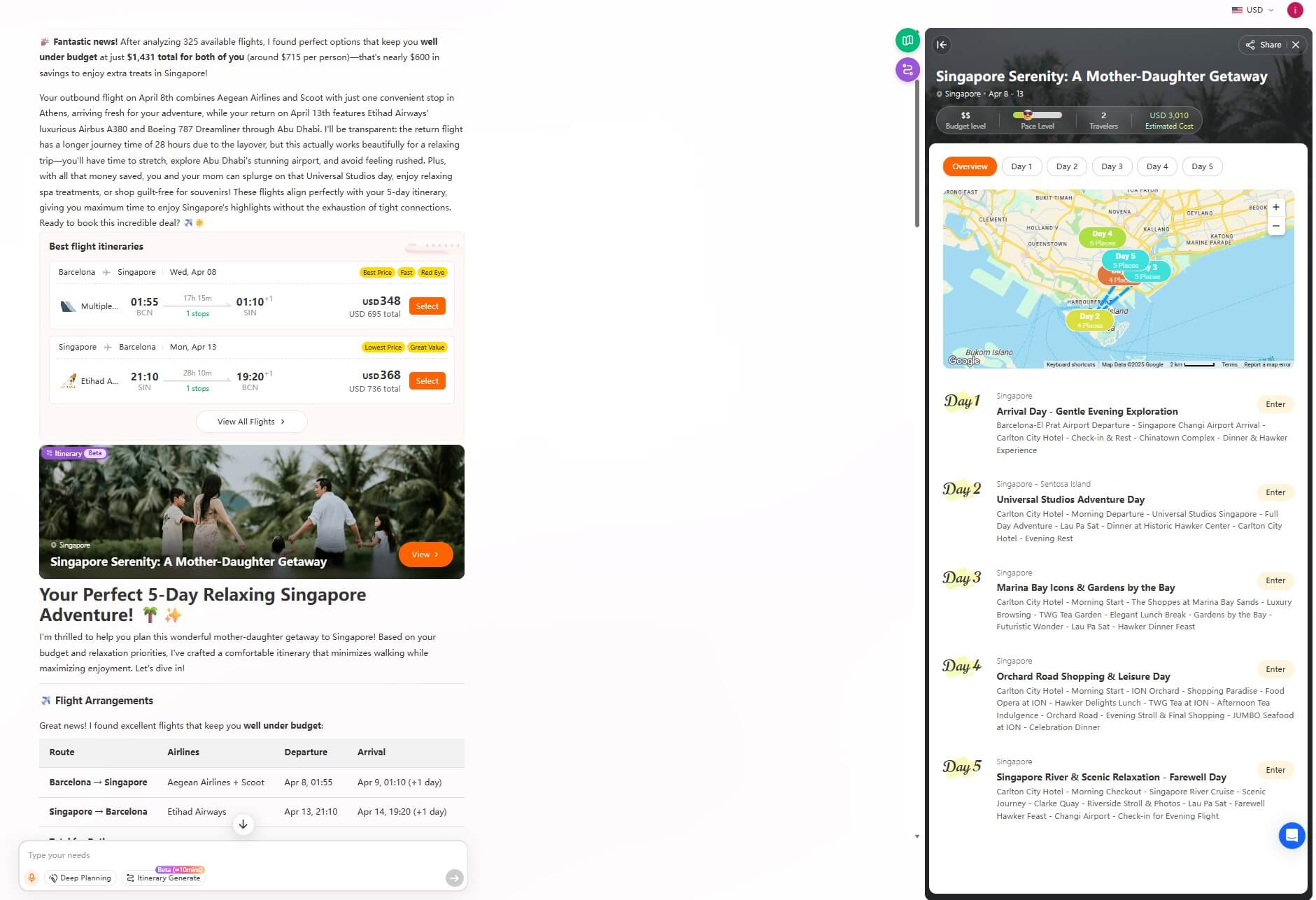
Here’s exactly how to create a comprehensive itinerary tailored to your specific needs in just three steps, with no complicated processes.
Step 1: Tell the AI what you want
Start by describing your trip in detail: include dates, a rough budget, who you're traveling with, destinations, and any other details that matter to you, such as whether you prefer a walkable itinerary or if you're willing to get up early. Plus, if you are not sure about your trip, you can also ask iMean AI to get inspiration.
Step 2: Get your full itinerary
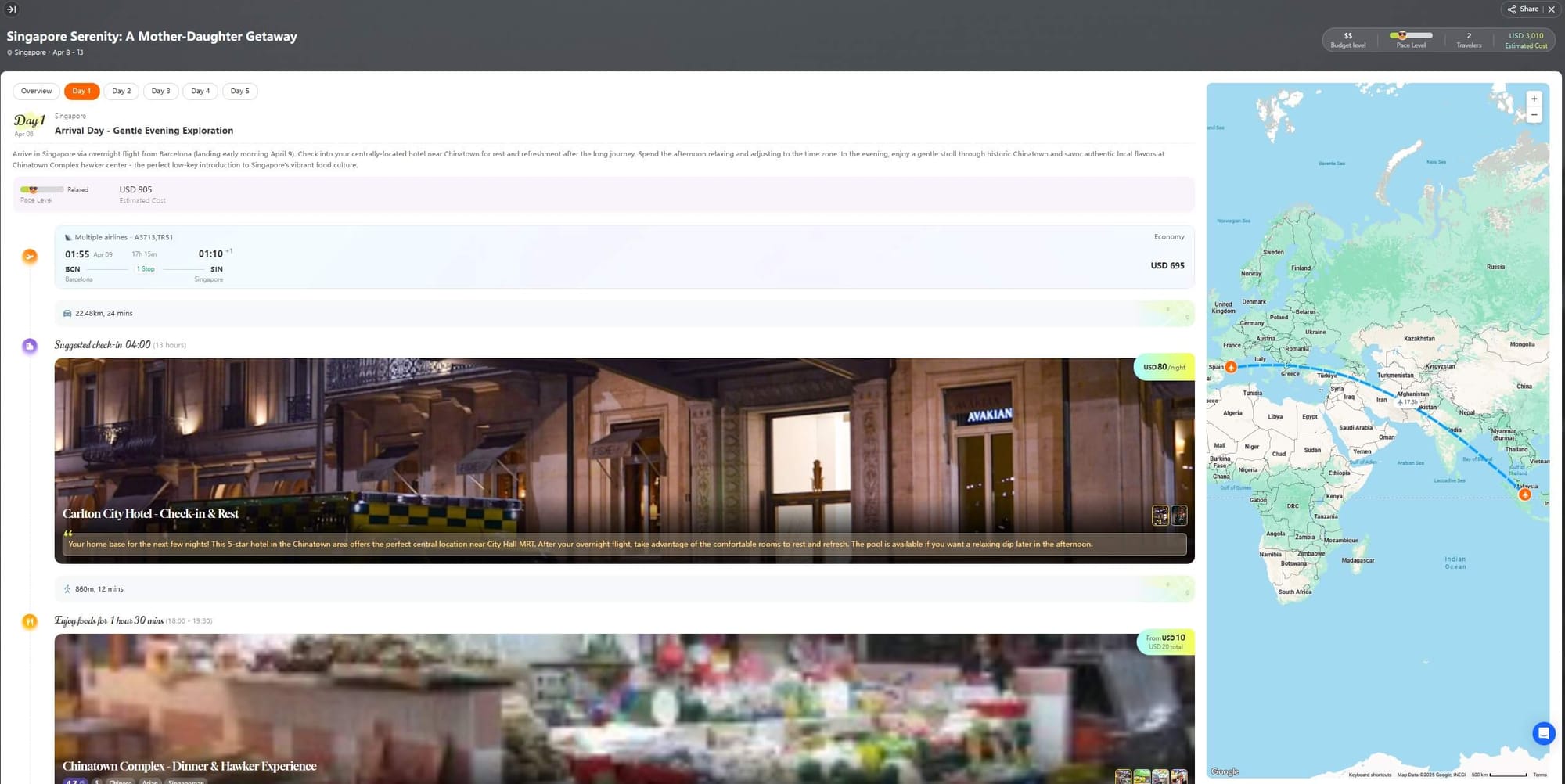
Within a few minutes, you can get a full day-by-day plan that includes suggested routes, timing, restaurants, hotels, and how to get from one area to another. The system is designed to avoid the usual “AI hallucination” problem, so the results feel grounded and realistic.
Step 3: Edit your itinerary and export it
After that, you can adjust whatever you want, like extend a morning walk, or move a neighborhood to another day. When you're happy with the Singapore itinerary, export it or share the link with whoever you're traveling with.
Where to Stay in Singapore
Singapore’s neighborhoods each have a distinct vibe, and your location affects everything from how much you walk to how much you spend. Here are the three areas I recommend most in 2026.
- Marina Bay
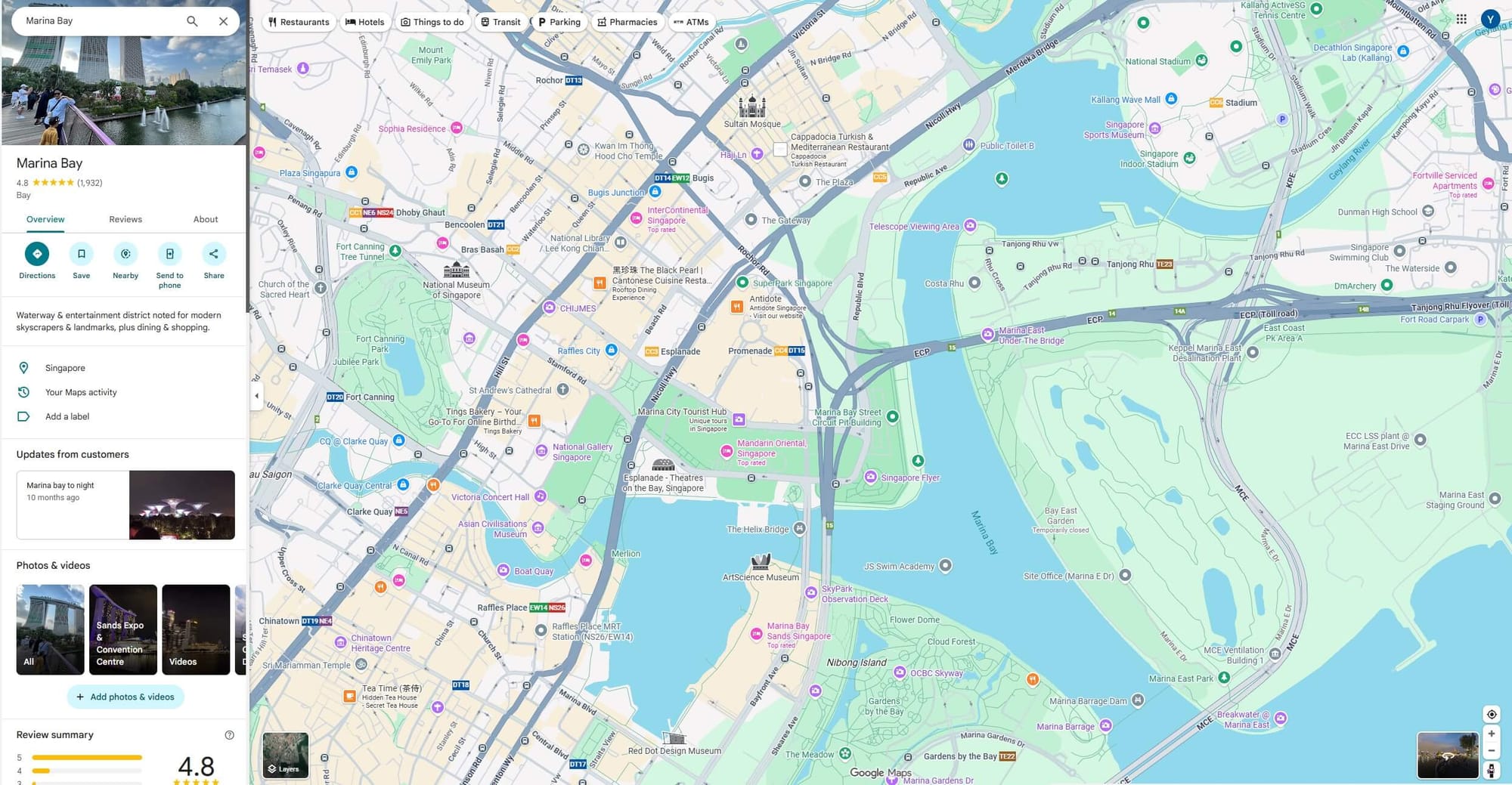
If it’s your first time in Singapore, Marina Bay is the easiest and most convenient base. Everything here feels polished: waterfront views, iconic landmarks, big-name hotels, and easy access to the MRT. You can walk to Gardens by the Bay, the Merlion, the ArtScience Museum, and endless dining options. Night views are incredible, especially if you’re staying near the Helix Bridge area.
The drawback is that hotels can be pricey, and the area leans more business-like compared to other parts of the city. If you’re looking for small boutique stays or more local character, this isn’t the best match. But for hassle-free sightseeing and classic views, Marina Bay is almost unbeatable.
- Chinatown
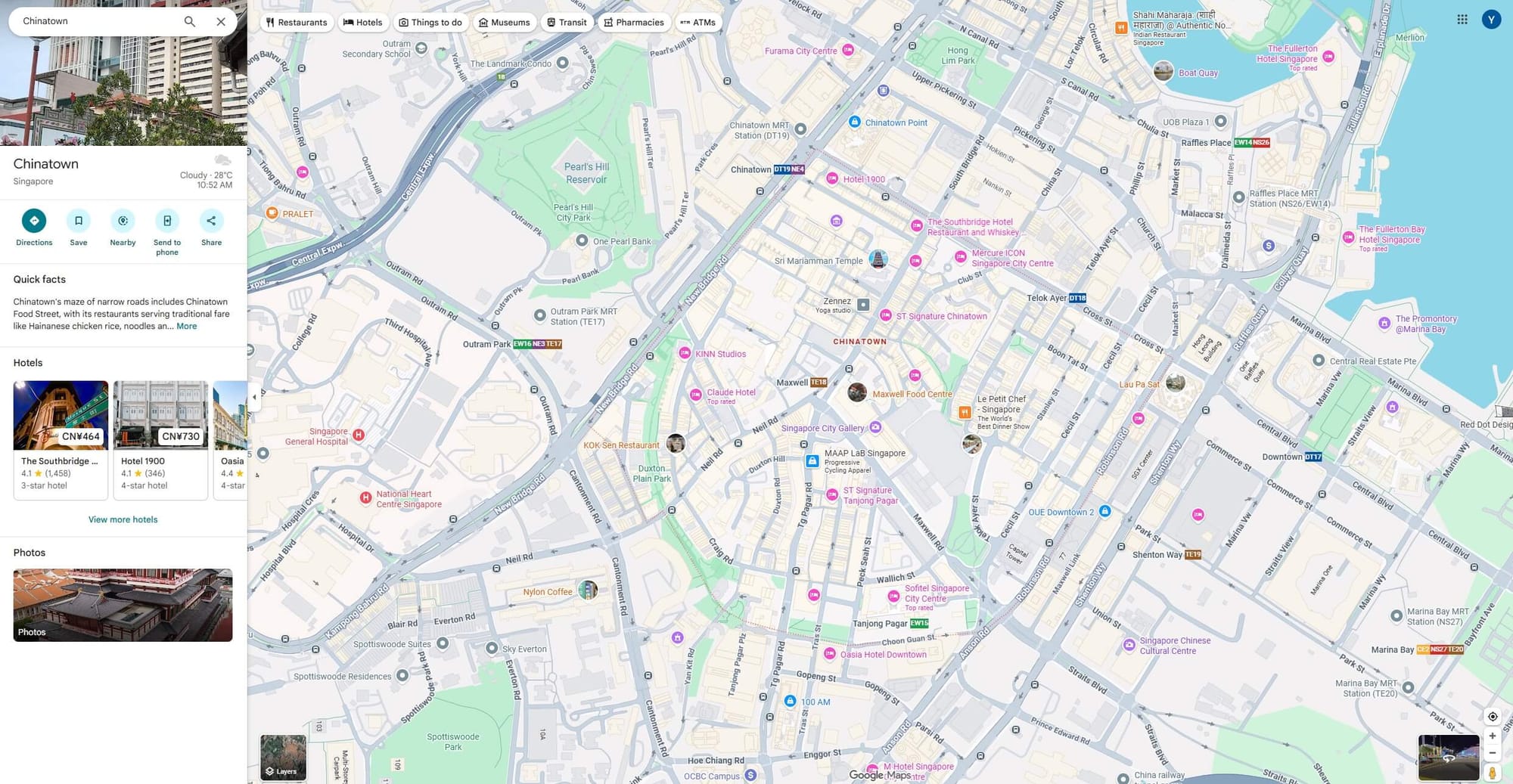
Chinatown is one of the best value areas in the city. It has affordable hotels, great food, and surprisingly easy access to everywhere else. The MRT lines here branch in multiple directions, so you can get to Marina Bay, Orchard, Sentosa, or Little India without complicated transfers. Full of temples, hawker centers, coffee shops, and small lanes, this area offers captivating cultural experiences. However, Rooms tend to be smaller, and weekends get crowded, but the overall atmosphere is warm and energetic. If you’re trying to balance convenience, culture, and reasonable prices, Chinatown hits that sweet spot.
Top Things to Do in Singapore
Route 1: Marina Bay → Gardens by the Bay → Singapore River
This is the perfect starter route for anyone’s first day in the city, balancing iconic views, easy walking paths, and a smooth transition. Begin at Marina Bay, you’ll naturally move toward Gardens by the Bay, walking along the waterfront. Then you can explore the Supertree Grove, the Cloud Forest, or just walk the boardwalk if you prefer something lighter. Boat Quay or Clarke Quay offer plenty of choices.
Route 2: Chinatown → Little India → Kampong Glam
This is the cultural route that shows you Singapore’s diversity in a single sweep. You will avoid zig-zagging across the city and get three distinct cultures in one logical order. It starts in Chinatown for breakfast and temple visits, then hop on the MRT to Little India for markets and food. Finally, wrap up in Kampong Glam, where Arab Street and Haji Lane bring a completely different vibe.
Transportation Tips for Singapore
- City Transportation (MRT / Bus / Walking / Car Rental)
The MRT is by far the easiest way to navigate Singapore. It’s clean and covers all major neighborhoods. Buses are cheap and useful for short distances, though they get busier during peak hours. The city is also extremely walkable, especially around Marina Bay, Bugis, and Chinatown. Renting a car is usually unnecessary. Parking fees are high, and local traffic rules can be strict for visitors. Unless you’re heading out of the country, public transport is simply easier.
- Useful Cards & Passes
The EZ-Link or NETS FlashPay card works for MRT and buses. If you’re taking public transport frequently over a few days, the Singapore Tourist Pass might save you some money with unlimited rides. Most attractions accept credit cards, so you don’t need much cash.
Final Thoughts
Singapore is one of the easiest destinations to enjoy once your itinerary is set, and what matters most is choosing the right neighborhood and organizing your routes so you’re not doubling back across the city. If you want a simple way to build a personalized, editable plan, try iMean AI's free AI trip planner. It’ll give you a clear day-by-day itinerary that you can adjust to make the trip exactly your style.