
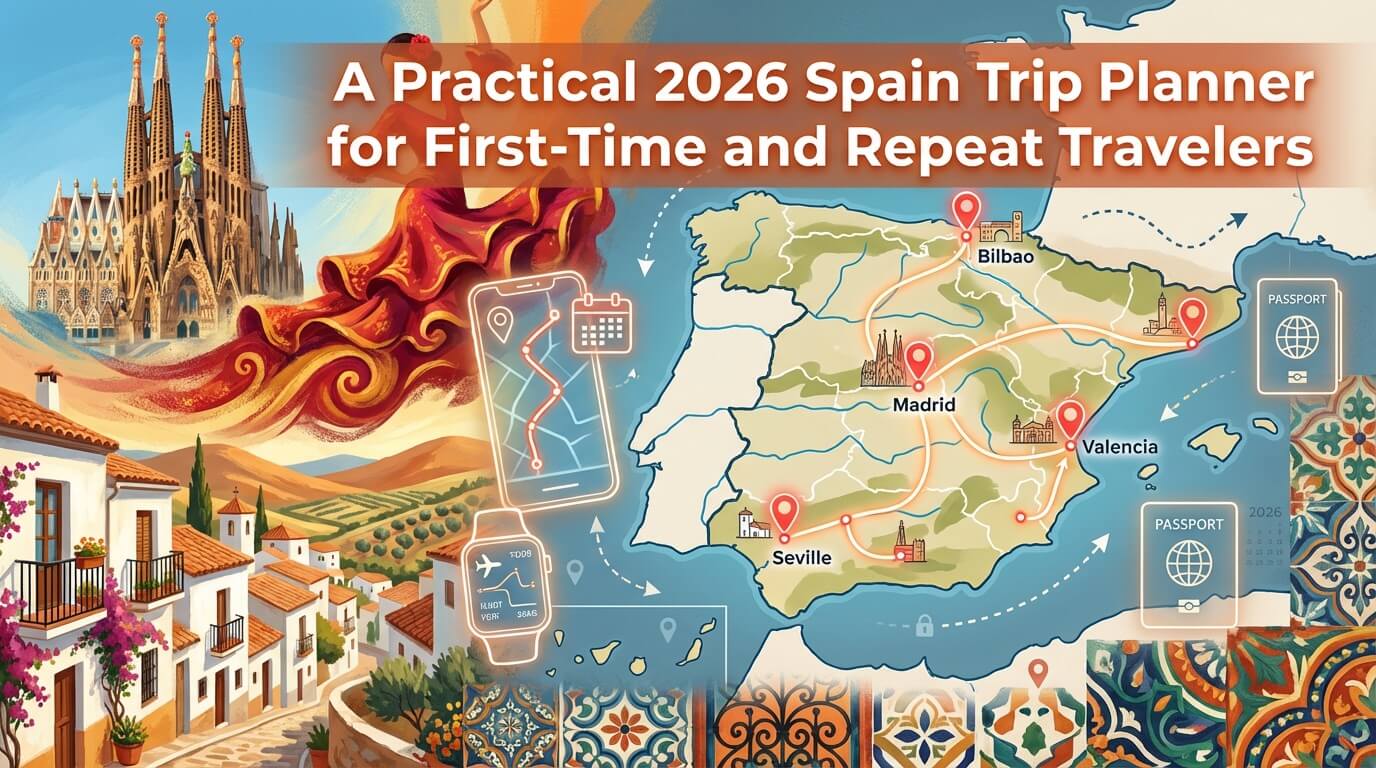
When it comes to exploring Spain, it's hard not to mention the professional Spain trip planner, iMean AI. As we know, making itineraries for Spain can be easily confusing due to the information explosion, the complex situations in Spain, etc. Unlike regular trip planner websites, which often leave me with too many tabs open, iMean AI helps me connect everything more naturally without spending days searching.
In this guide, I’m breaking down everything I wish someone had handed me the first time I planned a trip across Spain. The following is the step-by-step roadmap I made for real travelers, simple, practical, and based on what actually works.
Best Time to Visit Spain
Visiting Spain in the spring (April to June) and early autumn (September to October) is good for most people, when there are abundant activities, good weather, and fewer crowds. But the best time to travel depends on what kind of trip you’re planning, so let’s dive into the details to help you decide.
Spring (March–May)
If you’re looking for ideal temperatures in Spain, it doesn’t get much better than the springtime. Most of the country is sunny and warm, but not too hot, with average temperatures ranging from 60 to 70°F. Plus, you may encounter some spring showers and festivals. Just enjoy the comfortable weather, clearer skies, and cities that feel lively without being packed.
Summer (June–August)
The summer months are the hottest and driest in Spain, especially in central Spain, with temperatures in places like Madrid soaring into the 90s or higher. But it’s also the best time to visit Spain to see the country at its liveliest. Whether you’re on the hunt for the summer’s best seafood dishes, the best beaches in Europe, or a cold glass of sangria, you’ll find it when you visit Spain in the summer.
Fall (September–October)
Fall in Spain is also shoulder season. The weather in Spain in September can see plenty of sun, and temperatures as high as 80°F, whereas the weather in Spain in October is often rainier, with warm afternoons but lows dipping into the high 40s in the evening in some areas. If you visit Spain in the fall, you’ll encounter lighter crowds, cooler weather, and color-drenched landscapes (there will be plenty of freshly harvested produce and local wine as well).
Winter (November–February)
There’s never a bad time for a trip to Spain, which is why we included the country among our favorite places to visit in winter. The weather is fairly mild and sunny compared to other parts of Europe. The average temperature for these three months ranges from the mid-60s to the lower 30s F. Whether you’re seeking cozy Christmas markets or surprisingly warm weather, you’ll find it in Spain.
How Many Days Do You Need?
For most travelers, I recommend:
- 5–7 days if you’re visiting two major cities
- 10–12 days if you want a balanced route with culture, food, and coastal stops
- 14+ days for a full north-to-south or east-to-west trip
Spain rewards slow travel. The longer you stay, the better everything fits together.
How to Plan Your Trip with the AI Trip Planner
Here’s exactly how I use iMean AI as my best trip planner when I want a trip that feels personal but also easy to adjust.
Step 1: Tell iMean AI what you want
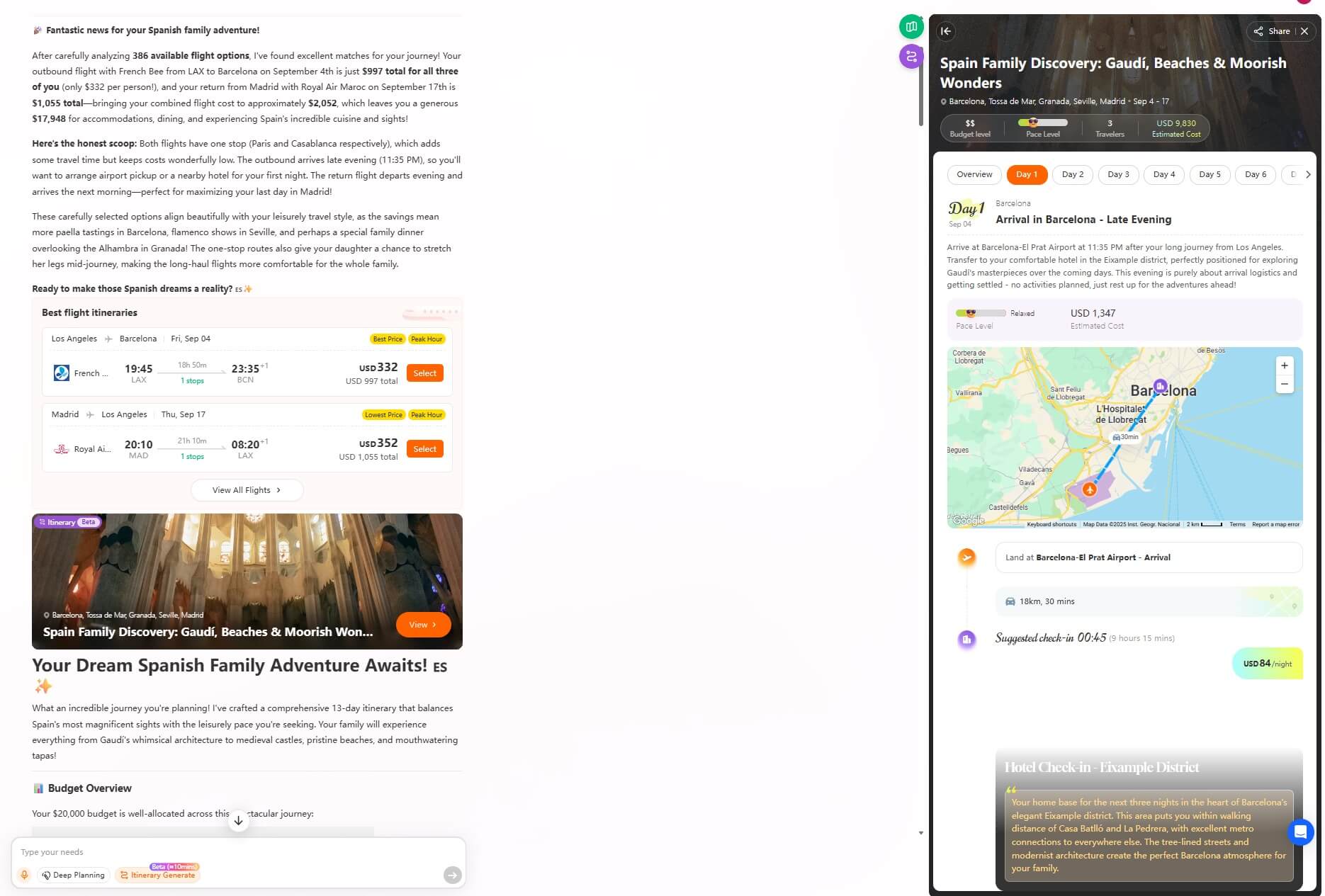
I usually start by giving a simple prompt: where I’m going, how long I have, and what I care about (trip pace, transportation preferences, any physical constraints, and anything I don’t want). The chat experience also feels natural, like talking with a friend who is an expert in making Spain itineraries, rather than using a traditional trip planner website.
Step 2: Get your full itinerary
iMean AI itinerary planner will organize my requirements and give me a complete itinerary, which doesn’t include fake attractions or transfers. Everything it recommends is something I can actually visit. Instead of showing only partnered hotels or locked-in OTAs, it checks options across the internet so I can see which flights or hotels give the best value(the flight search works for one-way, round-trip, multi-city, or flexible dates).
Step 3: Edit your itinerary and export it
Once the day-by-day plan is ready, I start adjusting things: swapping restaurants, extending time in neighborhoods I’m curious about, or moving activities to different days. When I’m done, I export the Spain itinerary as a shareable link so it’s easy to keep on my phone.
Where to Stay in Spain
Here are three neighborhoods, one in each of Spain’s most-visited cities, that consistently work for most travelers.
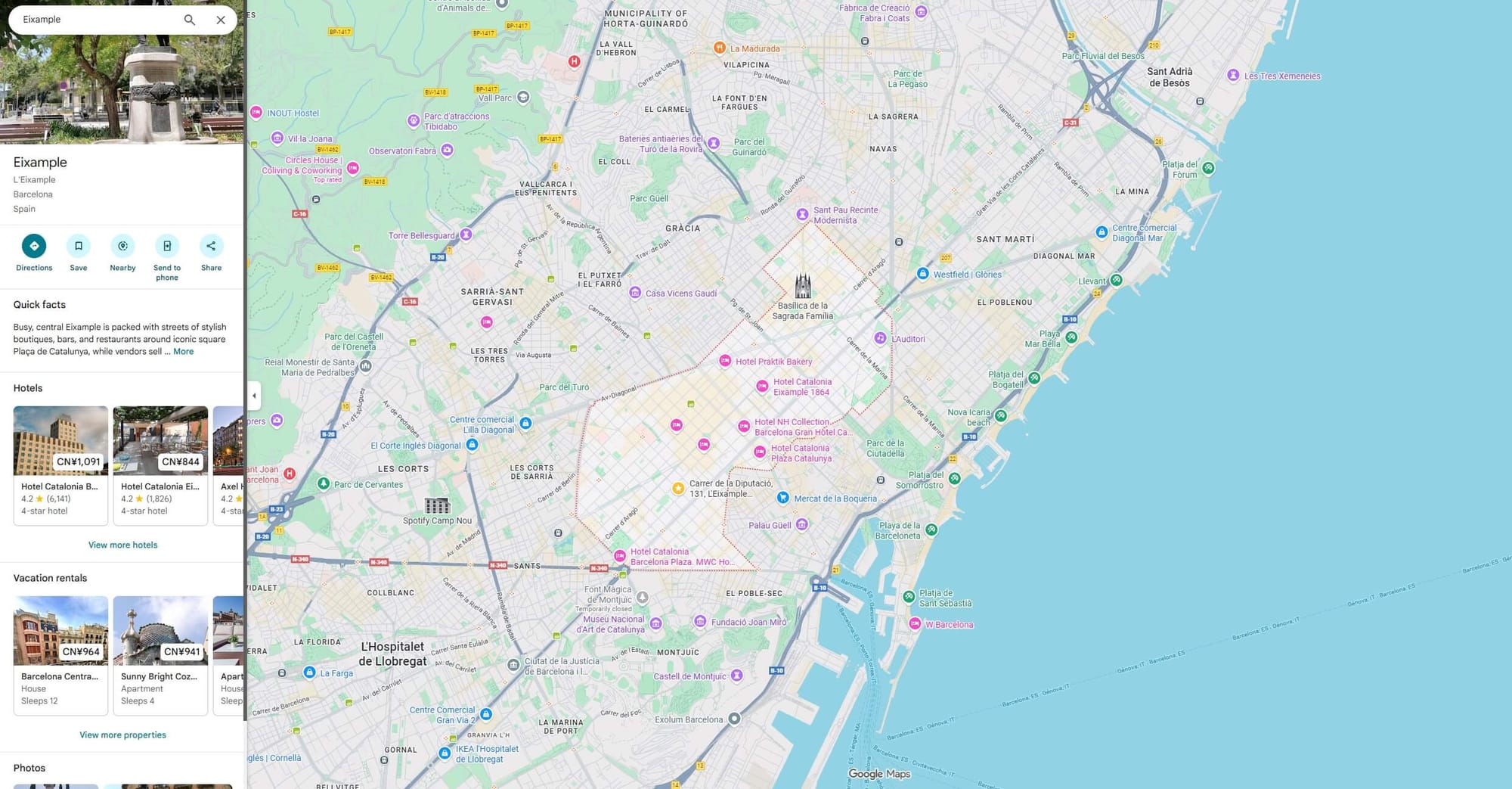
Eixample, Barcelona
Eixample is the part of Barcelona that feels clean, spacious, and easy to navigate. It is generally made up of octagonal blocks of buildings, and pretty much every block will have a cafe, bar, or restaurant on it, so you'll have no problem finding good places to eat/drink too.
Eixample is big, but either way you will have no trouble getting around. Hotels here tend to be slightly higher-priced because of the central location, and some sections feel business-oriented.
I think Eixample is perfect for first-time travelers or anyone who wants quick access to both sightseeing and great food without the late-night chaos.
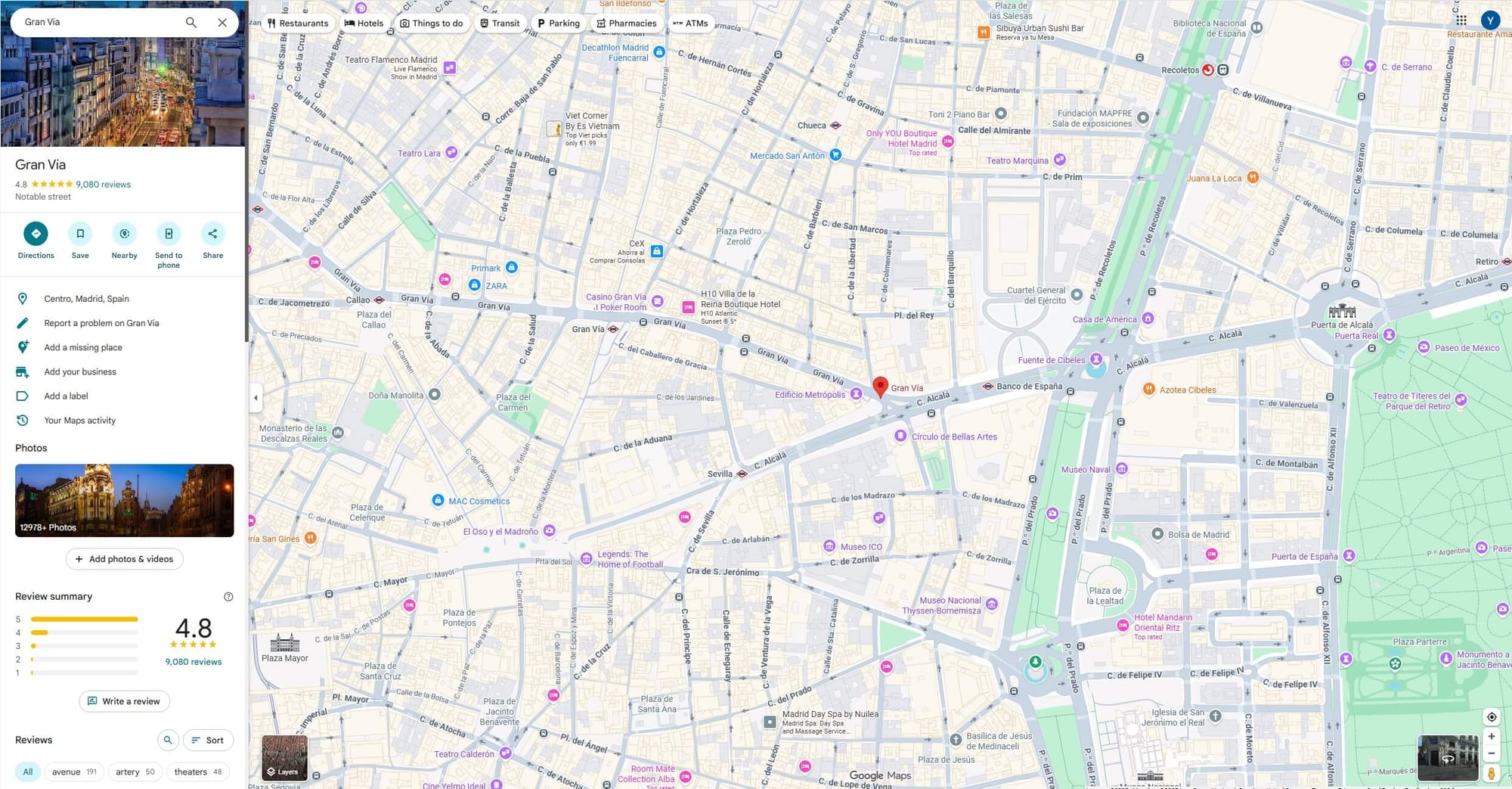
Sol & Gran Vía, Madrid
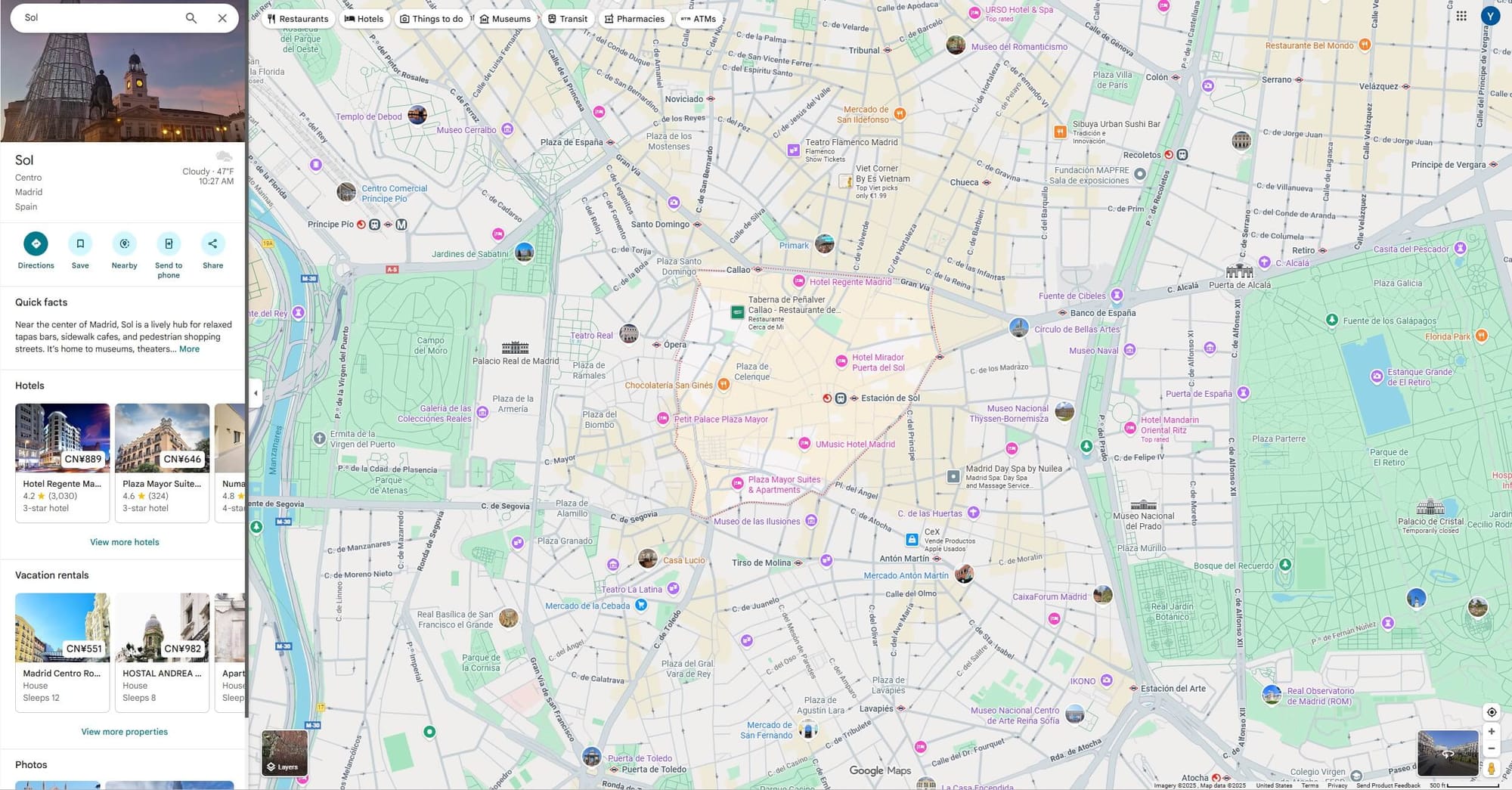
Whenever someone asks me where to stay for their first Madrid trip, I usually suggest Sol or the Gran Vía. These two connected areas put you right in the middle of the city’s energy, offering shops, tapas bars, theaters, historic sites, and nonstop movement. For travelers who like to walk everywhere, this area is unbeatable.
The catch is that it’s busy(sometimes too busy), especially during weekends and holidays. But if you want the classic “capital city” experience, Sol/Gran Vía is one of the most popular choices for a reason. It’s lively, convenient, and ideal for short stays.
Santa Cruz, Seville
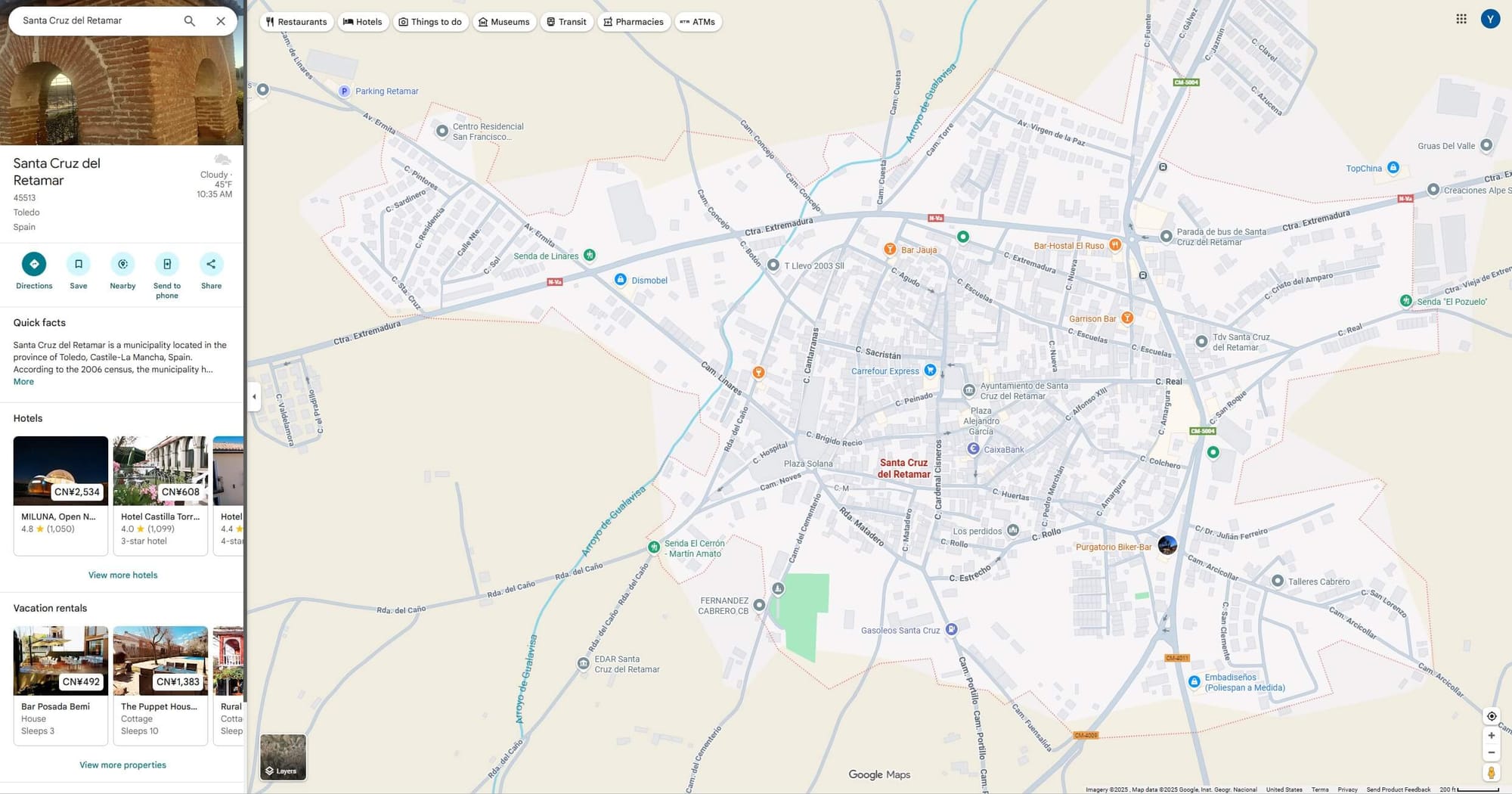
Santa Cruz feels like the Spain many travelers imagine before arriving: whitewashed walls, orange trees, hidden courtyards, and quiet alleys that twist like a maze. This neighborhood sits right next to Seville’s biggest landmarks: the Alcázar, the Cathedral, and some of the city’s best tapas bars. It’s extremely walkable and great for couples or anyone who loves photography and history.
If you like outdoor activities: hiking, biking, surfing, etc., and you prefer a more laid-back social atmosphere, then Santa Cruz can’t be beat. The town does close down early in general, so if you are more of a nightlife city person, it won’t be too good for you.
Top Things to Do in Spain
Instead of writing a giant list of attractions, I like organizing Spain by routes. This makes the trip feel more natural and avoids doubling back across the country.
- Route 1: Barcelona → Valencia → Madrid
This is a great route for first-timers because the travel connections are smooth. Barcelona gives you architecture, beaches, and city life. Valencia adds futuristic buildings and some of the best food markets in the country. Madrid finishes the trip with world-class museums and lively neighborhoods. You can move down the coast and then inland, using Spain’s fastest trains. The pacing is energetic but not rushed.
- Route 2: Madrid → Córdoba → Seville
If you love culture and history, this line through Andalusia is perfect. Madrid starts you off with big-city energy. Córdoba brings a quieter atmosphere and the Mezquita, one of the most unique buildings in Europe. Seville ends the route with warm evenings, flamenco, and beautiful plazas. The distances between cities are short, trains are frequent, and each city offers something entirely different despite being close together.
- Route 3: Bilbao → San Sebastián → Barcelona
This northern route is ideal if you want cooler weather, food-focused travel, and a different side of Spain. Bilbao has world-class art and riverside architecture, while San Sebastián is all about beaches and pintxos. Flying or taking the train back to Barcelona gives you a smooth ending with plenty of choices for flights home. You can get coastline, culture, and fantastic food without the intense heat found in the south.
Transportation Tips for Spain
Within Cities
Spain’s cities are walkable and easy to get around in once you know which option fits each situation.
- Metro systems in Madrid and Barcelona are fast, frequent, and spread across most tourist-friendly areas, making them the default choice for longer city journeys.
- Buses help reach neighborhoods the metro doesn’t cover, especially in places like Seville or Valencia, where routes run deep into historic zones. Many old towns from Madrid’s Literary Quarter to Barcelona’s Gothic area are best explored on foot, since narrow lanes and plazas make walking both practical and enjoyable.
- Car rentals inside cities are rarely helpful; limited parking and tight streets often turn driving into extra stress, so most travelers avoid renting until they leave for countryside routes. Uber is valid in big cities.
Between Cities
Intercity travel in Spain is smooth because each option serves a different type of route. The AVE high-speed trains are the most efficient way to connect major hubs like Madrid, Barcelona, Valencia, and Seville, often beating flights in total travel time.
For shorter journeys, regional trains offer scenic, slower routes, ideal for day trips, such as Madrid–Toledo or Seville–Córdoba. When distances stretch across the country like Barcelona to Málaga or Bilbao to Seville, domestic flights become practical, with airports operating quickly and with minimal hassle.
Travelers heading into wine regions, coastlines, or remote hill towns may prefer renting a car, which provides freedom but isn’t as efficient between big cities.
Travel Cards / Passes
Spanish cities use their own transit cards, and picking one early makes travel easier. For long journeys across several regions, some travelers consider a Spain Rail Pass, which can be useful if you plan multiple high-speed or long-distance train rides in a single week.
Final Thoughts
Spain is one of those places where every trip feels different depending on the cities you choose, the season, and how fast you like to travel. Our goal is to build a route that fits the way you travel instead of seeing everything. If you want a personalized, editable day-by-day itinerary that stays realistic and easy to follow, try iMean’s free trip planner and see how your next Spain route could look.