
How to find cheap but reliable flights is always a hot topic among travelers. In the past, people relied on traditional platforms like Google Flights, Skyscanner, and Kayak to find the flights they needed. But the situation has changed due to the rise of AI flight finders. So, the focus accordingly changed to which tool is better for finding cheap flights? This article compares AI flight finder vs traditional flight search engines across six key dimensions that influence real booking decisions.
How AI Flight Finders and Traditional Flight Search Engines Actually Work
Traditional flight search engines get real-time prices directly from airline APIs and global distribution systems. Based on your selected filters, the platform will show you the up-to-date results. Because of the information source, these traditional platforms are reliable for fixed and standard routes. The price you see on the page is almost the price you finally get, with minimal fluctuations.
AI flight finders operate differently. Users input their needs like departure, destination, and date, AI flight finders will use their machine-learning models to explore flights among various airport, date, and airline combinations automatically. They analyze both regular flights and non-standard route travelers wouldn’t normally think to search. Not like traditional flight search engines, AI flight finders don't rely on fixed filters; they can handle more complex situations and generate flexible route ideas to help users find cheaper or more efficient options.
Six Key Factors Comparing AI Flight Finders and Traditional Flight Search Engines
When comparing AI flight finders and traditional flight search engines, there are six factors that travelers are most concerned about: price accuracy, search speed, hidden deals, personalization, user experience, and route coverage.
Price Accuracy
Price accuracy is essential for AI vs traditional flight search for cheap flights. Traditional search engines usually have higher price accuracy because they get real-time prices directly from airline APIs and global distribution systems. Like Google Flights, it can integrate live data from different airlines. By using its internal travel analytics center, it can monitor price discrepancies and itinerary availability. These ensure its price accuracy, but there are still some factors that have an influence, such as a rapid price change or regional differences in price.
For AI flight finders, they may show price differences on the final checkout page. Because they aggregate flight prices from mixed sources or redesign the flight routes algorithmically. But this also lets AI flight finders be more flexible and can find cheaper combinations more easily; A round trip can be split into two one-way flights, because sometimes one-way flights may have discounts and round-trip flights don't; By exploring combinations of flights from different airlines or secondary airports, AI tools can find cheaper options.
Search Speed
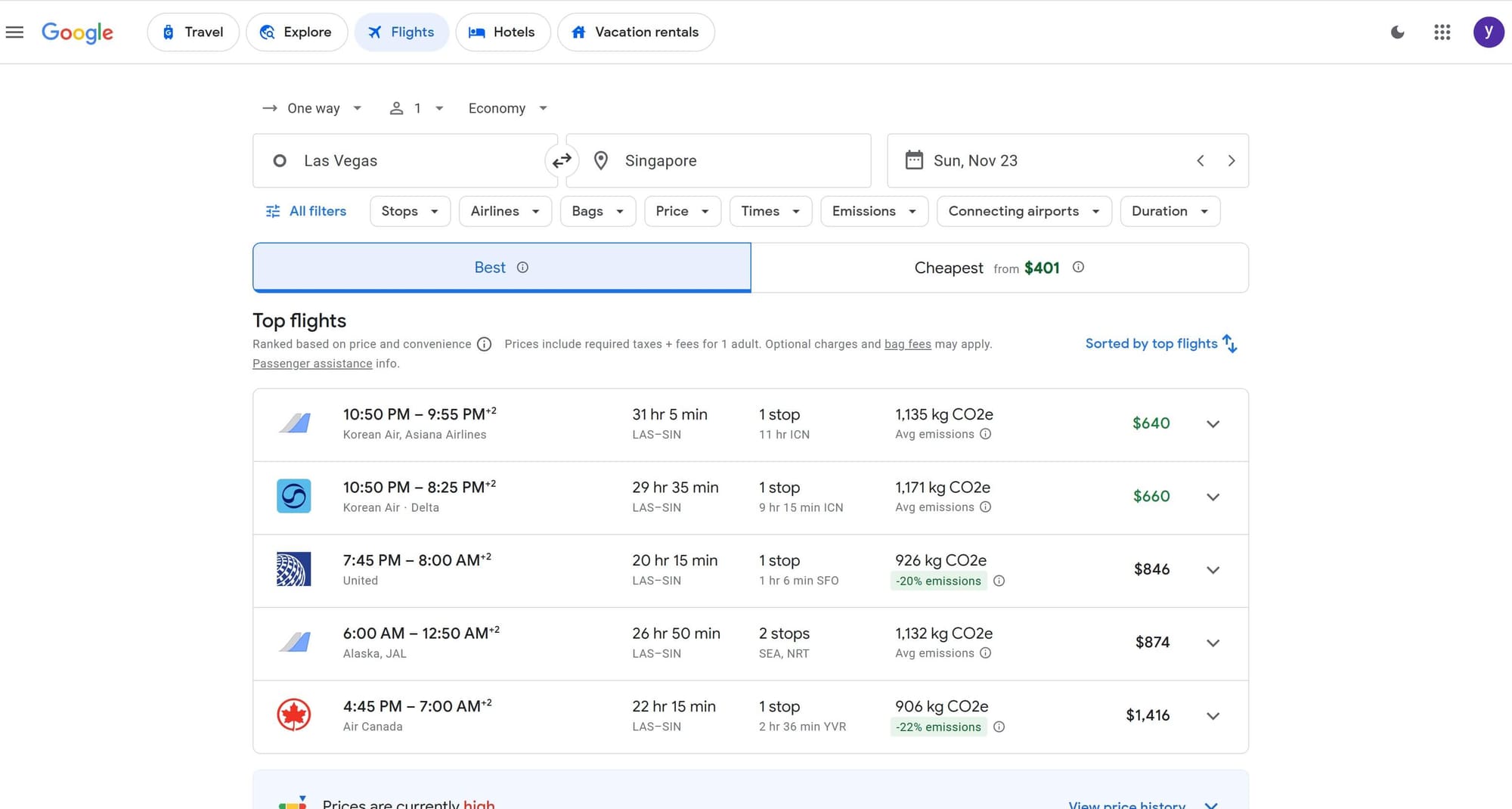
When your dates and routes are fixed, traditional flight search engines show a fast search speed. You just need a few seconds to get the result. Traditional flight search engines like Google Flights or ITA Matrix use data directly from airline application programming interfaces and global distribution systems. And these dates were highly optimized and up-to-date, specially designed for quick search.
AI platforms can perform a little bit slowly, especially when the destinations and dates are not fixed. According to users' needs, they will search across multiple airports and dates because they want to find out more possibilities. But on the other hand, it is also an advantage.
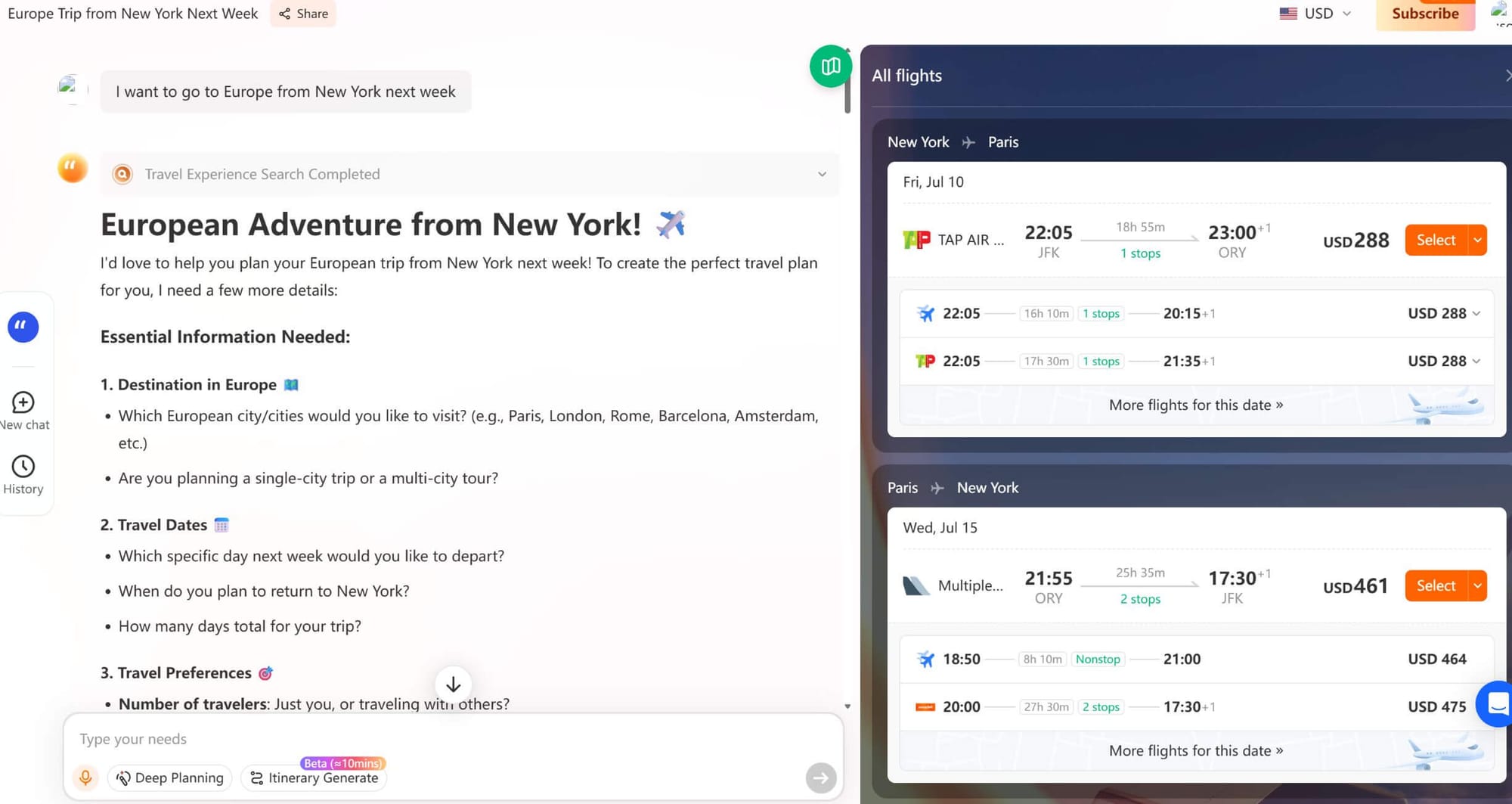
When the users' needs are unclear, for example, the user asks, "I want to go to Europe from New York next week," and AI will check all possible plans and then provide flights that meet the needs for users to choose and compare. If you use traditional flight search engines, you should determine one destination first and then try different destinations one by one. Sometimes you also need other tools to write down the results for comparison.
Ability to Find Hidden Cheap Flights
Traditional search engines are powerful in basic functions like comparing standard, point-to-point routes within major city groups. For finding non-standard routes like cross-city airport combinations or split tickets, they are not powerful enough due to a lack of data. As a result, many uncommon but workable options might be missed. AI flight finders are good at discovering hidden cheap flights. Besides standard routes, they also explore different combinations automatically.
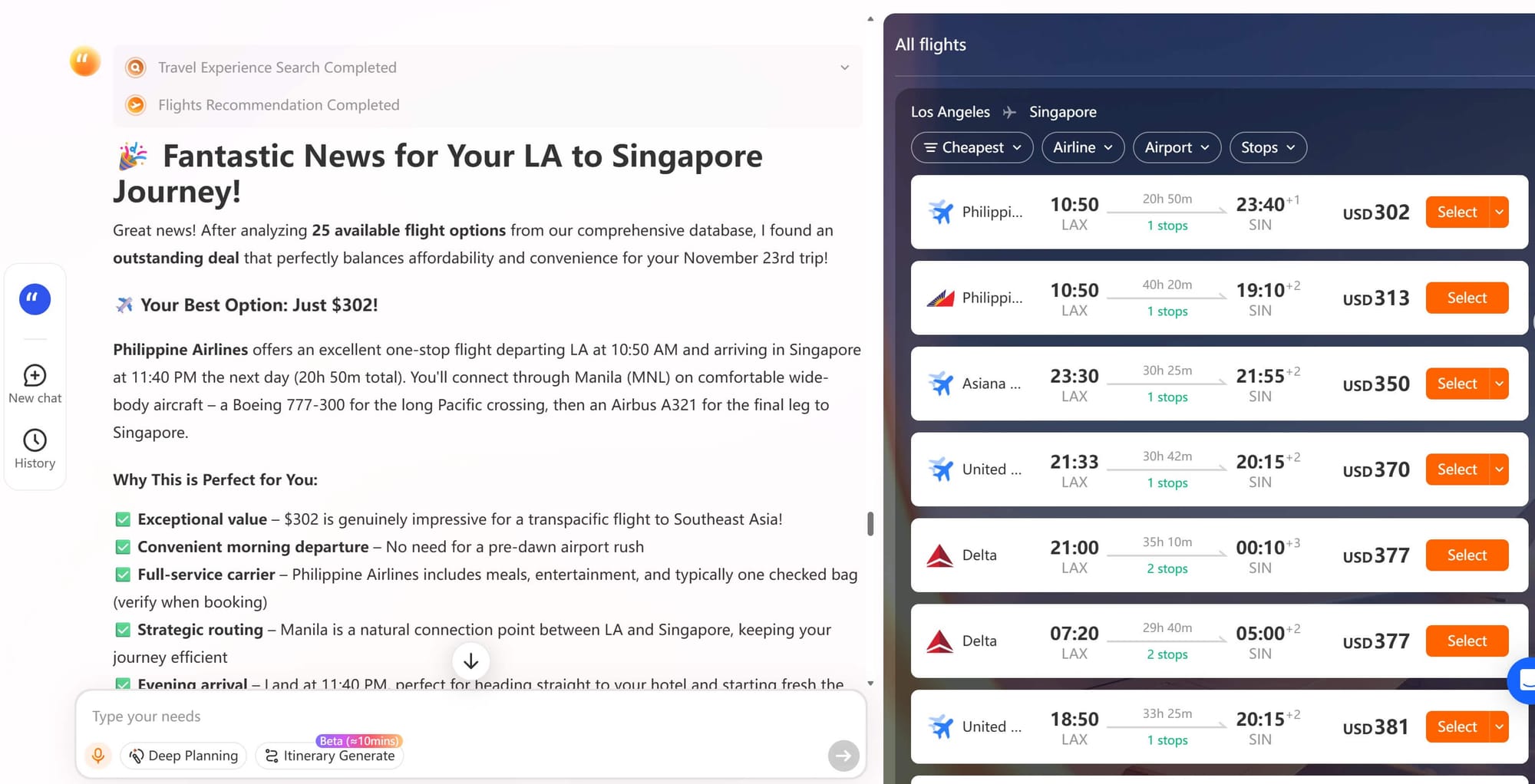
Some AI flight finders have the ability to search across the entire web, which can help you find more economical flights. To test this, I searched one-way flights from Los Angeles to Singapore on November 23, both in a traditional engine and an AI flight finder. This is the result. On Google Flights, the cheapest flight was $401 with a 25-hour journey and two stops. And within the price range of $400, there is only one choice. On iMean AI, an AI flight finder, the cheapest flight was $302 for a 20-hour journey with only one stop. And around the price range of $300, there are many choices.
These flights were not found on Google Flights, and you might need to use different flight search engines to find them. This demonstrates that, in certain situations, AI flight finders perform better and are even the best flight search engine for cheap flights.
Personalized Recommendation
Traditional flight search engines rely on filters. You need to adjust the content according to your needs. That means what you get completely depends on what you input. But many traditional search engines can predict the price for one month or even more, which is useful for users to select suitable flights.
AI flight finders offer more personalized services because they can understand natural language. You can tell them your needs, like chatting with an old friend. Even if your requests are not precise, they can help you clarify your needs through conversations. You can tell them, ”Avoid early morning flights, please." "Could you recommend a destination in Europe? I only have $800 for the transportation,” or " I don't want a flight on a certain airline. Avoid it, please."
User Experience
Traditional platforms have existed for many years, and users are more familiar with their layout and use logic. Seasoned travelers may prefer to use select filters because they have clear destinations and rich experiences. A simple and clear operation platform is more convenient, so as people like businessmen.
The chatting mode of AI flight finders is extremely suitable for people who have multiple and complex needs. You don't have to return to the search pages over and over again to change the information. Thus, the user experience actually depends on their needs.
Route and Airport Coverage
Large traditional flight search engines cover mature flight routes stably because they connect directly to major airline systems. And benefit from cooperation with global distribution systems, the flights and other services they provide may be more reliable and real-time.
AI flight finders use aggregated data from multiple sources to support the function, so coverage can vary from different platforms. AI flight finders like iMean AI, through scanning the broader web to ensure coverage. Also benefited from the broader coverage, they can do the full-network comparisons to help users find combinations that traditional flight search engines do not cover.
How to Choose Between AI Flight Finders and Traditional Flight Search Engines
If your dates and routes are fixed
For the reliable and official flights they provided, traditional flight search engines are suitable for users who have fixed dates and certain needs. No more extra communication, only fast and accurate input. Travelers like businessmen and frequent flyers may like traditional tools.
If your needs are complex with a limited budget
With the advantages we mentioned before, AI flight finders are better choices for travelers who want an assistant, not only a search engine. And the multi-source data of AI flight finders can provide users with more economic choices and even find hidden cheap flights. That's important! Users, like students who have time but have no money would like more economical flights.
You can use both together
For me, before traveling, I'd like to use AI flight finders to organize my thoughts first. Because my travel plan is always a mess and I hate complex and endless information. My budget is limited but I have many dream places to go. So for the cost of transportation, the less, the better. After chatting with AI flight finders, I will search on the Traditional flight search engines again, to see if there are any discounts or cheaper choices.
Conclusion
Actually, there is no absolute winner between AI flight finder vs traditional flight search engines. It totally depends on your needs and travel style. Travelers with strict schedules will appreciate the stability of traditional flight search engines, while flexible travelers can benefit from the creativity and broader search range of AI tools. They are both useful tools for flight finding. Use them flexibly and explore more hidden usage methods.