

I’ve always felt that choosing the right area is even more important than selecting a hotel. When the neighborhood feels off, it's hard to feel at ease, even if the room you book is perfect. What's worse, it's more difficult to get the correct advice about the location than the correct advice about hotels. That’s why I wanted to see if AI could actually help by giving clear, grounded explanations of what different areas feel like in real life.
Why Area Matters More Than Hotels
Filtering by price, rating, and facilities, it's way too easy to get the right selections for hotels that fit your needs. Location, though, is a completely different story. Universally, there is no criterion for choosing a location on the platforms for making itineraries. A “good area” means different things to different people. For me, it often comes down to a few questions that I think most people easily feel the same:
- What’s the vibe during the day?
- Is it noisy at night?
- Will I feel comfortable walking back after dinner?
- Is public transit close enough that I’ll actually use it?
- Are there local restaurants nearby, or am I stuck in tourist zones?
And the hardest part: cities change fast. Blocks that were quiet two years ago might now be full of bars. A neighborhood that travel blogs call “up-and-coming” might feel chaotic in person. This is why I tested iMean AI, not intending to obtain a simple top-5 list, but to see whether it could break down neighborhoods in a practical, experience-based way. I tried three cities where area choice truly makes or breaks the trip: Tokyo, Barcelona, and Bangkok.
Test 1: Tokyo
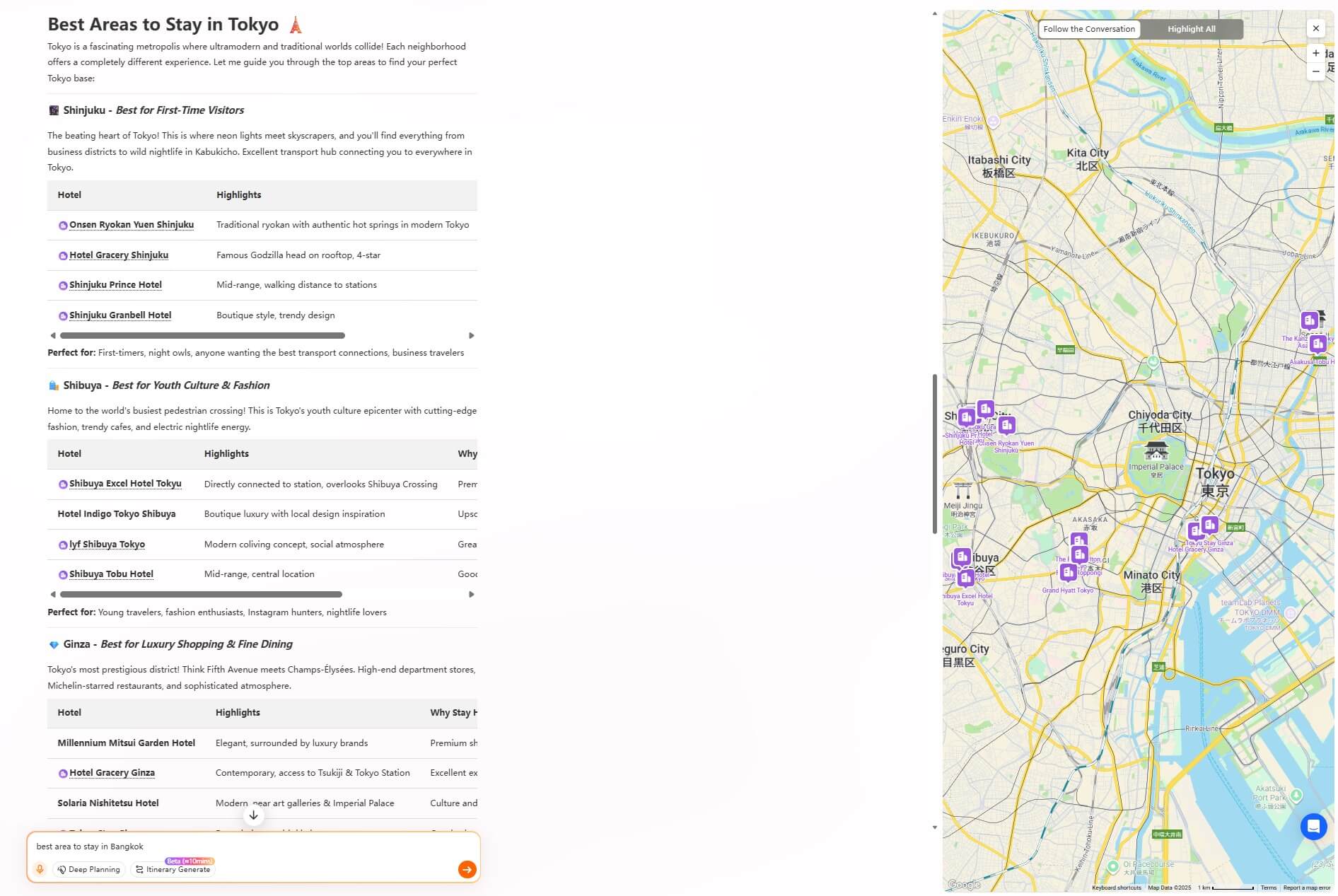
Tokyo is the place that convinced me that area research matters as much as anything else. It’s one of the few cities where you can feel like you’re in different worlds, just five subway stops apart. I asked iMean AI hotel finder for the best area to stay in Tokyo based on food, transit, and nighttime quietness. What I found most helpful was how it explained sub-areas inside big districts, which most travel blogs rarely do.
Asakusa: Traditional, Calm, Easy to Settle Into
Asakusa is a tourist centre only if you stick to the temple area during the daytime. If you move a bit away from that or visit early in the morning/late in the day, the vibe changes quite a bit. You would have no problem staying in Asakusa if you wanted to stay in that general area of the city. The food scene is great in a low-key way, with small family-run spots everywhere. Transit isn’t as dense as Shinjuku or Shibuya, but the Ginza Line puts you in the city center easily. This is a neighborhood where your day starts peacefully, not with crowds.
Shinjuku: But Only in the Quieter Pockets
Massive, confusing (the station is like a small city in itself), stimulating, never boring, overwhelming, sleazy in places, cool in others. If overkill's not your thing, it might not be as much fun. But if this is a one-off chance to see Japan, it could be a good place to stay, as it's on the Yamanote line, which can take you to other major areas (Shibuya, Ikebukuro, Shinagawa, etc.)
The other mentions avoiding Kabukicho, which is good advice later in the day (and even then it's "insalubrious" rather than actually dangerous), but it's harmless while it's light as long as you ignore the touts and people trying to get you to come to their sleazy clubs.

Nakameguro: Trendy, Clean, and Walkable
Nakameguro feels like the opposite of the Shinjuku buzz. Think river walks, small cafés, vintage stores, and a gentle pace. A lot more interesting shops and food. A little less convenient not being on the Yamanote, but still easy enough to get around Tokyo. It’s great if you want a “live like a local” atmosphere with easy access to major areas, but none of the chaos.
Shibuya: Energetic Without Being Overwhelming
Shibuya Crossing is wild, but the surrounding blocks vary a lot.iMean AI explained that staying slightly outside the busiest part gives you the youthful energy, restaurants, and shopping without the all-night noise. This was useful because Shibuya is often treated as one giant “party zone,” when in reality it has calmer and safer-feeling residential pockets too.
Test 2: Barcelona
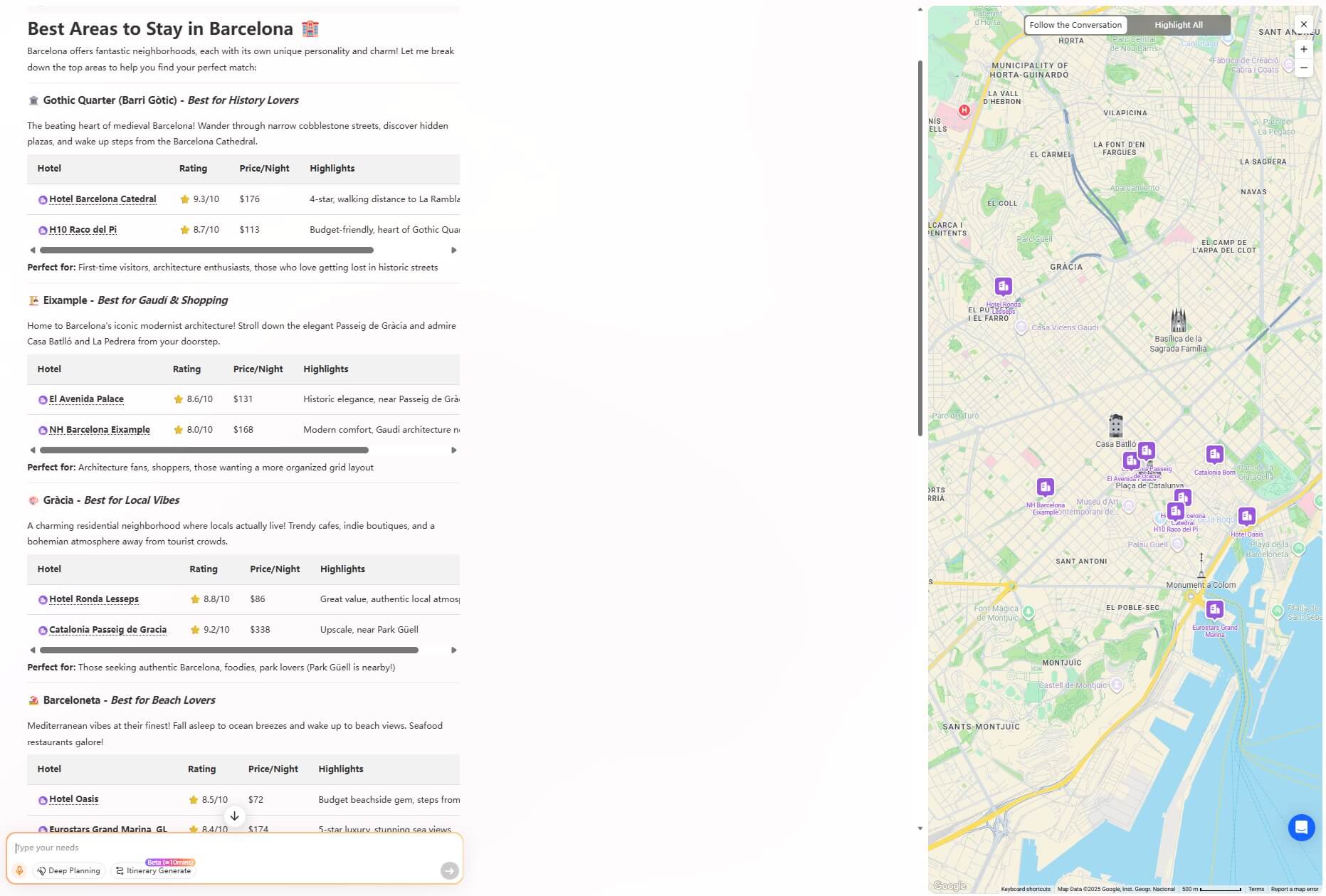
Barcelona changes drastically from one block to the next. A beautiful street can sit right beside a noisy nightlife strip. This makes choosing your area incredibly important, especially if you care about sleep. I asked iMean AI where to stay in Barcelona for a trip focused on food, walkability, and calmer nights.
Eixample: Clean, Safe, Predictable, and Very Walkable
Eixample is one of the easiest areas for visitors because the grid layout makes orientation simple. It is big, so it depends on which bit of Eixample you'll be in, whether you'll be close to stuff. But either way, you will have no trouble getting around, and the streets in Eixample are wide, well-lit, and safe, which makes it much less likely that you will be pickpocketed, etc, there too.
Eixample is generally made up of octagonal blocks of buildings and pretty much every block will have a cafe, bar, or restaurant on it, so they'll have no problem finding good places to eat/drink too. It’s the perfect “balanced” district for people who want comfort and convenience without the chaos.
Gràcia: Artsy, Young, Authentic, and Community-Driven
Gràcia feels like its own village. Small plazas, indie shops, creative cafés... This is where younger locals hang out, which gives a feeling that escaping all the tourist movement and coming to the authentic part of Barcelona. It’s lively during the day but settles down at night in a way that feels cozy, not isolated. Walking here feels safe and warm, and you get a real sense of everyday Barcelona life.
El Born: Stylish, Fun, and Cultural (But Busy)
El Born is beautiful and full of great restaurants, artisan shops, and museums, which is just very touristy. It's very pretty but also crowded. You will be fine with normal precautions unless you are out super late alone on the street (and even then, probably still fine, Barcelona is very safe outside of pickpocketing). Nights can be louder, depending on where you stay. It’s perfect if you want energy and culture, but not if you’re sensitive to noise.
Barceloneta: Amazing for Beach Lovers, Not for Light Sleepers
Barceloneta is the dream if you want to step out and be near the water. Plus, there are a lot of nightclubs near the beach. However, beach areas in Barcelona are busy from morning to night, especially in warm months. In addition, it is not very convenient to go to the city center. It usually takes a forty-minute bus (if you can squeeze into the bus you are waiting for). It’s fun, active, and social, but definitely not quiet.
Test 3: Bangkok
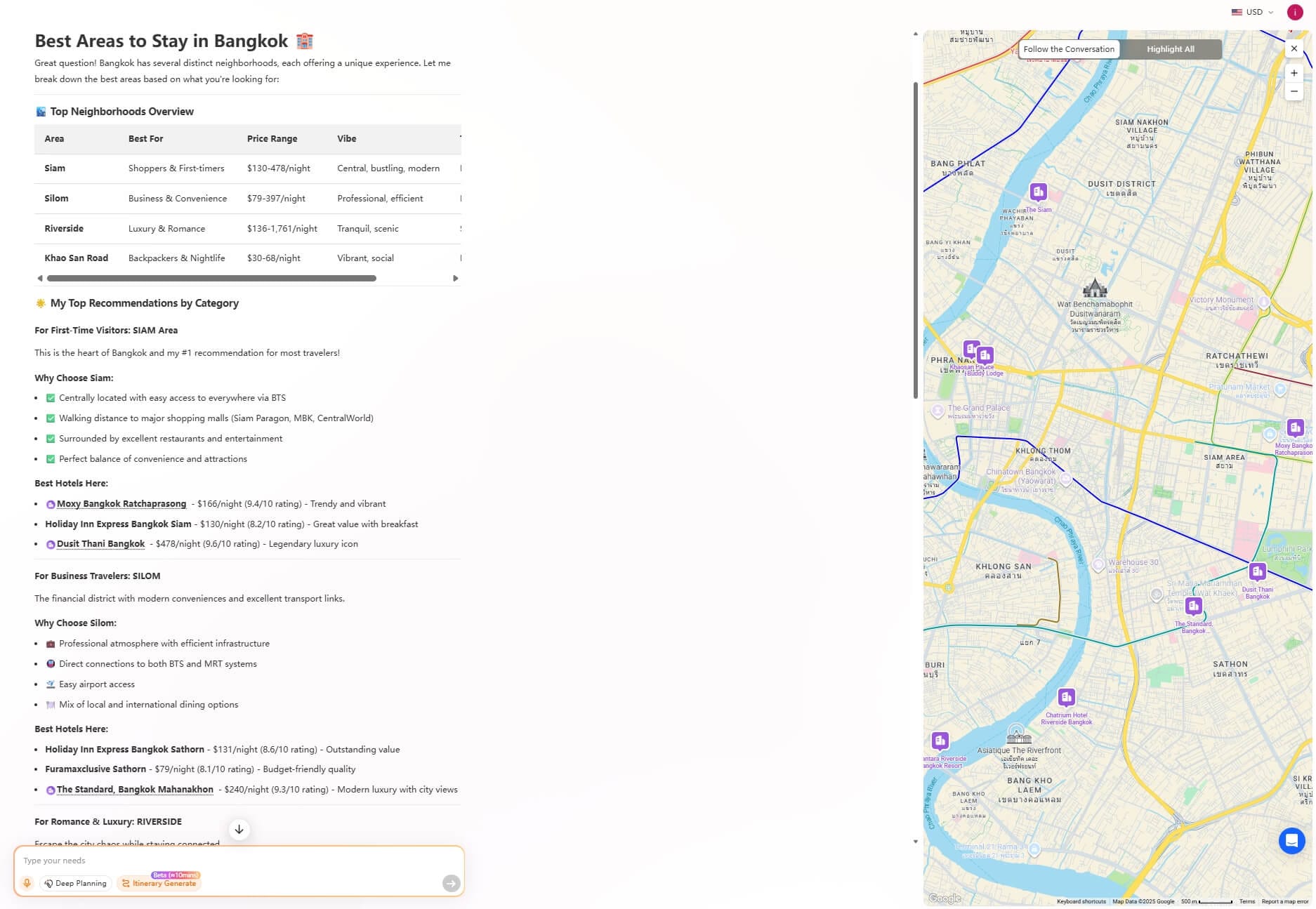
Bangkok is unpredictable in the best way, but that also makes choosing an area tricky. Some blocks feel calm, others feel like nightlife has taken over, and some are quiet until suddenly they’re not. I asked iMean AI for neighborhoods with easy transit, great food, and a balanced pace.
Sukhumvit (Asok–Phrom Phong area):
iMean AI described this area as the easiest place for first-timers: walkable pockets, endless food options, and train access that actually saves time. It didn’t pretend that Sukhumvit is peaceful. It acknowledged the traffic and noise, but made it clear why many travelers still choose it.
Ari:
This neighborhood is often misunderstood, but the tool captured its tone well. It highlighted Ari as a calmer, residential pocket with cafés, small restaurants, and a slower rhythm. Not “quiet,” just less intense than central Bangkok. That distinction felt accurate.
Old Town / Rattanakosin:
Most guides either oversell its “heritage charm” or dismiss it as inconvenient. The explanation here struck a balance. The AI travel planner said the area works if your trip is about temples and culture, but you trade walkability and transit for that atmosphere. This felt honest and practical.
Thonglor / Ekkamai:
Instead of just calling it “trendy,” it explained what that actually means—modern bars, restaurants that open late, and a crowd that skews local and young professional. It also noted the downside: if nightlife isn’t your thing, you may not enjoy staying right in the middle of it. Overall, the Bangkok suggestions felt surprisingly grounded. Nothing was exaggerated. Nothing sounded guessed. It simply described what each area feels like on the ground, which is what I needed.
So… Can AI Actually Help You Pick the Best Area?
After trying three very different cities, my honest conclusion is yes. Most generic travel AIs make the same mistakes, such as recommending neighborhoods that don’t match the traveler’s style, mixing up areas, and giving generic lists with no vibe explanation. On the contrary, iMean AI felt different because of them:
- explained vibe, noise, transit, and daily rhythms clearly
- compared areas based on how I travel, not what’s popular
- didn’t confuse landmarks or districts
- helped me find cheaper hotel options across the entire web, not just partner sites
- made area decisions feel human and practical
- handled flights, hotels, restaurant ideas, and itineraries all in the same flow
Choosing a neighborhood will always be personal. But this was the first time I felt AI genuinely reduced the stress instead of adding more questions.
Final Thoughts
Testing these cities made me realize that AI can’t replace the joy of discovering a new place, but it can make the early decisions clearer. When an AI trip planner explains how a neighborhood actually feels, tells you about its rhythm, noise, and daily flow, it removes a lot of the stress that usually comes with planning. It won’t choose for you, but it helps you choose with confidence.
Asking iMean AI to find the best area to stay for your next trip!