
As a travel enthusiast, of course I know planning a trip is a kind of big trouble. I used to rely on social media and blogs to gather information and plan my trips. But sometimes, countless blogs, multiple online posts and crazy comments intensify our stress. Travel inspiration is everywhere, while turning it into a real trip is really hard. We always scroll our screens for 2 hours but get no results. However, I recently found AI travel assistants like iMean AI can change this difficult situation.
Too Much Inspiration, Not Enough Trip
Modern travelers are not short on ideas. If you open Pinterest, you can see boards full of amazing landscapes. Also, Reddit threads go deep on sleeper trains, solo trips, and the most underrated cities. With all these comments piling up, you don't even have time to read them all. The point is not a lack of travel inspiration. The point is that inspiration rarely becomes a format you can directly book. Nobody wants to get 20 recommended places but not any clear routes or plans after scrolling their phone for an entire weekend. Most people stop planning their trip at one of two stages:
- They collect endless creative travel ideas and never pick one.
- They pick several places, but they don't know how to connect them.
The Real Pain: So Many Places, No Coherent Plan
When chatting with frequent travelers, such complaints are often heard. Their wish lists are long and include many emotional images, like “I want a dreamlike vacation experience,” “I want to relive those most unforgettable travel memories with my kids.”However, the structure blocks people. There are some common points of contention, including:
- Not knowing how to combine countries or cities into one logical trip
- Underestimating travel time and overfilling each day
- Struggling to match budget, season and length of stay
- Planning for different personalities in one group
Comparing flights and hotels can be mentally draining. Especially when you're busy with work, planning your itinerary feels like a burden. You're overwhelmed by different windows and abstract distances on maps. Two hours pass, and you still can't decide on your final destination.
How AI Turns Fuzzy Ideas into Draft Itineraries
A light-touch AI travel assistant can change the shape of planning. Instead of forcing yourself to decide every detail at once, you start by telling the assistant what is in your head, what your feelings are at this moment. A good system like iMean AI usually steps through four quiet jobs.
First, it gathers your rough drafts.
You can type:
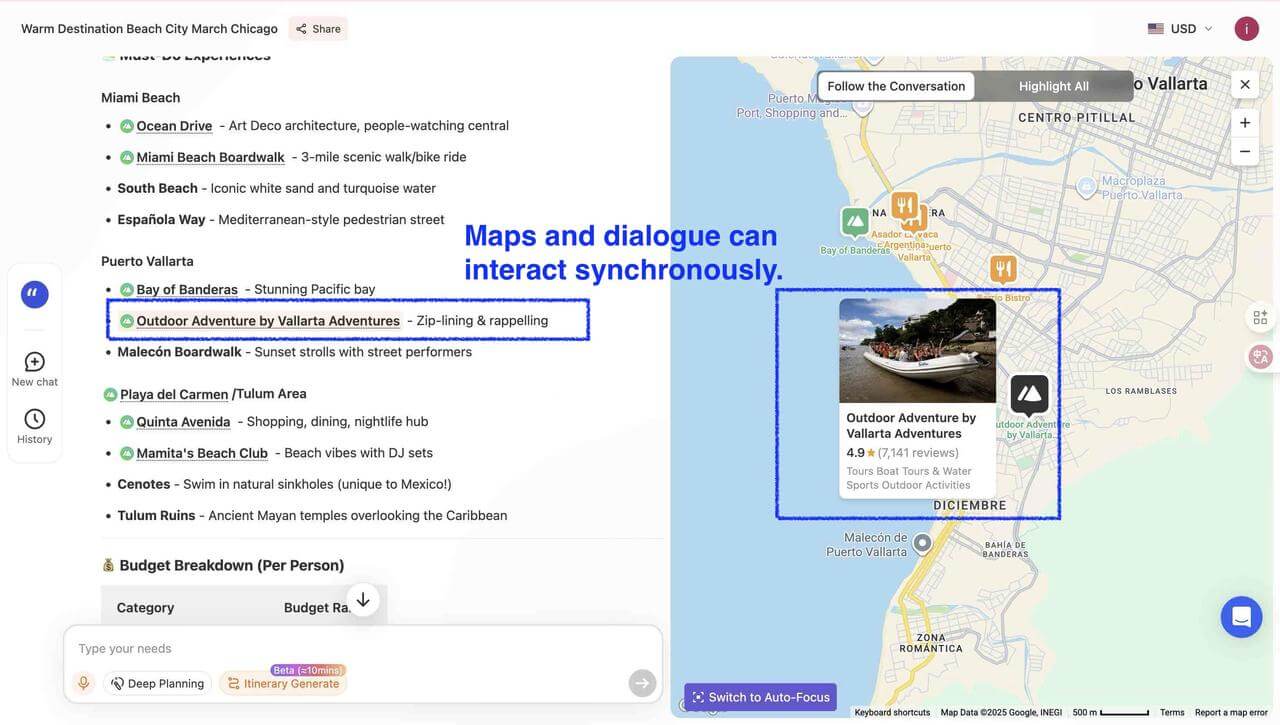
Thinking about a ten day trip somewhere warm, maybe with one city and one beach, good food, not too expensive, leaving from Chicago in March.
You might add links or snippets from places you have saved. The assistant pulls them into one space, so the chaos moves out of your mind. This is already a form of free travel planning, because the only cost was typing what you were thinking anyway.
Second, it recognizes your patterns.
The assistant starts to ask your preferences from small prompts. Do you like warm weather? Are you a food-motivated person? Do you have an interest in morning activities? It even asks thoughtful questions: “Do you prefer public transport or private transfers?” or “How important is nightlife?” Over a few minutes, your likes and dislikes become clear.
Third, it offers you an actual route.
Once there is enough information, the engine behind AI trip planning turns loose notes into an outline. It may propose a loop instead of a zigzag route. Maybe it will suggest you fly into one city and out of another, or notice that three countries in ten days will be too hurried. This is not guesswork, but rather a calculation of distance performed at speeds far beyond the capabilities of the human brain.
Fourth, it balances the rhythm of the trip.
One of the most modest but practical things is controlling pace. iMean AI can alternate heavy sightseeing days with lighter ones, flag that you have put two long travel days back to back. Or it can suggest you a night near the airport makes sense before a very early flight. That kind of balance is what often separates a trip that feels frantic from one that feels like rest. The goal here is not to remove your choice. It is to give you something to react to. A draft that you can cross out, move around or approve, instead of a blank page.
A Concrete Example: iMean AI and a Thailand Dream
Imagine a traveler who has been collecting Southeast Asian itineraries for months without taking action. Her bookmarks cover beaches and local markets. This dream itinerary combines solitude time with social activities. Perhaps it will become one of her most unforgettable travel experiences. They type into iMean AI:
Ten days in Thailand, one big city, one cultural stop, one island. I like street food, hate super early flights, mid range budget, traveling alone but want group activities sometimes.

From that one prompt, the free AI trip planner can:
- Suggest a simple structure, such as three nights in a city, three in a northern town and four on an island
- Highlight date ranges where weather is likely to cooperate
- Outline a realistic sequence of flights and transfers
- Create a day by day skeleton that mixes guided activities and free time
On the screen, this looks like a conversation on the left and an iternary on the right.
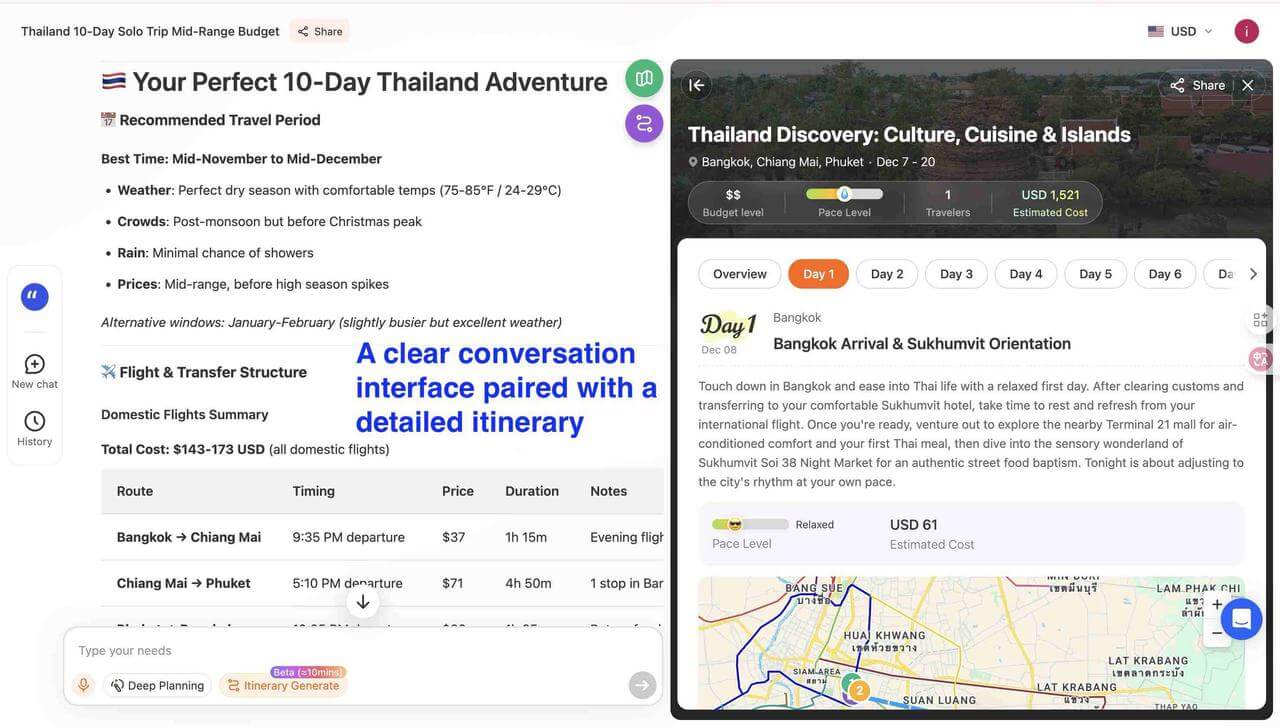
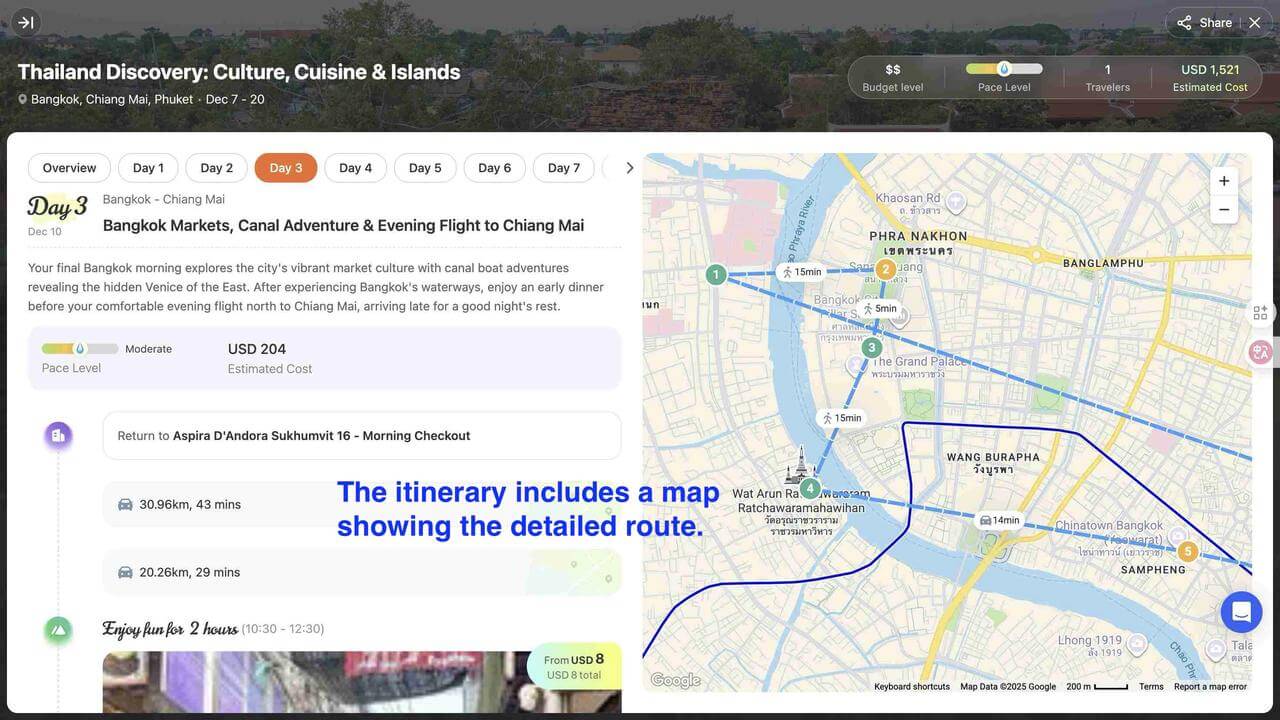
The assistant in each case is acting like an AI travel agent that listens first and proposes second, without imposing a sales script. It does not care which city you pick. It cares that the structure makes sense.
Why This Feels Different for Travelers
You may say iMean AI is just another tool. But actually your thoughts would be changed after trying it. The deeper shift lies in the psychological realm. In the past, travel planning was a heavy task. The expectation of travel is often buried by practical arrangements. By the time all reservations are made, that anticipation has already faded for a long time. With systems like iMean AI, the burden becomes lighter. Rather than spending energy searching through every option, travelers have time to focus on sifting through high-quality choices. This transformation brings back joy. More like having the best AI travel companion, it feels like a friend in the background.
Many people hesitate to talk to a human agent because they feel pressure to pay a consultation fee. A tool that allows free travel planning until the traveler is ready lowers that barrier. You can get ten versions of a trip at no cost other than time. Most importantly, this keeps human parts human. Travellers still decide whether to try a cooking class or a hike, still choose between city views and sea views, and still pick who they go with. The assistant just removes part of the grind.
From Saved Posts to Booked Trips
The distance between a saved post and a boarding pass doesn't need to be so large. Next time you find yourself wanting to explore an unfamiliar city after seeing an online post, you won't have to say “maybe someday” again. All you need to do is open iMean AI and type in your thoughts, then your personal AI travel companion will make your dreams come true.
Travelers don't have to view more content. Instead, they can create a specific itinerary. It also allows them to continuously adjust these plans through conversation based on preferences until their needs are fully met. For anyone sitting on years of travel ideas, this is the real promise of a modern trip planner AI. It does not dream for you. It does not travel for you. It simply makes it easier for the idea in your head to become a real journey on your calendar. And that is often the hardest part.
Let iMean AI build your dream trip, it's free!