

Where you stay for a trip is key to your experience. Most travelers just focus on the hotel itself, but the location matters even more. A good location can save time, reduce planning stress, and keep your daily plan running smoothly. A good AI hotel finder can not only save you time on searching and filtering hotels, but also recommend the best area to stay based on your itinerary, then pick the right hotel within it.
Why "Where to Stay" Matters More Than the Hotel Itself
A lot of travelers think that the key to a good stay lies in the hotel itself. Actually, where to stay is even more important than how to choose a hotel. A good location is not just an optional detail; it is the hub of your entire trip.
How Location Shapes Your Time and Energy
The location of your accommodation has a direct impact on your commuting costs. Think about it: after a long day of sightseeing, you just want to get back to your hotel. But it is far away, and you need at least 1 hour to get there. The next morning, you have to wake up early because the destination is still far away. Every day, you spend an extra two hours on transportation, and lose two hours of rest and sightseeing.
It also influences your travel pace. When travel time is limited, the daily schedule becomes tight. Sometimes the trip becomes a checklist of attractions, instead of an enjoyable travel experience. But if the hotel is in a good location that suits your daily itinerary, you can focus more on the journey and have more time to rest. Even if you feel tired at noon, you can go back to the hotel conveniently.
How Location Defines Your Daily Experience
Different neighborhoods in the same city can offer completely different lifestyles and travel experiences. For example, in London, Holborn is ideal for first-time visitors. Stay here, you can experience all aspects of London, from traditional meals to London fashion. Areas like Kensington and Chelsea are suitable for people who like cultural experiences, with world-class museums. For travelers who want to experience the local vibe, Shoreditch is a good choice.
A wrong location may not lead to problems immediately. But as the trip goes on, the hidden costs like the time and energy spent on commuting, frequent taxi or subway expenses, or even the missed appointments or reservations start to add up. Many travelers think they are choosing a hotel, but in reality, they are making a decision about how to choose where to stay.
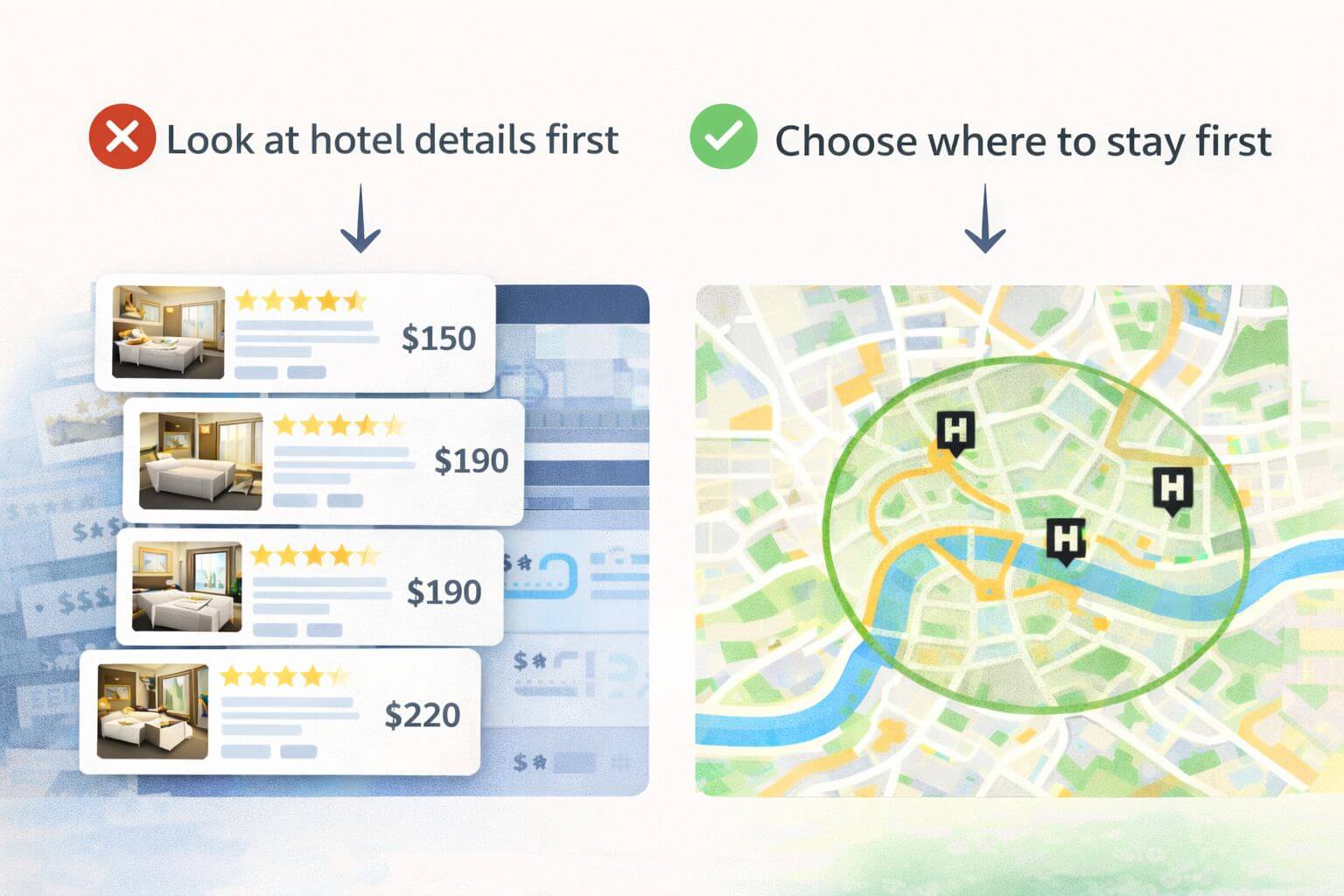
Why Most Hotel Search Tools Miss This Decision
Most hotel recommendation tools are designed to help you quickly compare options within an area you have already chosen, but not really solve the problem of where to stay.
A hotel recommendation tool assumes that you already know which area to stay in. Then they sort options based on price, star rating, or review score. But for travelers visiting an unfamiliar city, they usually have no idea which area is actually best for them. The map the recommendation tool provides only shows the locations; it does not show how staying there affects travel pace and energy.
More importantly, it can not take the overall itinerary into account. It doesn't know where you will go the next day, and also can not tell if the location is convenient for your trip. A hotel has good conditions, but a poor location can lead to a worse travel experience.
To sum up, they help you pick a hotel, not a place to stay.
How AI Thinks About Where You Should Stay
Instead of how to find the best hotel, AI hotel finders focus more on how to find the right hotel. Here is how an AI hotel finder determines where you should stay, step by step.
Step 1: Plan Around Your Trip Goals
An AI hotel finder does not start with hotel conditions or ratings like traditional hotel finders; it begins with your travel goals and preferences. Whether you want to have a relaxing holiday, an adventure journey, or a romantic honeymoon, this ensures the recommendation meets your real needs.
Step 2: Identify Optimal Areas Before Hotels
Then, the AI analyzes the location of your attractions and divides them into logical areas. Based on distance and itinerary, it chooses the best area to stay in. Whether to stay in a strong base or change hotels to follow the attractions? The AI helps you plan your route better by choosing the best areas to stay.
Step 3: Select Hotels Within the Right Areas
Once the right areas to stay are decided, the AI considers the details, like the traveler's budget, specific preferences, and the condition and rating of a hotel. That's how AI ensures the recommendation not only meets your itinerary, but also fits your personal travel preferences.
Examples: How AI Chooses Different Areas for Different Travelers
The best area to stay depends entirely on who you are and how you travel. Even within the same city, the best areas to stay can be completely different for different types of travelers.
For first-time visitors, areas with convenient transportation and concentrated landmarks are usually a better choice. It reduces decision-making stress in an unfamiliar city and makes the trip easier to plan and enjoy.
For a family with the elder and kids, a quiet neighborhood with good local facilities is better than being in a lively area. This makes daily life easier, safer, and more comfortable.
For slow travelers or digital nomads, it's better to stay in areas with a strong local vibe. Every day life happens all around. These neighborhoods make it easier for travelers to have a deep experience of local life.
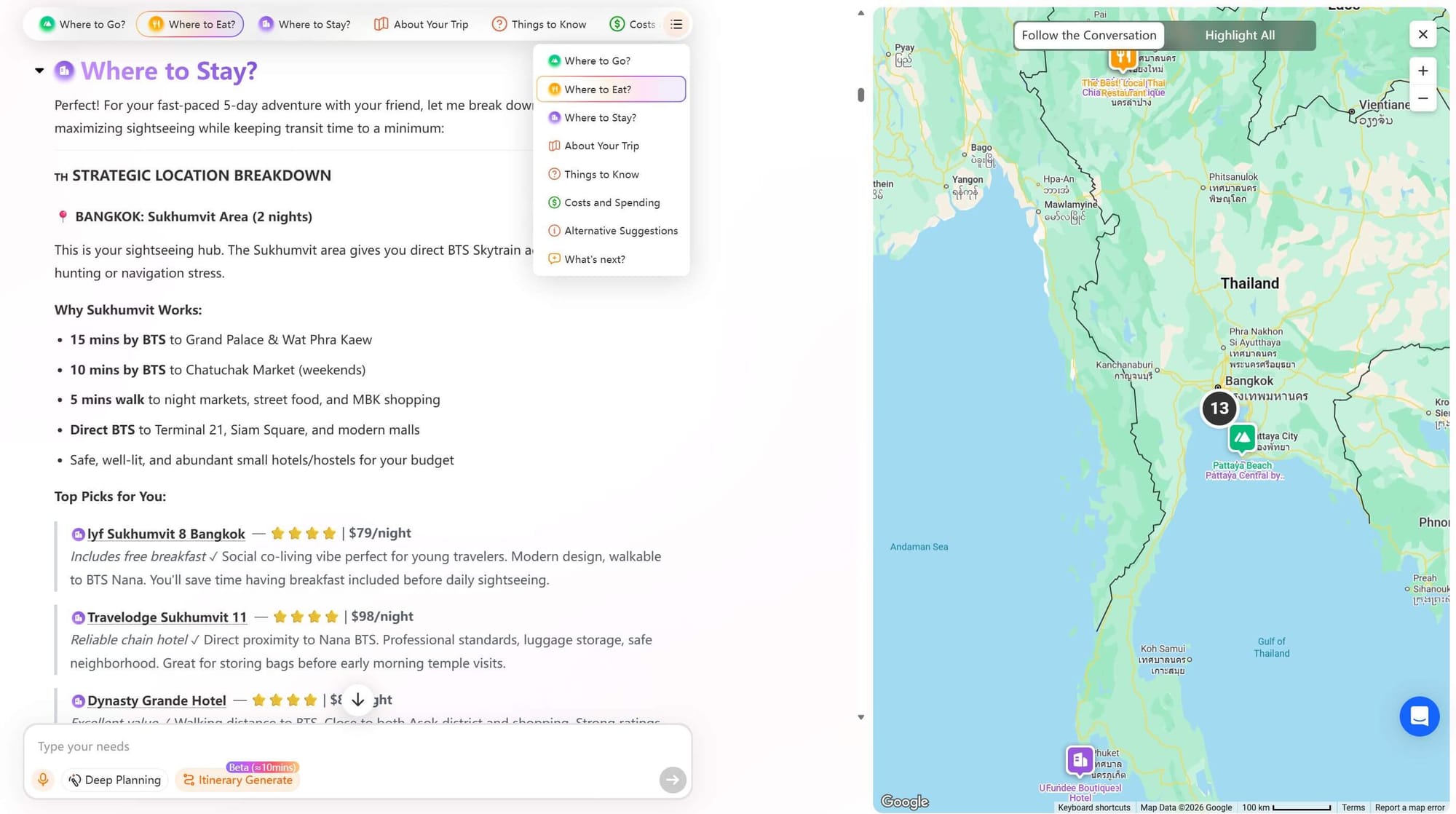
Case 1: For 2 girls who want to have a fast-paced sightseeing trip to Thailand for five days, the AI suggests areas and hotels that let them see the most sights while spending as little time as possible on transportation.
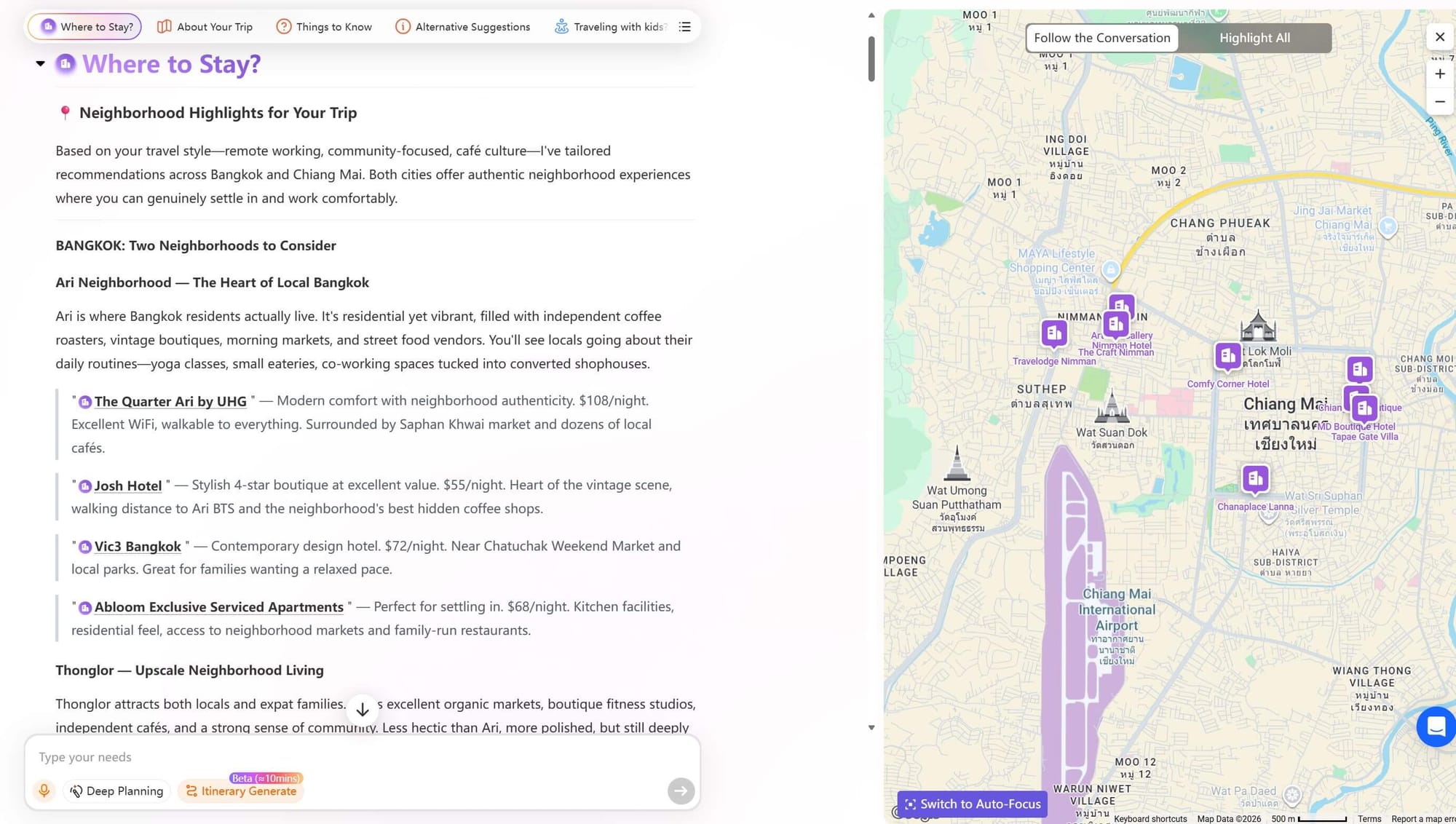
Case 2: For a digital nomad who wants to have a two-week trip in Thailand, the AI recommends areas with a strong local vibe, plenty of cafés, and a lifestyle that allows him to experience daily life like a local.
What to Look for in an AI Stay Recommendation Tool
A good AI stay recommendation tool can change how you decide, not just present you with the final result. The key is not how many hotels it can show, but whether it can help you make a better decision. These are what the best hotel finder should meet.
- It considers areas before specific hotels
A reliable AI hotel finder helps you understand which neighborhoods or districts fit your trip best and why, not just give you a list. - It considers your overall itinerary and travel pace
The AI tool should analyze your daily itinerary, like where you go today and tomorrow, and how busy or relaxed your travel pace is. - It explains why an area is recommended
Good AI hotel finders show why a certain area fits your travel plans and how a hotel meets your needs, instead of just giving you a list. - It adapts to different travel types
The AI knows that even within the same city, different types of travelers have different needs, like first-time visitors, bleisure travelers, or adventure seekers. - It should allow users to adjust their preferences
A good AI hotel finder allows users to adjust their preferences and helps them make trade-offs. Even if the itinerary changes, the recommendations can change along with it.
Final Thoughts
Picking a hotel is just a small detail. Deciding where to stay is the structural decision that shapes your entire trip. A smart AI hotel finder can help you make the decision with its ability to choose the right area to stay based on your itinerary and detailed preferences. Try it yourself and see how iMean AI chooses the right area for your trip.