While aspiring world travelers are legion, actual world travelers are harder to find. That’s because you need to be an expert travel planner, with enough money saved to book flights for multi-city trips. So, how do you master the art of booking cheap multi-city flights? If you need to plan a multi-city trip but are not sure where to start, just discover how to book multi-city flights with this guide.
In this article, I want to break down why multi-destination booking is so tricky, what mistakes people make, and how to approach the entire thing with a much more realistic, structure-first mindset. Now let’s make complex travel simpler.
Why Multi-Destination Flights Are More Complicated Than They Look
A holiday is always nice, but a multi-destination trip is a true adventure. Complex itinerary flights involve numerous factors like connections, airlines, and dynamic pricing. They are influenced by hub networks, regional demand, seasonality, and partnerships, none of which are obvious to a traveler planning a long route for the first time.
There are also numerous issues. Different carriers on one itinerary multiply the chances of errors and unprotected transfers. Lack of understanding can also turn a good deal into an expensive, disappointing experience...It becomes clear why so many people overspend or end up wasting time reworking their routes from scratch.
Reality Check: Common Mistakes People Make
I’ve watched people make the same mistakes with multi-city booking. Most of these errors aren't obvious until you've learned the hard way, so here’s the reality check that would have saved them (and me) a lot of frustration.
Reversing the Route Order
Most travelers start their plan by deciding where they want to go, not in what sequence. But order matters. A trip that goes Lisbon → Paris → Tokyo will price very differently from Tokyo → Paris → Lisbon, even with the same cities. East-west and north-south flows often have consistent cost patterns. Ignoring this is one of the biggest money traps in multi-city trip flight planning.
Booking Every Segment Separately
People sometimes buy each flight individually because it “feels cheaper,” but multi-segment trips come with risk. If one flight is delayed, you may lose the entire sequence of downstream tickets. Airlines generally don’t protect you when the bookings are separate. It’s not about fear—it’s about math. A single missed regional hop can destroy the budget of your long-haul trip.
Forgetting that Ground Transport Exists
This mistake sounds small, but it is surprisingly common. Someone wants to travel to Vienna → Budapest → Prague and thinks flights are required. In reality, trains are faster, cheaper, and way less stressful. Unnecessary flights also complicate your itinerary because they lock you into timed transfers instead of giving you flexibility.
Using Only One Booking Platform
Every booking site has its own strengths, weaknesses, and inventory sources. Relying on a single OTA or airline website for booking flights for multi-city trips often means you miss out on cheaper mixed-carrier combinations or better-timed routes. Multi-city travel almost always requires a wider search space.
Not Understanding Logical Routing
Hub-and-spoke networks can route you in unexpected directions, like flying from Bangkok to Singapore via Kuala Lumpur, or from Madrid to Athens via Istanbul. This isn’t a glitch; it’s how airline networks work. Not understanding this leads to picking routes that waste time and assuming “direct-looking” routes will be cheaper when they aren't. Most people don’t know these patterns, which is why multi-city bookings often feel random or unfair.
Actionable Guidance For Booking a Multi-city Trip
Pick a logical route
If you want to save money on flights and make the most of your vacation time, it’s vital you think about your route logically. Put simply, you want to spend as little time in the air as possible. By the way, adjusting travel dates and considering alternative airports can unlock better flight deals.
Extend existing layovers by a day or two
If you’re lucky enough to land a layover in an appealing destination, then simply contact your airline to extend your layover into a stopover. This way, you get to add a whole extra leg onto your trip without shelling out for another flight.
Choose stops with similar climates
When you’re booking a multi-destination trip, packing to suit your itinerary can be tricky. However, it becomes next to impossible if you choose destinations with vastly different climates. For example, it would be very difficult to pack for a multi-destination trip that incorporates both a sunny coastal leg and a skiing trip.
Adding extra luggage to your booking is expensive, and on a multi-destination vacation, you’ll have to pay this charge for more than two flights. Book multi-stop flights within the ideal 4-8 month window for best prices.
Use flight comparison tools
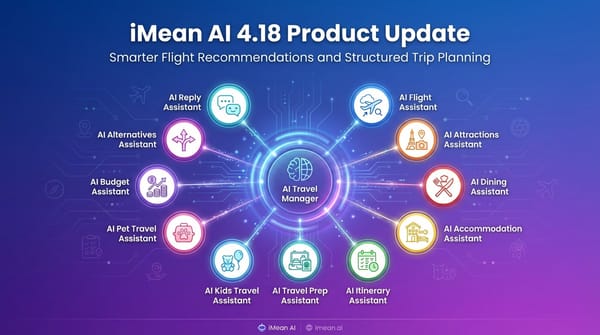
While you can book multi-city itineraries with one airline, you’ll likely find the best deals using flight search tools like iMean AI. These platforms scan all available flights from all airlines, giving you much more choice. You can then play around with your destinations and flight dates until you find the best-value tickets.
Don’t overpack your itinerary
While a multi-destination trip gives you the chance to see a lot more than a standard vacation, don’t overpack your itinerary. Be realistic with how much time you’ll need in each destination and give yourself enough time to actually enjoy each stop.
How AI and Smart Tools Actually Help
iMean AI shines in multi-city planning, not because it can magically deliver a “perfect” price, but because it can help you think more structurally.
It helps you see the structure you can’t easily see yourself.
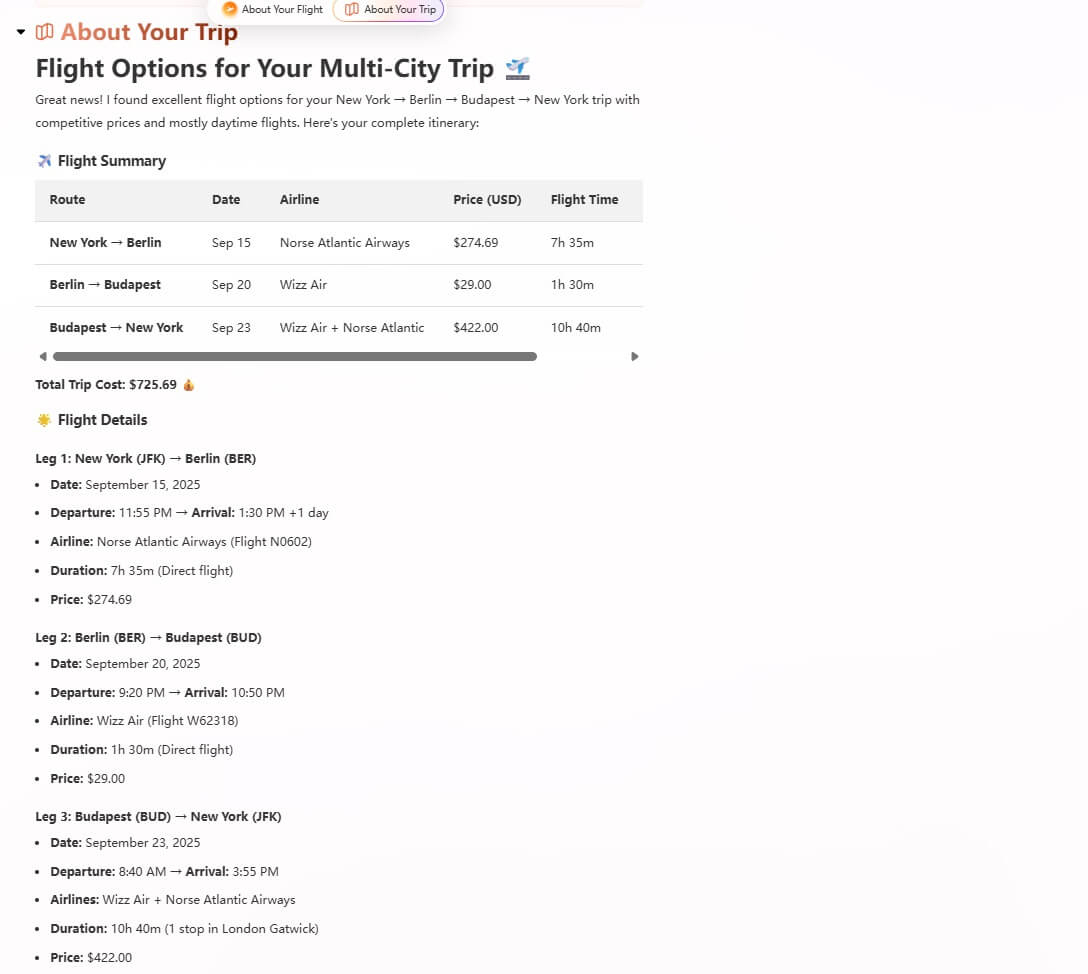
A good flight planner can reorganize your cities into a cleaner sequence, and it can do this in one sweep. This single step often eliminates the wasted detours, duplicated flights, and backtracking that make complex trips so costly and exhausting. iMean AI stands out here because its routing suggestions are grounded in real flight logic rather than pattern-matching guesses, so you’re less likely to get unrealistic city orders or non-existent connections.
It compares combinations humans rarely think to test
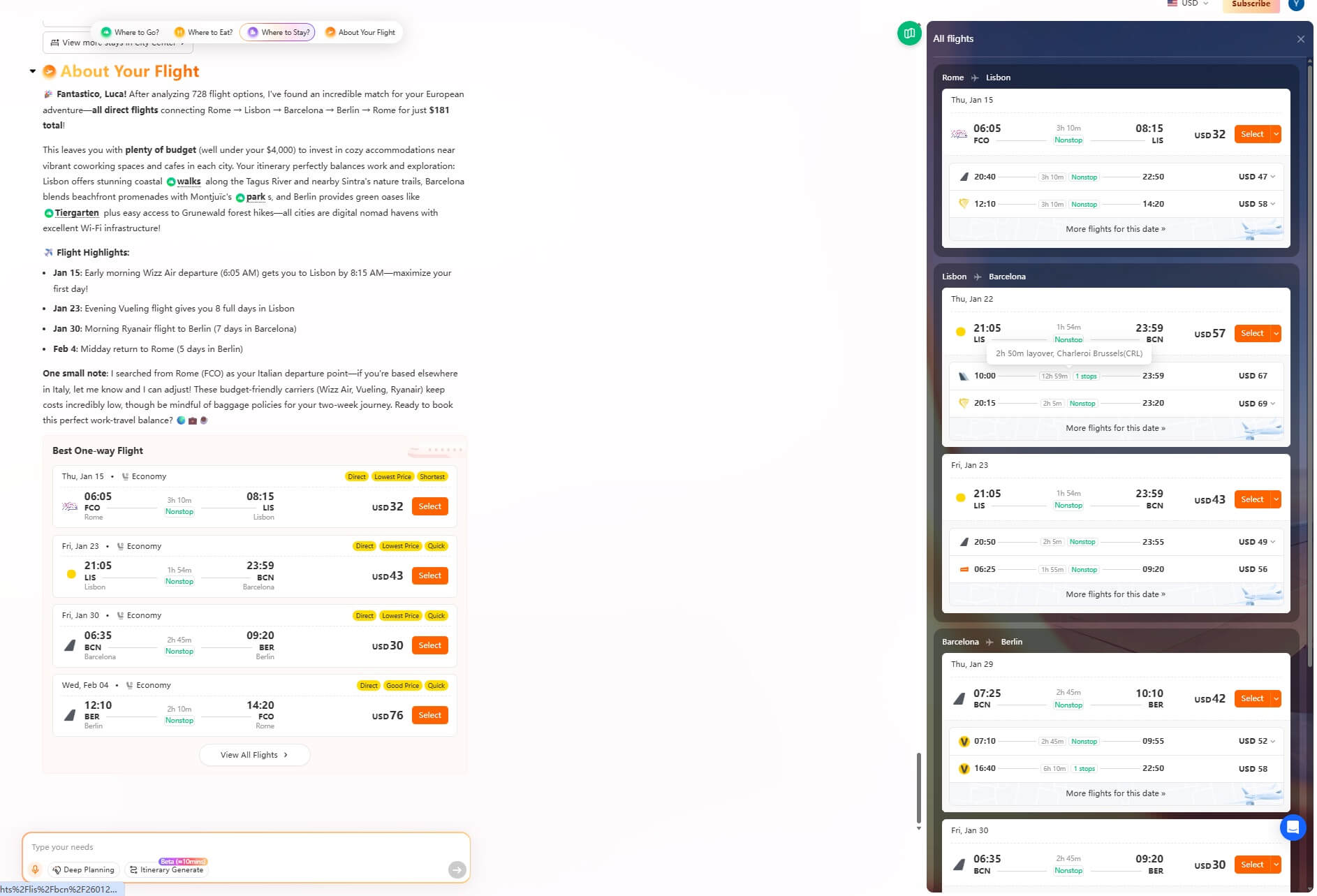
People often overspend because they search one OTA or stick to the “multi-city” form without testing open-jaw or mixed-carrier stitching. Since iMean AI isn’t restricted to a handful of partners, its comparisons feel more like a transparent scan of the ecosystem rather than a curated list, which avoids the classic mistake of assuming the first platform’s multi-city quote is the “true” price, suggesting a more logical airport pair.
It clarifies trade-offs early
iMean AI will research your multi-city trip flight planning before you book anything. A smart planner can flag routes that have inconvenient airport transfers, unrealistic timing, or fragile stitching between separate tickets, helping you avoid the common trap. But this doesn’t mean iMean AI decides for you or guarantees the lowest fare. It simply brings the real constraints to the surface so you’re making informed choices rather than hopeful guesses.
Final Thoughts
Planning a multi-destination trip doesn’t have to be a stressful endeavor. A once-confusing itinerary can become surprisingly manageable if your route is logical. iMean AI makes this even smoother by helping you structure complex multi-city travel in a realistic, flight-aware way. At the end of the day, smart planning beats lucky pricing. If you can structure your destinations clearly, the rest falls into place.
Ready to plan your trip with less stress and more clarity? Try iMean AI and see how much easier multi-city planning can be.