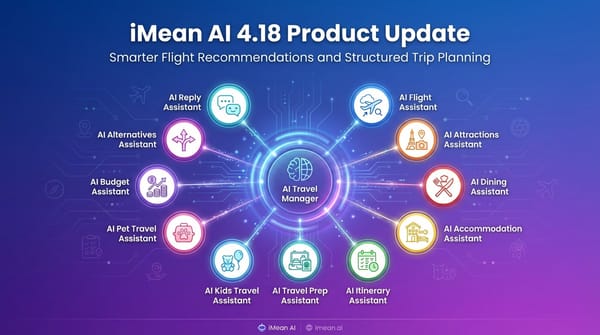

Finding the right hotel is such an important thing in the process of preparing a trip. Whether I can find a hotel that I am delighted with is even a prerequisite for me to decide to set out. Basically, the right one is not just the cheapest one. In addition to the price, the location, decoration, sanitary conditions, service attitude, etc. of the hotel also matter.
I've been to over 20 countries so far, and after years of traveling, I have a lot to talk about, such as what makes a hotel right for me and how to find the right hotel with my practical AI hotel finder. If you want to gain a solid foundation for booking lodging for your next trip, let's proceed.
Why “Cheapest Hotel” Is Often the Wrong Choice
Hotel booking is not all about finding the lowest price. The more I traveled, the more I learned that the cheapest option usually came with some catch. Price alone rarely tells the full story because the low price usually reflects hidden trade-offs in location, safety, cleanliness, amenities, and overall guest experience, leading to more time and money spent.
When people ask me how to choose a hotel, I always say the same thing: think about your day-to-day routine during the trip. Instead of focusing on saving a budget, you'd better define your needs and make balanced choices where price and experience meet in the middle.
What Most Hotel Search Tools Get Wrong
After years of using traditional hotel search platforms, I noticed the same recurring problems.
- Information overload
Most tools present every possible option to you and expect you to determine what matters. Of course, hotels are so personal, but it becomes a wall of prices, ratings, and endless filters. Instead of simplifying the process, it makes you feel like you’re working your way through a spreadsheet.
- Location transparency
Many hotel listings highlight a “central location” that turns out to be central only if you’re a bird. I’ve had hotels described as “close to the city center” while I still need to walk 15 minutes to transfers. The map wasn’t wrong, but the description was misleading.
- Personalization
A typical search tool can’t really understand the kind of trip you’re taking. Everything is reduced to general categories like “family-friendly” or “good for couples,” but none of that explains whether it fits your actual needs. On top of that, some platforms only highlight hotels from partners or specific booking sites, which naturally narrows your options.
How AI Changes the Way You Choose a Hotel
Actually, AI may help our hotel choices earlier than you think. Well, early in 2025, Google rolled out a major change. It started prioritising the AI overview more, rather than showing hotel websites directly in search results.
When I first used a hotel finder with AI, I didn't expect much. I know how to use Google and set filters on hotel sites. I thought that's enough. To my surprise, it designed a perfect hotel guide through simply telling it what I needed, like I want to live in a comfortable place near public transportation while travelling, not too far from supermarkets, within a certain budget. That kind of context is hard to express through dropdown menus, but incredibly easy through conversation.
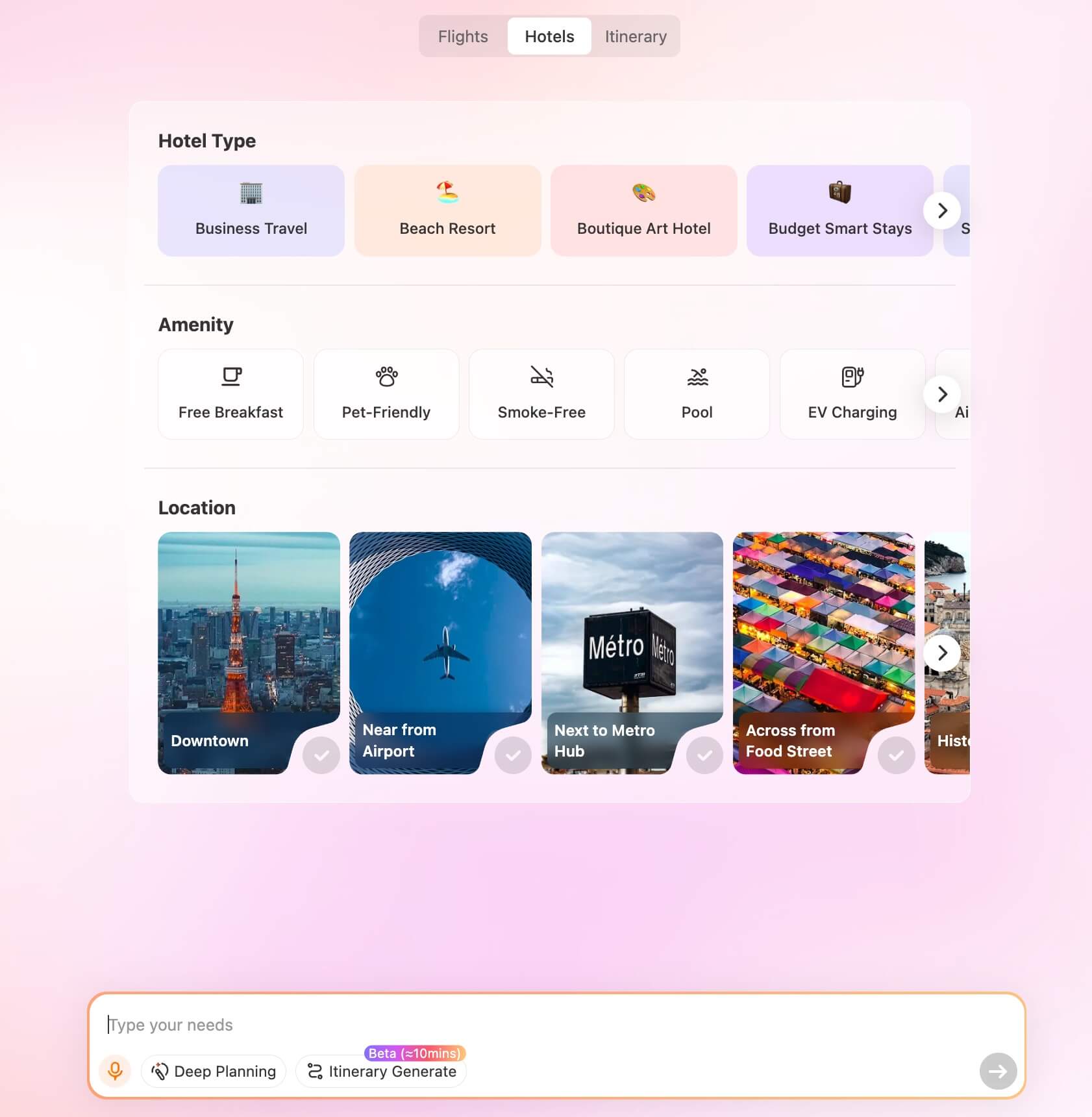
One of the best hotel finders, iMean AI, has become my necessity for travel. It's an AI-powered hotel recommendation tool that pulls from across the web instead of limiting recommendations to a particular booking site. Different from general-purpose AI tools, it doesn’t hallucinate nonexistent hotels or misplace neighborhoods, which makes me feel reliable.
What to Look for When Using an AI Hotel Finder
In my opinion, a good AI hotel finder should work in the following 3 activities: planning, booking, and on-trip assistance.
- When you’re still in the planning stage, the most helpful thing an AI hotel finder, like iMean AI, can do is make sense of your real needs. Most people think they want “a hotel,” but what they actually want is “a hotel that fits the trip I’m trying to have.” That’s why it’s important to look for an AI hotel finder that understands context.
- During the booking stage, accuracy matters more than anything else. A solid AI hotel search tool should show you hotels based on real geographic data. The system should also help you filter hotels by the facilities that actually matter to you. The point is that the AI should prioritize the few details that affect your comfort, and help you narrow things down in a way that feels personal and realistic rather than mechanical.
- Once you're on the trip, good AI support shows up in the way the recommendations continue to make sense. Even though the booking is done, you still want a system that helps answer questions about the area you’re staying in: nearby cafés, convenient places to grab a quick bite, or neighborhoods that are nice to walk through at night.
These are the reasons I like using iMean AI. When the experience is intuitive, it becomes easier to adjust your plans on the go without getting lost in endless searches.
A Simple Example: Choosing the Right Hotel with AI
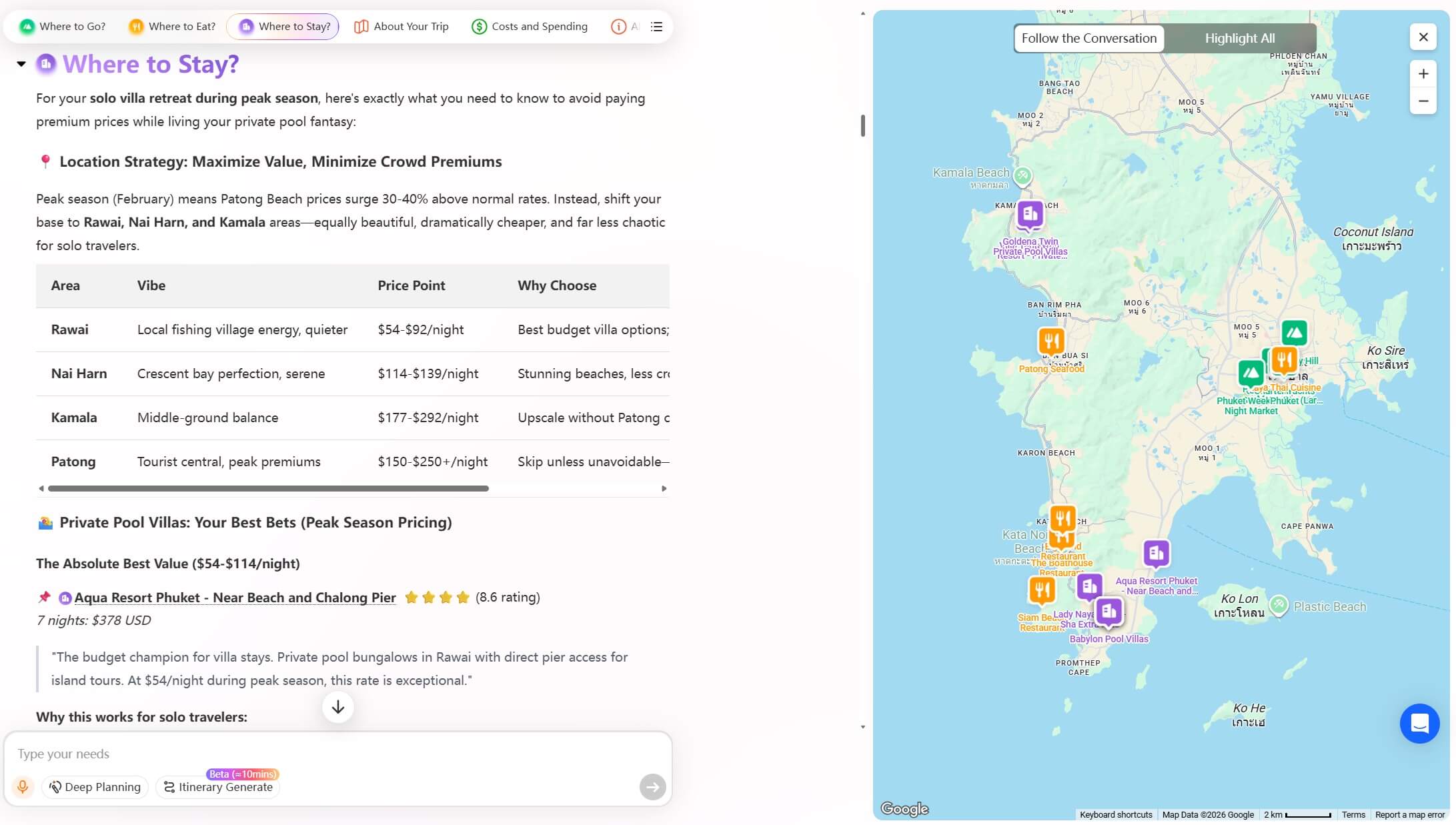
Lately, I've been planning a solo trip to Phuket. I usually spend hours picking recommended hotels on social media and comparing hotels across three or four different platforms, like most people. But iMean AI changed the process.
It's hard for me to find a villa with my favorite decoration style. It usually only costs 220 dollars a night, but it costs 500 dollars a night during my planned travel time. I don't want to pay the premium, but it really drains me to find another. After that, I asked iMean AI for help.
After I told iMean AI what I thought, it provided me with a comprehensive guide.
Final Thoughts
Finding a hotel doesn't have to feel like a guessing game. When you know what you want and use AI hotel search to organize the noise, the whole process becomes calmer and more intuitive. You don’t need the perfect deal or the lowest price. You just need a place that fits the trip you’re planning. That’s the real value of using tools like iMean AI. It doesn’t decide for me, but it makes the decision clearer.