
Short trips of three to five days often feel easier to plan than longer vacations, but they are actually trickier. Limited time leaves little room for mistakes, and one misstep can throw off the whole schedule. This article shows why short trips are prone to planning pitfalls and shares a smart approach that focuses on priorities, travel time, and flexibility. It also explains how AI can ease the stress, reduce repeated adjustments, and help travelers get the most out of every day.
Why Short Trips Are Harder Than Long Ones
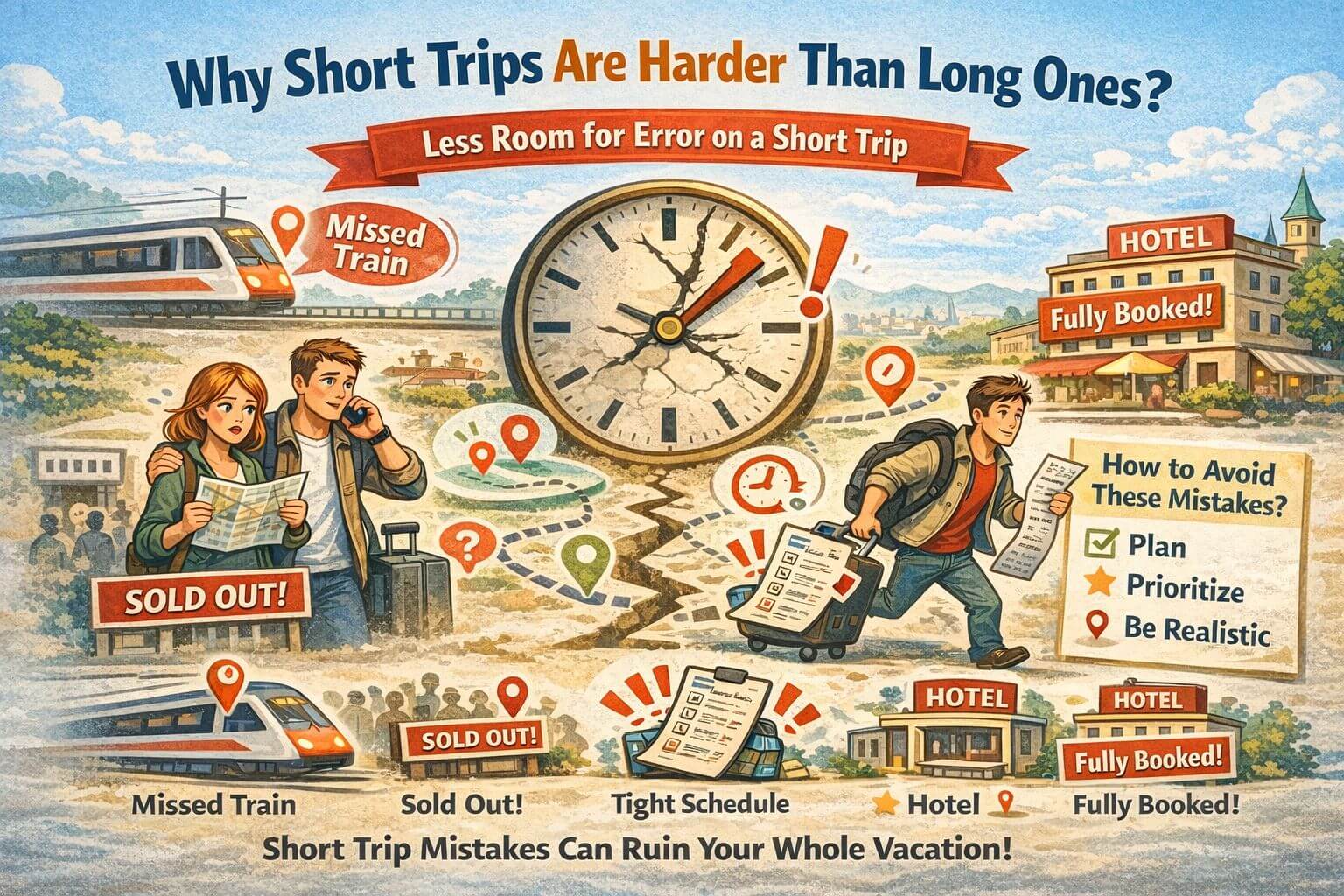
A short trip planning seems much easier than planning a longer one because of less distance and fewer days. But in reality, it leaves much less room for error. A single mistake, like underestimating transit time or missing the train, can ruin the day or even the entire trip.
When planning a short travel itinerary, some travelers assume the itinerary can be adjusted flexibly. They think, "We can figure it out when things go wrong." This mindset is common in long trip planning, where there is more time and room to adjust. But short trips punish bad planning much faster.
The Most Common Mistakes in 3–5 Day Trips
For a 3-day trip planning or a longer 5-day trip planning, mistakes happen fast. And different types of travelers tend to make different kinds of errors.
Casual travelers may underestimate the transit time between places or miss pre-booked tickets. Without a plan, they simply search for nearby attractions as they go. By the time they finally get to the attractions, tickets are often already sold out. They can only watch others go in and enjoy the attraction. So, they move to another spot instead… When they get home, they realize that the short vacation is over, and time and money have been spent. But they often feel it isn't worth the time or money.
Travelers who prioritize efficiency try to pack as much as they can into a 3-5 day trip. An overpacked itinerary without buffers for unexpected delays leads to no room for error. If they underestimate the transit time or the time an activity will take, the original plan becomes difficult to follow. Some travelers change hotels frequently to stay closer to the next day's attractions, but they overlook the time cost of frequent moves. Not to mention that most of the hotels can only check in in the afternoon.
Planning a trip requires more attention than it seems. The common mistakes we mentioned above are key to a smooth and feasible itinerary. So, how to plan a short trip in a smarter way?
A Smarter Way to Plan with Limited Time
Planning a short trip is harder than we thought, with limited time and little room for adjustment. The key is to focus on the most important parts of the short trip itinerary planning and leave some flexibility.
✨Choose one strong base
Avoid the time and transportation costs of frequent hotel changes. Travelers don't have to worry about checkout times or wandering around with their luggage before check-in. A stable place to stay brings a sense of security.
✨Limit daily highlights
Focus on fewer key attractions or activities each day to avoid worrying about rushing to the next stop. This allows travelers to move at a comfortable pace and truly enjoy each experience. They can have a deeper and more meaningful experience with enough time. In a short trip, it’s not about seeing more, but about making each experience meaningful.
✨Build around travel time, not attractions
A short trip leaves less room for error. Travel time between attractions and stops takes up a lot of time and energy. It's better to plan a short trip based on the distance and route between stops rather than just the attractions themselves. Attractions in the same direction can be scheduled on the same day.
✨Leave space on purpose
A flexible itinerary includes some key activities and extra time. Extra time gives room for exploring and unexpected moments, and also provides a buffer for delays or changes. Travelers can slow down when they feel tired, and add some extra activities if they have time and energy. Short trips need flexibility, which long trips naturally have, but short trips do not.

How AI Helps with Short Trip Planning
AI has changed the way people plan trips. It saves people from being overwhelmed by a sea of information and the headache of organizing a logical itinerary. But AI tools are not all-powerful. Even the best AI planners cannot work well without human decision-making. The best way to plan a short vacation is by combining human decisions with an AI trip planner.
What AI Can Help You
For a short trip, an AI trip planner can quickly select the key attractions for each day based on the traveler's preferences. Whether you want a tight schedule or a relaxed one, the AI trip planner can suggest the right rhythm for your trip. Also, it takes into account the location of each attraction, activity, and suitable accommodation. This minimizes unnecessary detours and reduces the need to adjust the itinerary repeatedly. iMean AI is designed to help structure trips when time is tight.
What AI Cannot Help You
No matter how automated, it's just a tool. It can't decide what you truly want from a trip. An AI trip planner understands travelers' needs and preferences based on the prompt they input and reasoning over vast amounts of data. For example, if travelers don't know exactly what matters and what kind of trip they want, AI may assume their preference as a popular one, which may not meet their real needs. A "must-visit" attraction on the internet is not truly a must-visit attraction in a traveler's mind.
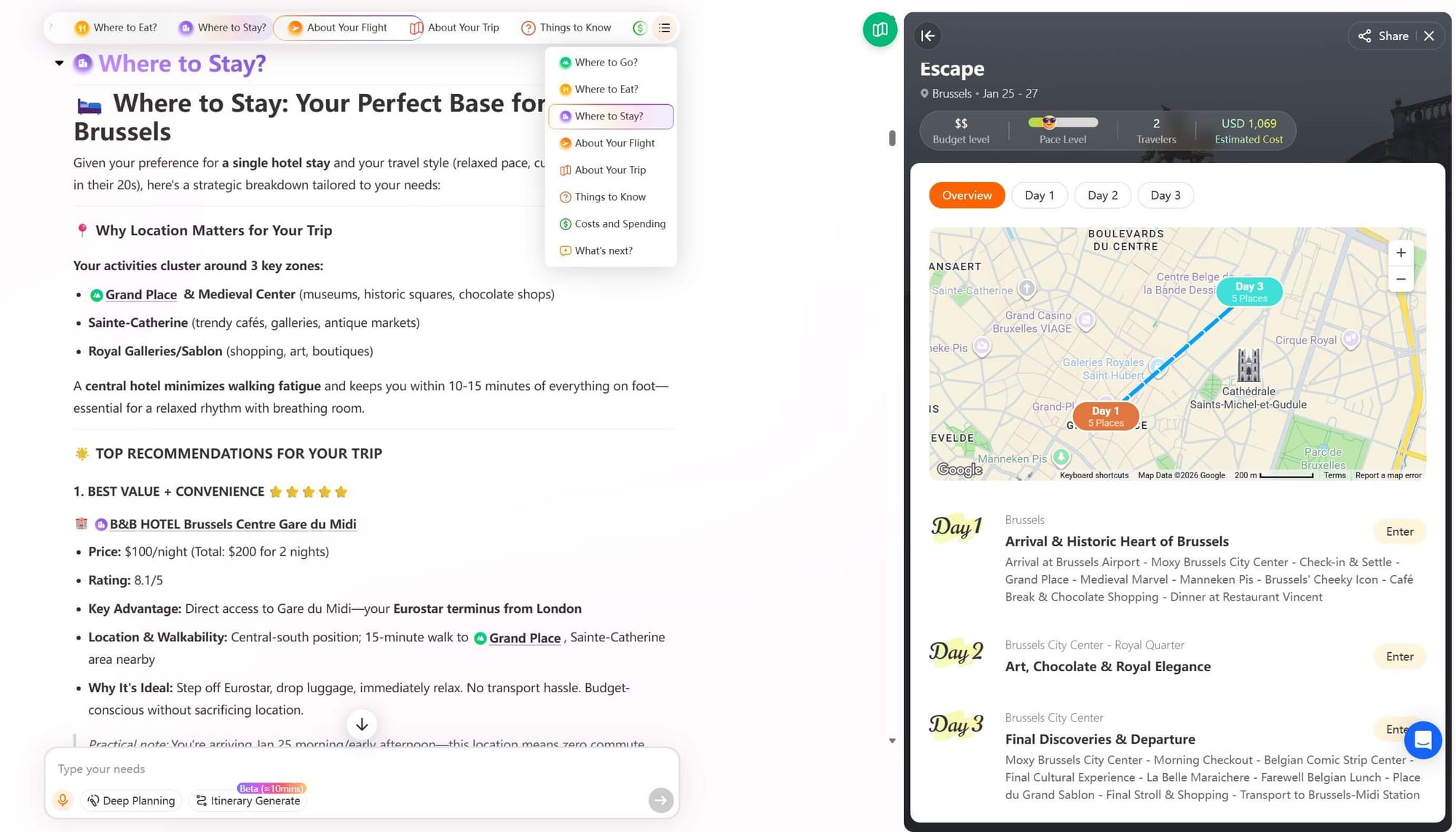
A Sample Prompt for AI Short Trip Planning
I am planning a ____day trip from _____ to ____. My travel dates are ___. The trip is for ___ people (Please specify the travelers’ ages and genders). It's better to avoid changing hotels frequently. I want a relaxed/moderate/packed travel pace with ____ key activities per day. Build the itinerary around travel time and routes rather than just listing attractions. Leave some flexible time each day for rest or adjustment for unexpected situations.
This is a sample prompt based on the short trip planning advice above. For real use, you should add more details according to your own preferences, like which type of activities you prefer or which one is your must-see attraction. It doesn't matter that you don't have a clear goal at first. You can chat with the AI trip planner, let it help you analyze, then make your decisions.
Final Thoughts
When your next short getaway approaches, try planning it using your own decisions together with an AI trip planner. Focus on what matters most, leave room for flexibility, and let AI help organize the details. Combining your judgment with AI can save time, reduce stress, and make every day of a short trip more enjoyable. With the right approach, even a three to five-day trip can feel smooth, meaningful, and fully rewarding.