If you’ve ever felt stuck about your solo trip planning, you’re not alone. It's aggravating and exhausting to have to come up with all the ideas and not have anyone to point out logistical problems or suggest alternatives that may end up being so much better. In this article, I want to talk about how to plan a solo trip without overthinking every decision, and I hope this helps someone in the planning phase of their solo trip.
The Most Common Solo Trip Planning Traps
Planning alone easily drains people due to all the logistics and having to find their way in unfamiliar cities while navigating different cultures. Here are the traps I see most often.
Trap 1: Thinking You Must “Get It Right on the First Try”
This is the kind of pressure that sneaks up on you. Instead of browsing casually, you end up over-analyzing every early decision: dates, destinations, routes. If we could, we would all wish to make the right decision at first, because once we make a mistake on a detail, the whole trip needs to change. It’s not the number of options that stalls you; it’s the weight you put on each one.
Trap 2: Information Overload
Whenever I go to a new place, I want to see the things that are locally coveted, not the generic tourist traps and crowdsourced BS. It feels very difficult to make the most out of your time traveling, because you spend half the time sifting through the internet looking for unique things to do in a sea of boredom. 'Hidden gems' are everywhere on the internet.
Trap 3: Anxiety About Balancing Budget, Pace, and Experience
It seems that everyone experienced what is commonly referred to as FOMO—fear of missing out. You want to have full control over your trip, ensuring you don't miss anything and make the most of it. Create a bunch of destinations, stops, and rush to complete the itinerary. It causes pressure to doubt yourself, that if you make the 'smart choice'.
What Actually Matters When Planning a Solo Trip
When you travel alone, every choice rests solely on your shoulders. You’re the researcher, the risk assessor, the emotional support, the logistics manager, and the person who has to execute the entire plan. You’re the only one responsible for your comfort and security. That's why solo travel triggers overthinking.

Finding a Travel Pace Works
Your travel pace is the foundation of the entire solo travel planning, and basically, everyone has their own preference for travel. What's more, I personally think the travel pace also depends on the location itself. Solo travelers especially need to get the travel pace right. When you’re alone, exhaustion hits faster and deeper. So it's better to determine on a right travel pace in advance.
Knowing Your Real Priorities Instead of Copying Other People’s Trips
It’s deceptively easy to adopt someone else’s priorities: a friend’s itinerary, a YouTuber’s “must-see,” a list from a blog. But the best solo trips happen when you’re brutally honest about what you actually enjoy. If your favorite part of travel is coffee culture and long walks, you don’t need a museum-heavy itinerary just because it’s “standard.” Instead of stuffing in activities “just because they’re famous,” we should plan a trip that feels like ourselves.
Choosing Logistics That Make Your Trip Easier, Not Harder
Logistics are the backbone of every smooth solo trip. Unlike preferences or pacing, which are emotional and creative, logistics are practical, and they create structure.
Things like where your hotel is located, how daily routes fit together, etc. They directly influence your comfort and sense of security. When logistics are solid, everything else becomes easier: meals, activities, transit, timing. When logistics are messy, even a well-planned itinerary feels stressful.
How AI Reduces Decision Fatigue for Solo Travelers
As someone who works closely with travel technology, I’ve seen how iMean AI, as a well-designed AI travel planner, can help reduce overthinking without taking away the freedom of planning. And to be clear, the goal isn’t to replace human judgment. The goal is to reduce the mental load that makes solo travelers second-guess everything.
To explain this more clearly, let’s look at how AI helps through three natural travel pain points.
Cutting Through the Early Overwhelm
When you’re planning from scratch, the hardest part is getting from “I want to go somewhere” to having a direction. An AI conversation removes that initial friction because you don’t need to structure the plan yourself. You simply describe what you like, what you dislike, and how long you’ll be gone. Based on that, iMean AI gives you a starting framework so you’re not staring at a blank page.
Simplifying Endless Comparisons
Solo travelers tend to compare everything, like hotels, routes, neighborhoods, and flight times, because nobody else is there to help validate decisions. iMean AI reduces the need for this by filtering options based on your real preferences. Instead of scrolling through dozens of hotels or flights, you see a guide that aligns with your comfort level, location needs, and general expectations.
This doesn’t remove your power to choose. It just means you’re choosing from realistic, relevant options instead of drowning in the full internet.
Turning Scattered Ideas into a Coherent Plan
Most travelers have no shortage of ideas, TikToks saved, screenshots collected, notes piled up. The hard part is turning that chaos into a day-by-day itinerary that flows well. iMean AI excels at this. It organizes your interests, locations, and timing into a structure that’s actually doable on the ground. Not rigid, not overly perfect, just logical.
This is especially helpful for solo travelers who want a plan that feels safe and steady but still flexible enough to change.
A Simple Example: Planning a Solo Trip with AI
To make this real, here’s exactly how a solo trip might come together using an AI trip planner like iMean AI.
- Step 1: Tell the AI What You Want
I started by describing the basics, including the time, budget, destinations, and my personal requirements. I just talked the way I’d talk because it’s just like a conversation with a friend who is a local in French.
- Step 2: Get a Structured, Easy-to-Use Plan Based on iMean AI’s Agents
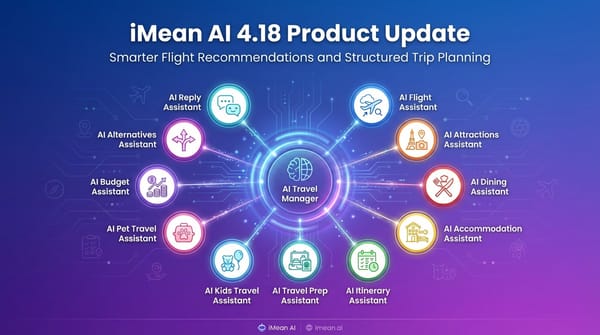
This is where the system’s behind-the-scenes collaboration becomes useful. iMean AI’s agents, like flights, accommodations, activities, dining, itinerary structure, and preparation, work together to shape everything into a coherent plan. Based on the details I described, it gave me a detailed and comprehensive itinerary.
It also includes links I can actually use: booking pages, flight options, and other practical resources, so I don’t have to go hunt them down separately.
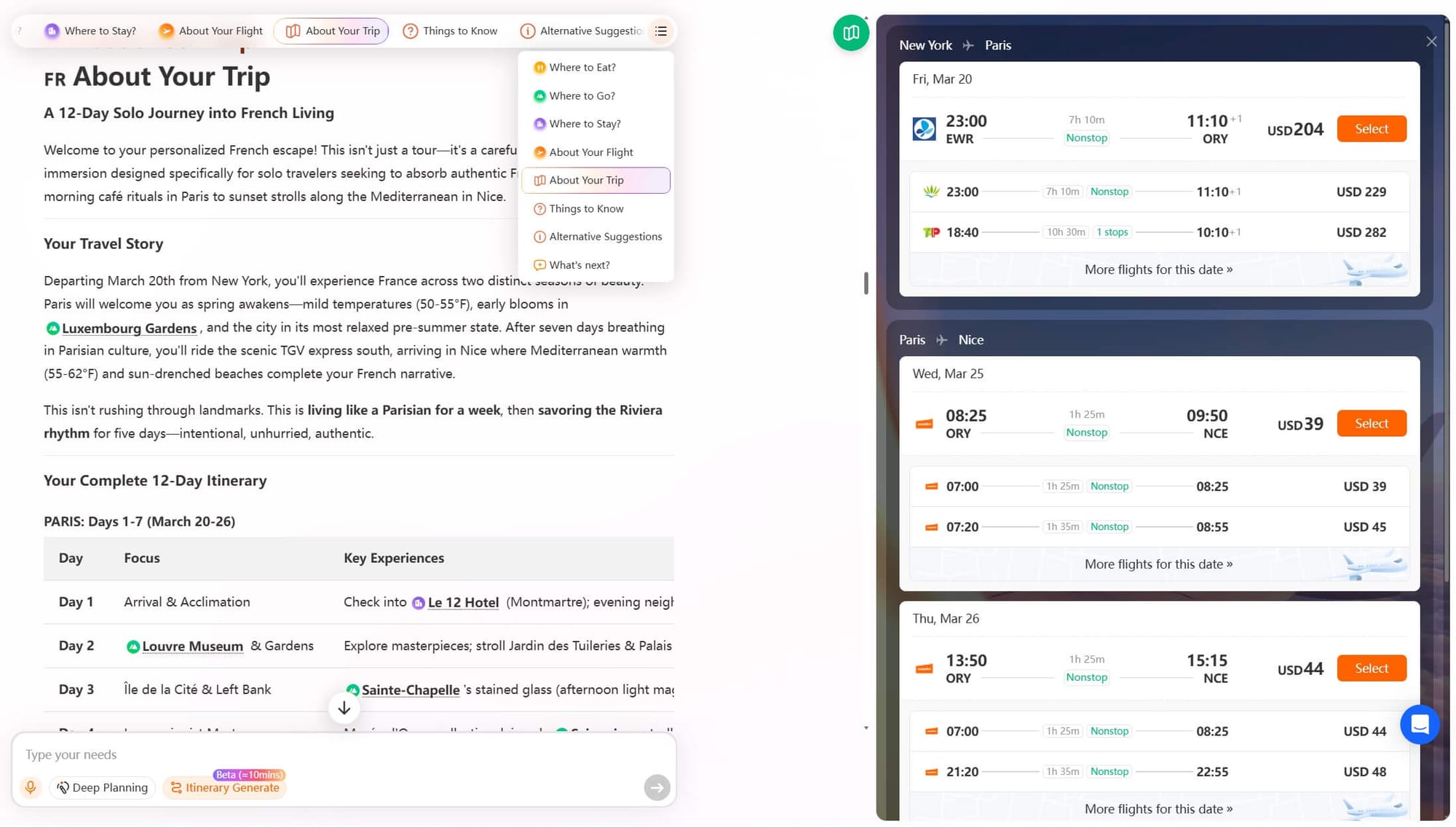
- Step 3: Fine-Tune Until It Fits Your Style
Once I see the plan, I start making small edits because I want to try more French food and spend more time on the beach. The AI updates the itinerary immediately, adjusting routes, timing, or hotel choices based on what I say. Here I got the final version of my itinerary.
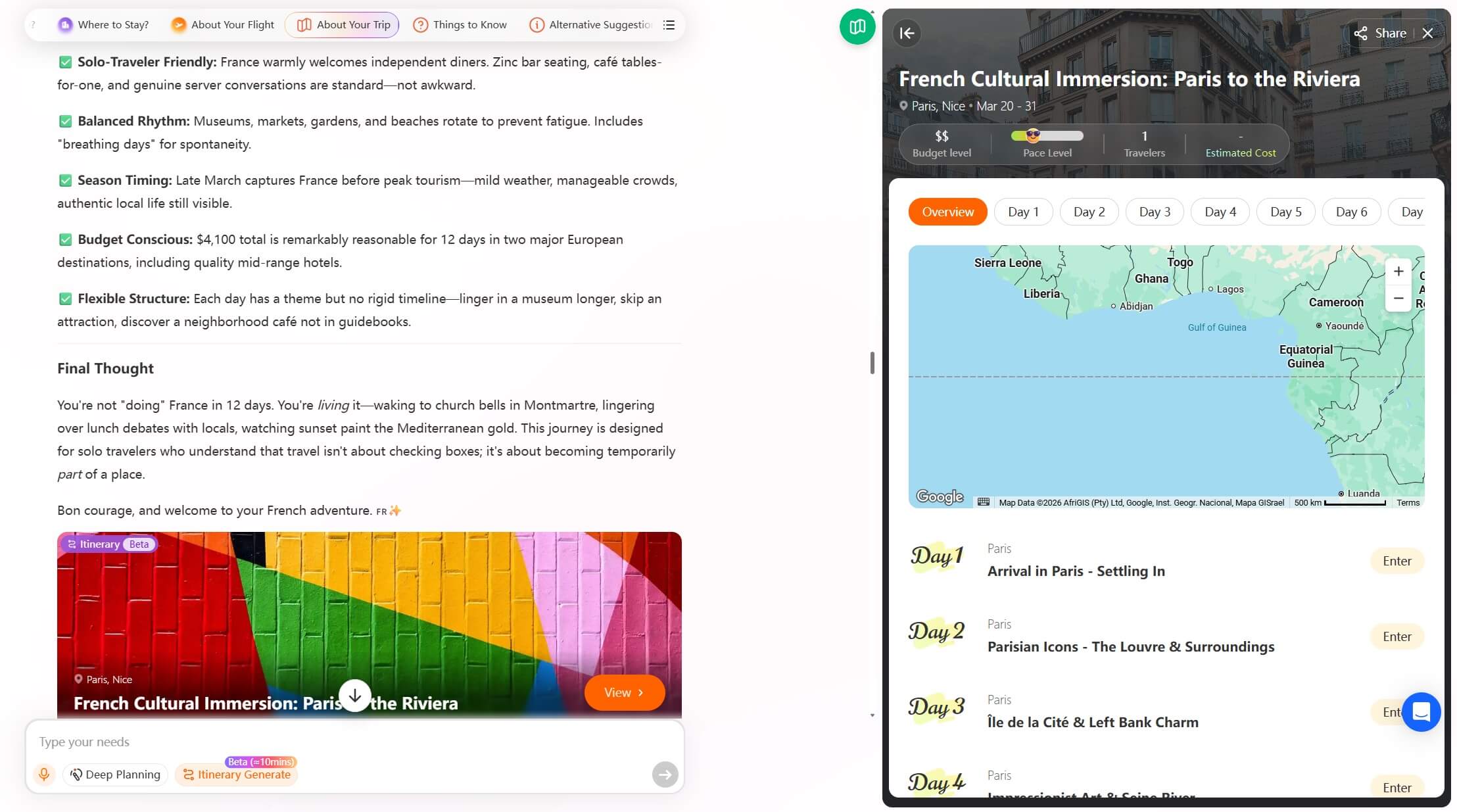
Final Thoughts
Solo travel doesn’t need to be complicated. AI travel planners like iMean AI don’t replace your instincts. They simply help you avoid the spiral of comparing everything alone. If anything, solo travel becomes more enjoyable when you spend less time overthinking and more time imagining the moments you’re excited about. That’s the part that matters most. Life is so short; the only wrong way to do it is to not do it at all. At the same time, iMean AI'll always be by your side.