At iMean AI, we have always believed that real travel planning is complicated. It is not only about flights or attractions. It is about time, budget, preferences, people, and many small details that matter in real life.
In version 4.18, we focused on two directions that users care most about.
The first is better flight recommendations.
The second is a more structured and reliable planning experience.
This version is a mid-cycle update, but it changes the way our system understands users and builds plans.
Smarter Flight Recommendations
In the past few months, we spent time reviewing user feedback and user behavior data. Many users told us that flight recommendations were useful, but they sometimes felt too simple. The logic was often driven by a small set of factors. That worked in some cases, but it did not always match real travel needs.
We learned one clear lesson.
People do not only want a cheap flight.
People want the right flight for their situation.
So in version 4.18, we redesigned our flight recommendation logic.
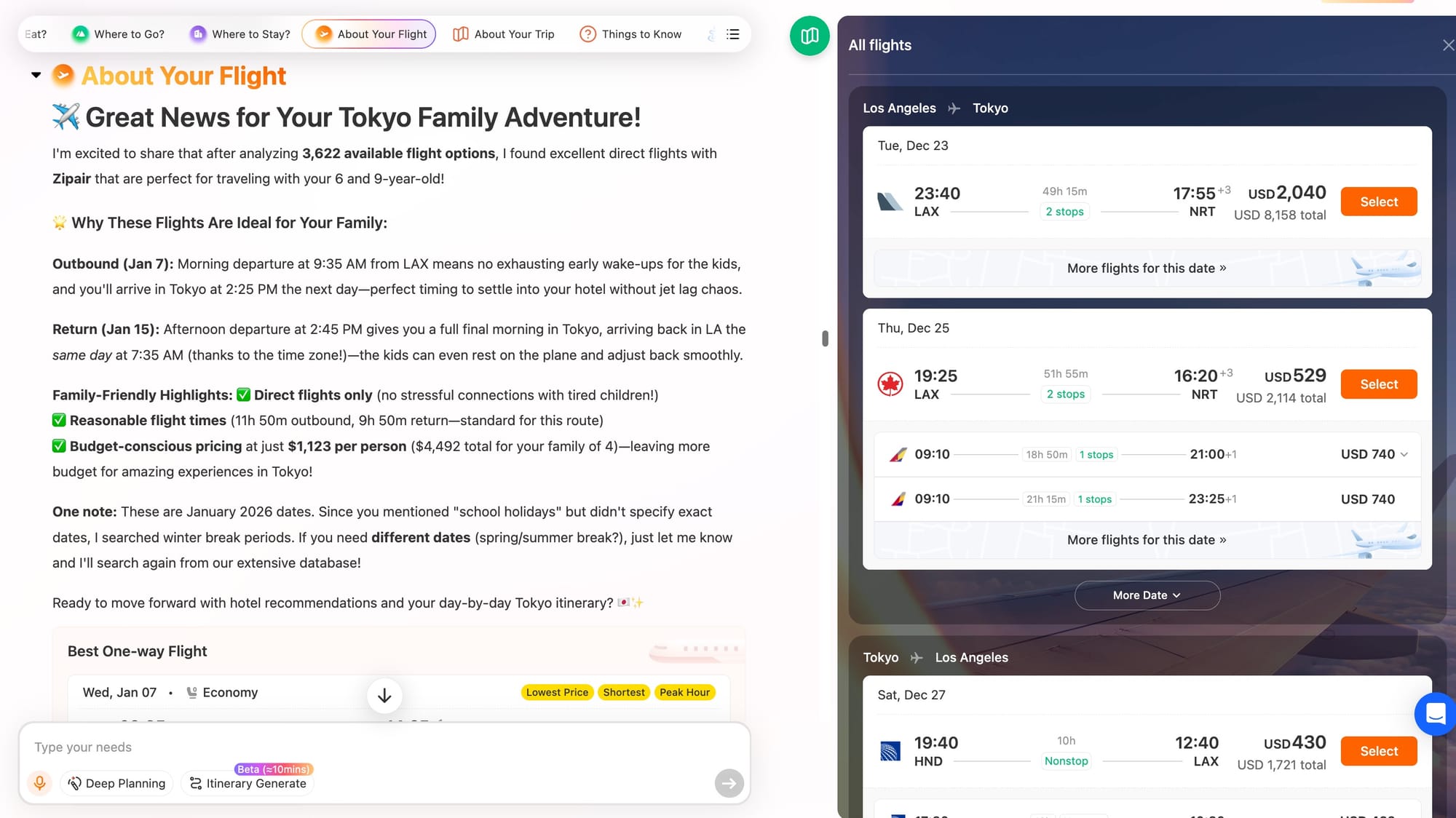
The new system now evaluates hundreds of flight options. It looks at price, total travel time, layovers, comfort, convenience, schedule fit, and user preference signals. It does not only sort flights. It tries to understand what feels reasonable for the traveler on that day.
Instead of giving a long list and letting users struggle to decide, we now try to surface flight options that are meaningful and realistic. Internal testing shows that this new approach can better satisfy most common travel needs. Compared with our previous version, it is more complete, more practical, and more aligned with real usage scenarios.
Structured Planning Powered by Dedicated Roles
Travel planning is a complex task. One single intelligent system often cannot handle everything well. It can easily miss details or lose structure when the problem becomes large.
So in this version, we redesigned how the system works inside.
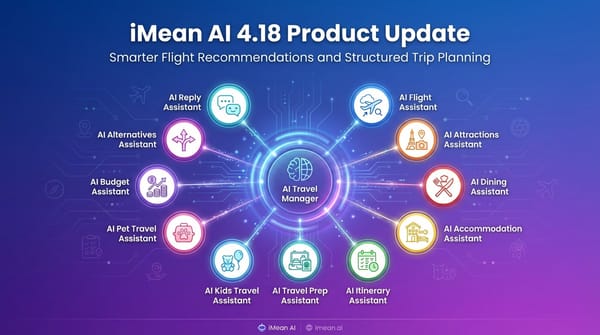
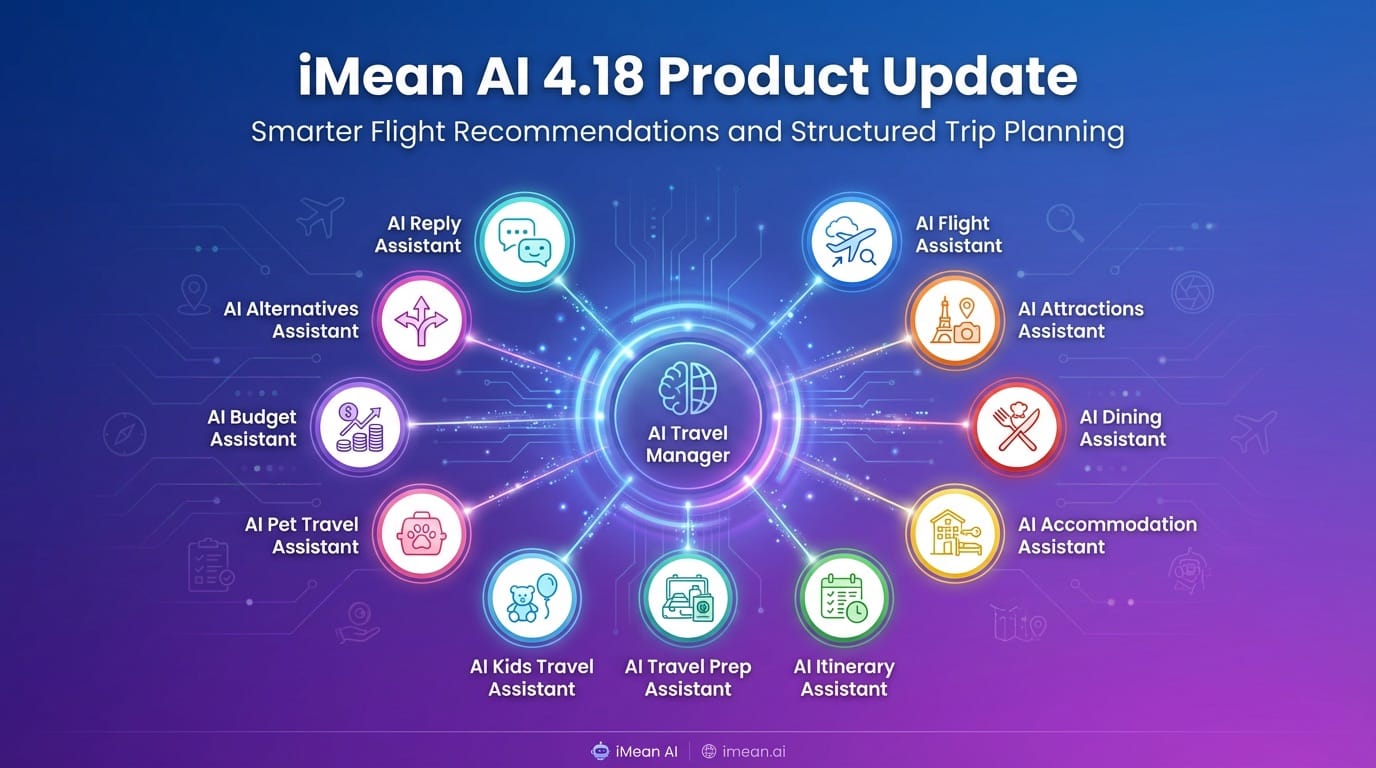
We moved from a single-assistant mindset to a multi-role collaboration model, with 12 dedicated travel planning agents working on different parts of the journey.
At the center, there is a travel manager role.
This AI manager reads user intent and assigns work to different assistants with clear responsibilities.
We introduced dedicated AI assistants for flights, attractions, food, accommodation, itinerary building, and travel preparation reminders. Each of them focuses on one part of the journey and tries to do that part well. After they finish their work, the itinerary assistant organizes everything into a clear plan.
We also created special roles for real-life situations.
For example, a child assistant appears when there is a child in the plan.
It checks safety, policies and practical care reminders.
A pet assistant appears when users travel with pets. It reviews pet-friendly hotels, restaurants and attractions and suggests reasonable rest and care arrangements.
Budget planning is also included.
A budget assistant checks current prices and user budget. It then suggests how to allocate spending to get better value from the trip.
In some cases, users are still uncertain about destination choice.
For that, an alternative destination assistant analyzes the core purpose of the trip. It then compares possible choices and gives a clear reference report.
Finally, a reply assistant acts like a personal helper.
It reminds users about missing information and helps them move forward with planning.
What This Looks Like in Real Use
To understand what this change really means, it is easier to look at real planning scenarios.
Recently we tested several different types of trips. The results showed us very clearly how this new structure helps users make better decisions with more confidence.
Case 1: A Family Trip That Feels Calmer and More Manageable
A user planned a 7-day trip from Los Angeles to Tokyo with two children.
They cared about reasonable flights, child-friendly activities, and a plan that was not too tiring.
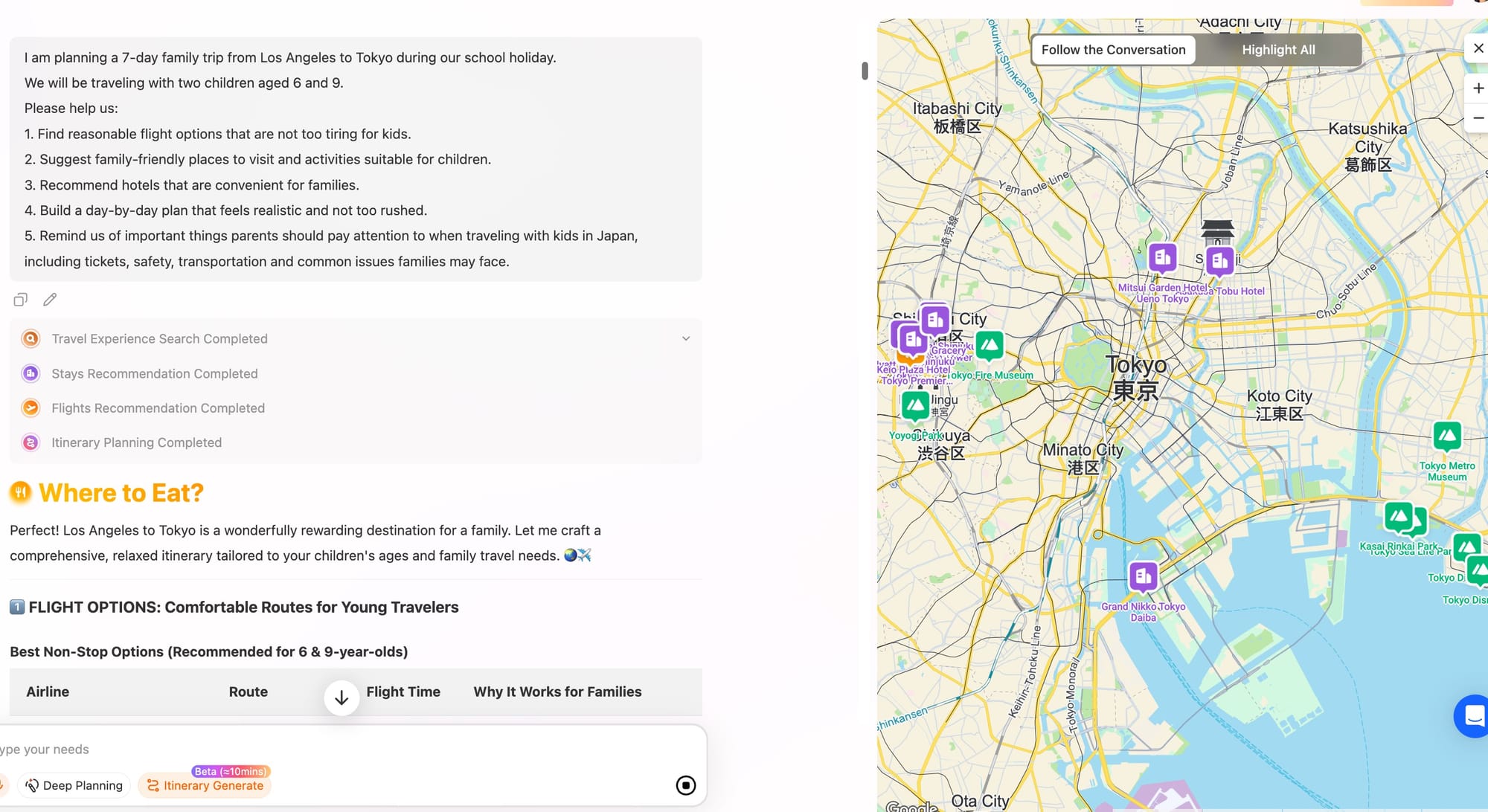
The flight assistant tried to avoid very long layovers.
The accommodation assistant recommended hotels that were convenient for families.
The attractions assistant filtered places that worked well for children instead of only tourist hotspots.
The itinerary assistant then organized everything into a daily structure that felt realistic.
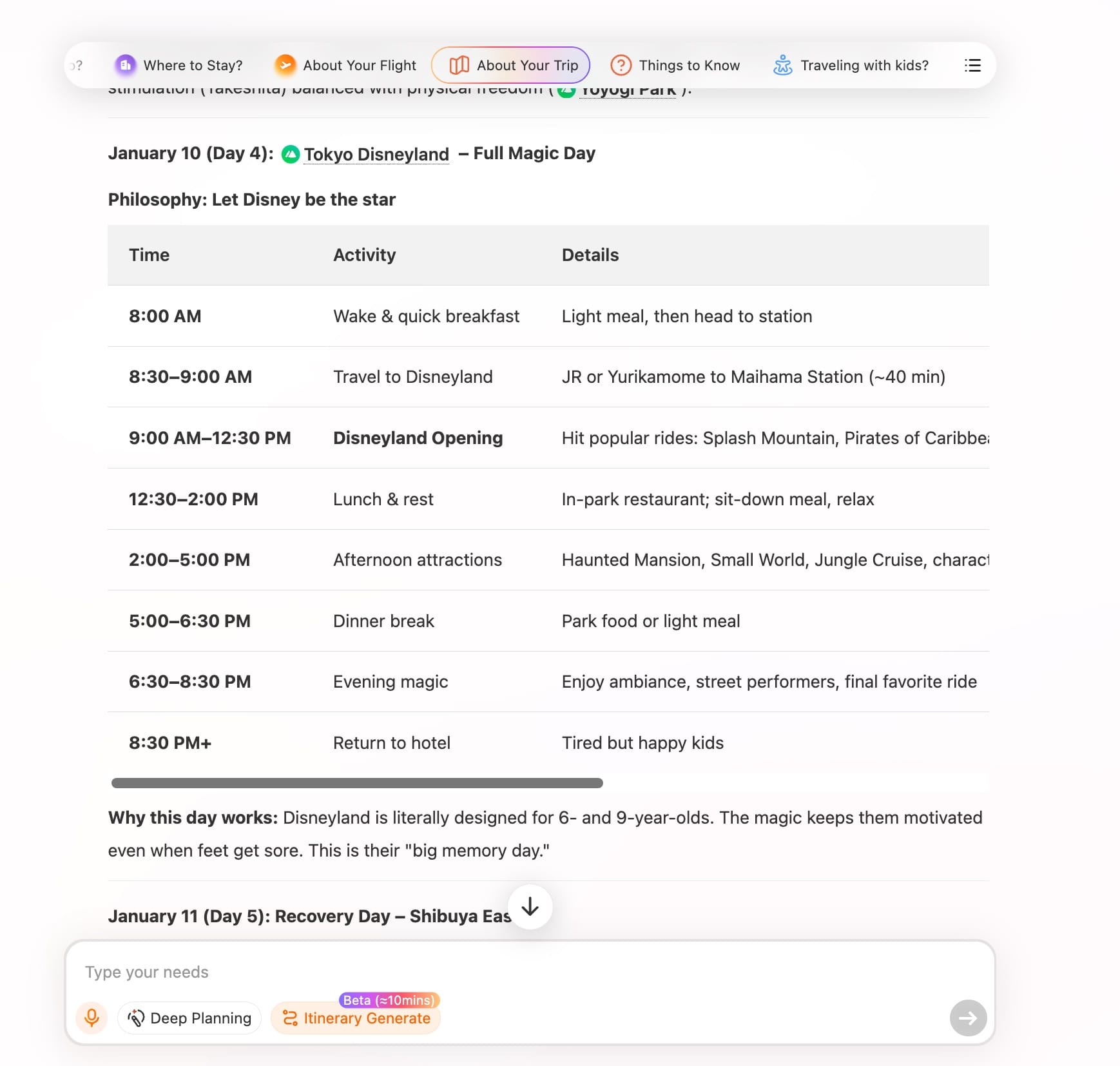
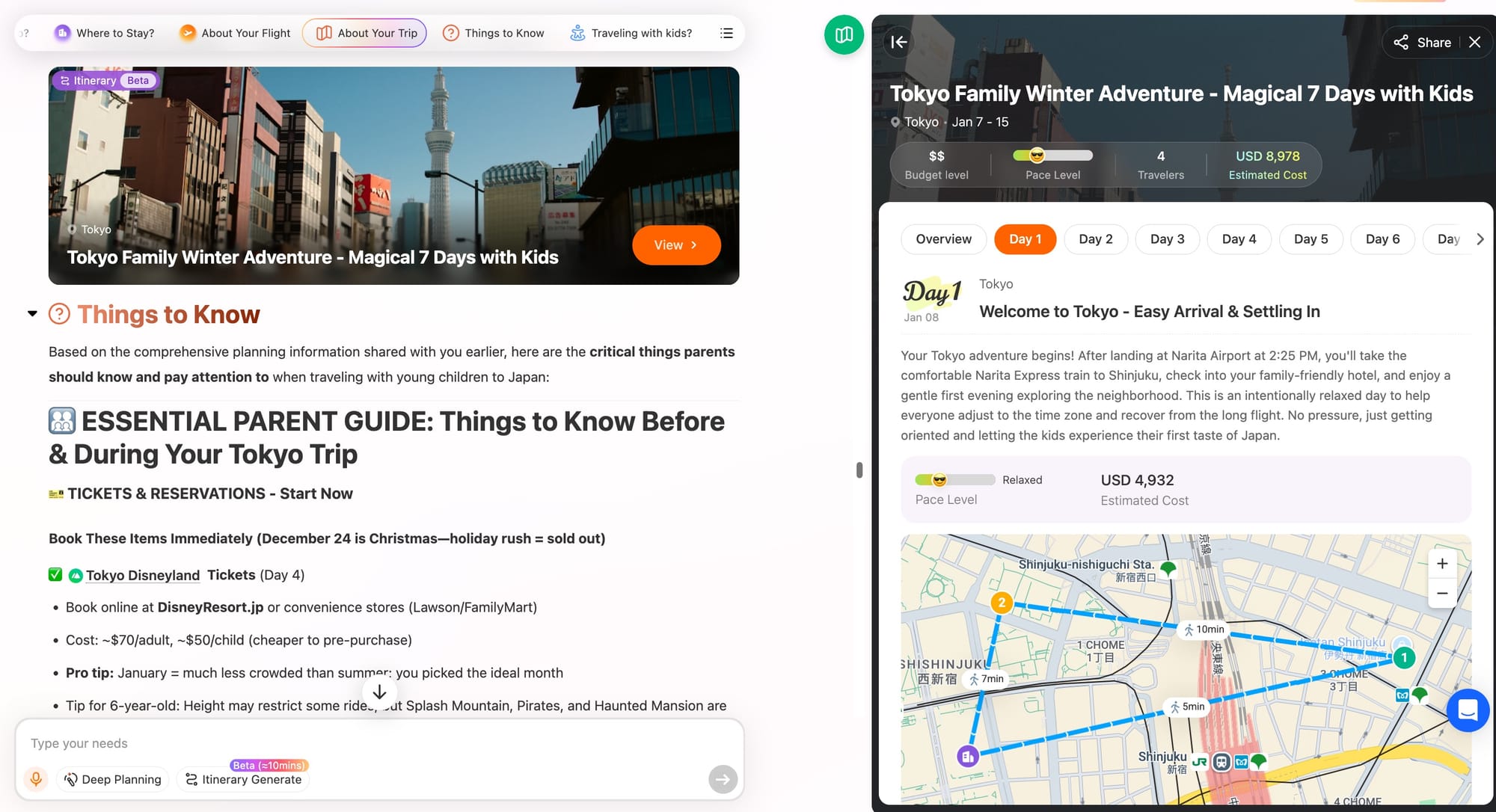
After that, the child assistant reviewed the plan again.
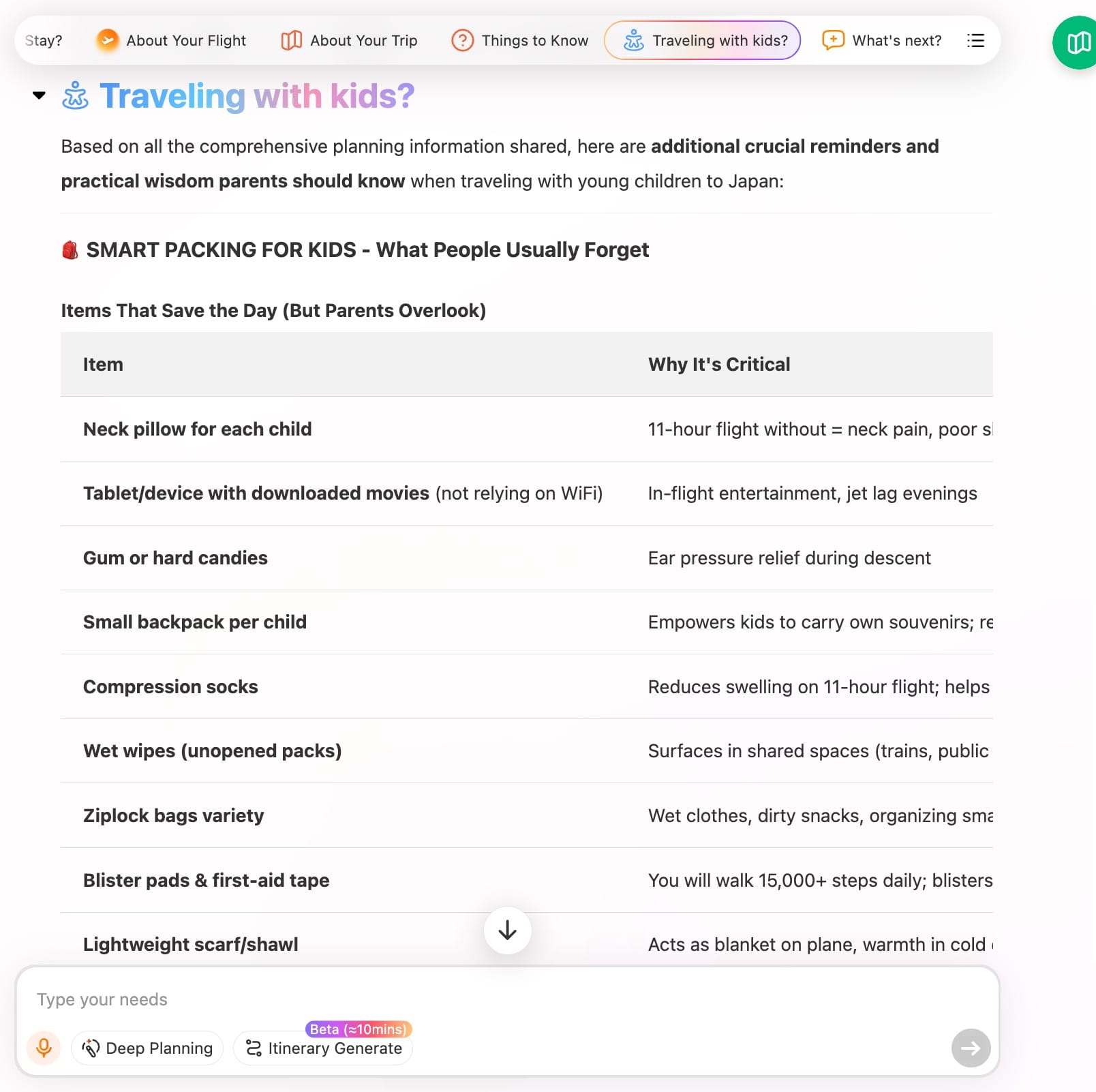
It added reminders about ticket policies, safety, congestion risks and transport situations.
In the end, the plan felt calm, safe and practical for parents.
Case 2: Thinking About Value, Not Just Price
Another user planned an international trip from London.
They were deciding between Bali and Phuket.
They wanted good value for money and a relaxing experience.
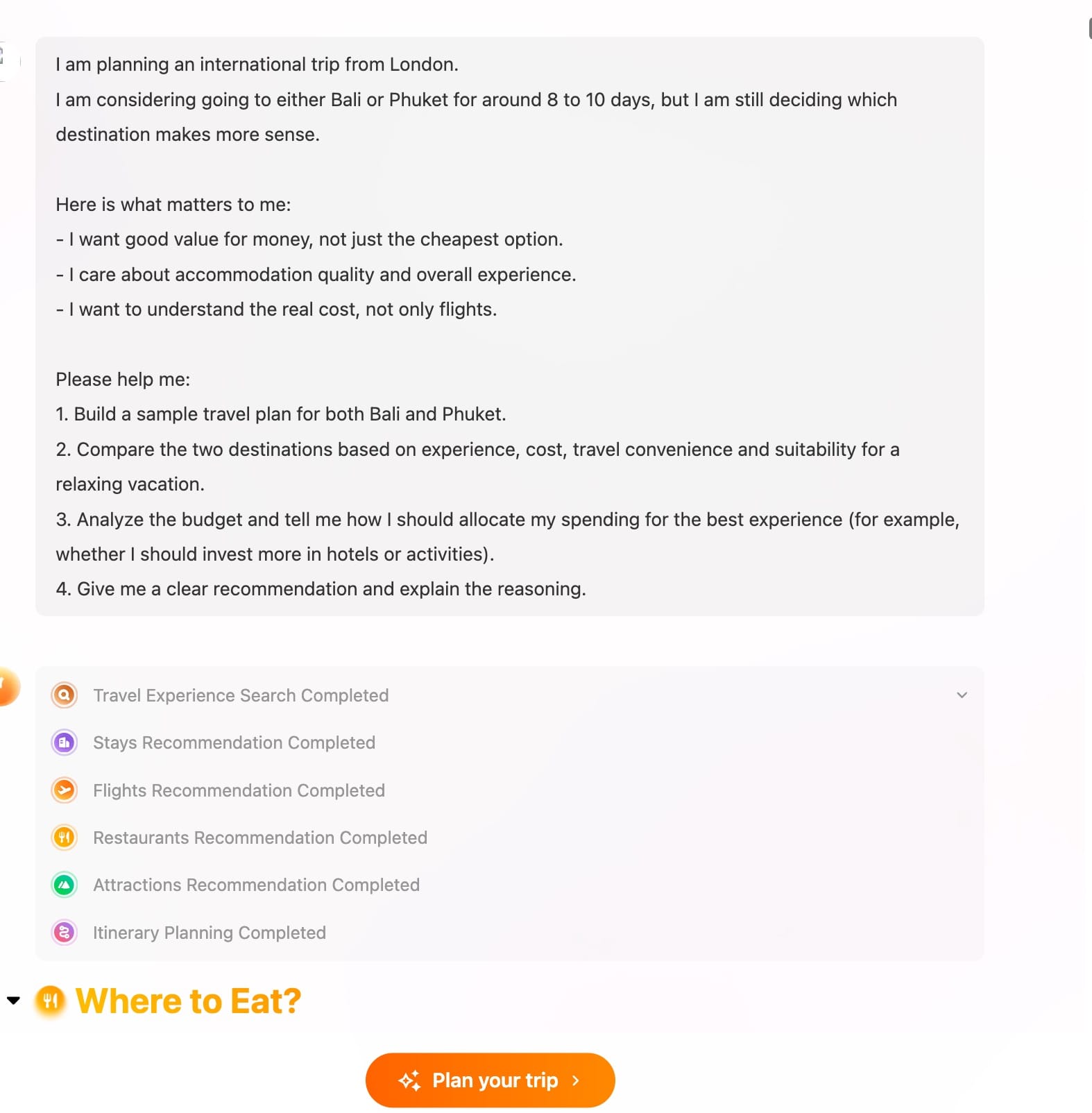
The iMean system first created planning suggestions for both destinations.
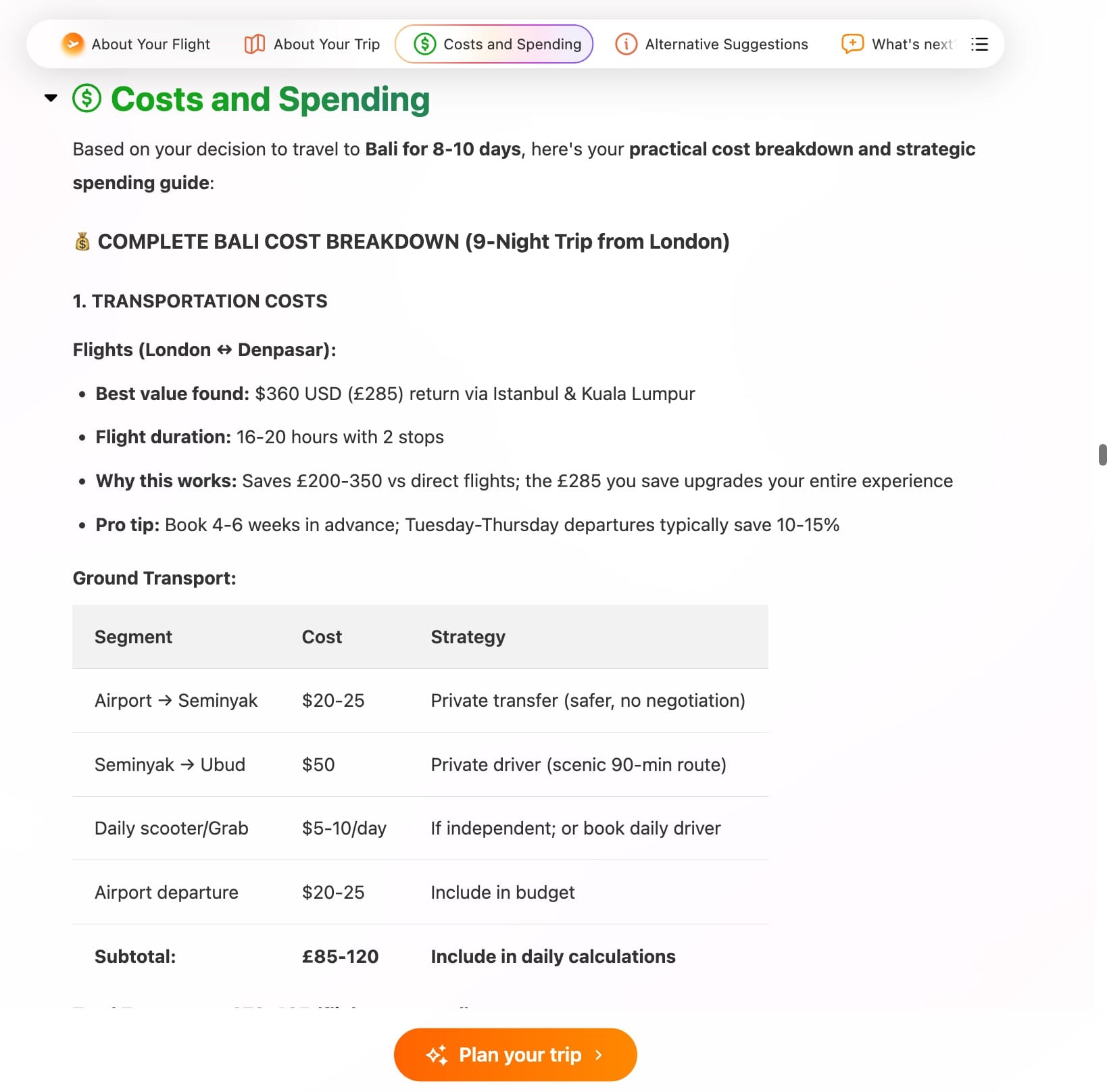
Then the budget assistant analyzed real prices and helped explain where money should be spent to improve the experience.
The alternative destination assistant compared both choices in terms of experience, travel convenience, cost, and suitability.
The user did not only see two options. They saw a clear decision framework.
This reduces uncertainty. It allows people to choose calmly instead of guessing.
Case 3: Traveling With a Pet Without Constant Worry
A user planned a trip from New York to Italy and wanted to bring a dog. This brings real constraints in the real world.
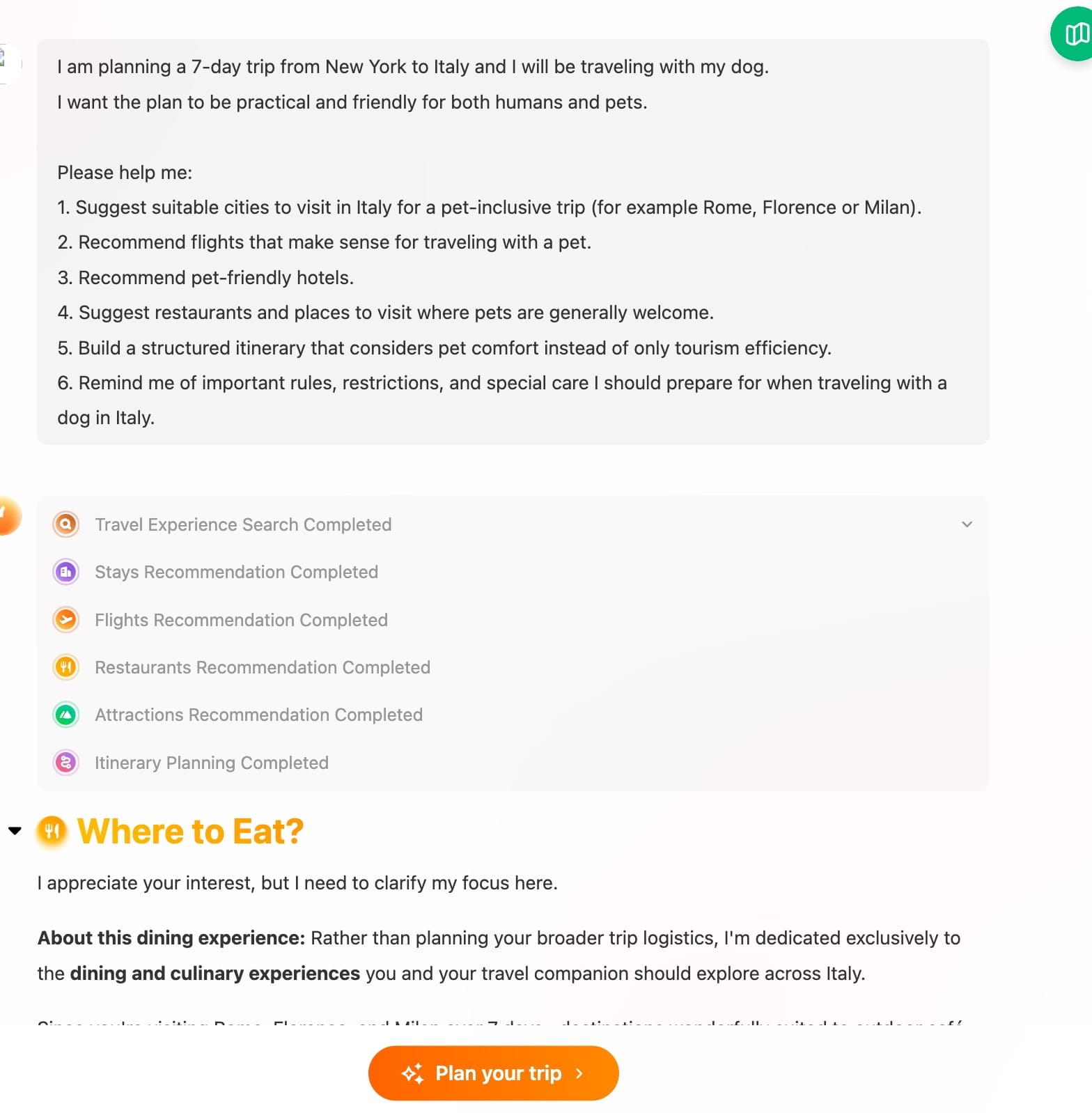
The system built the basic route first.
Then the pet assistant reviewed it carefully.
It checked which hotels were pet-friendly.
It identified restaurants and attractions that welcome pets.
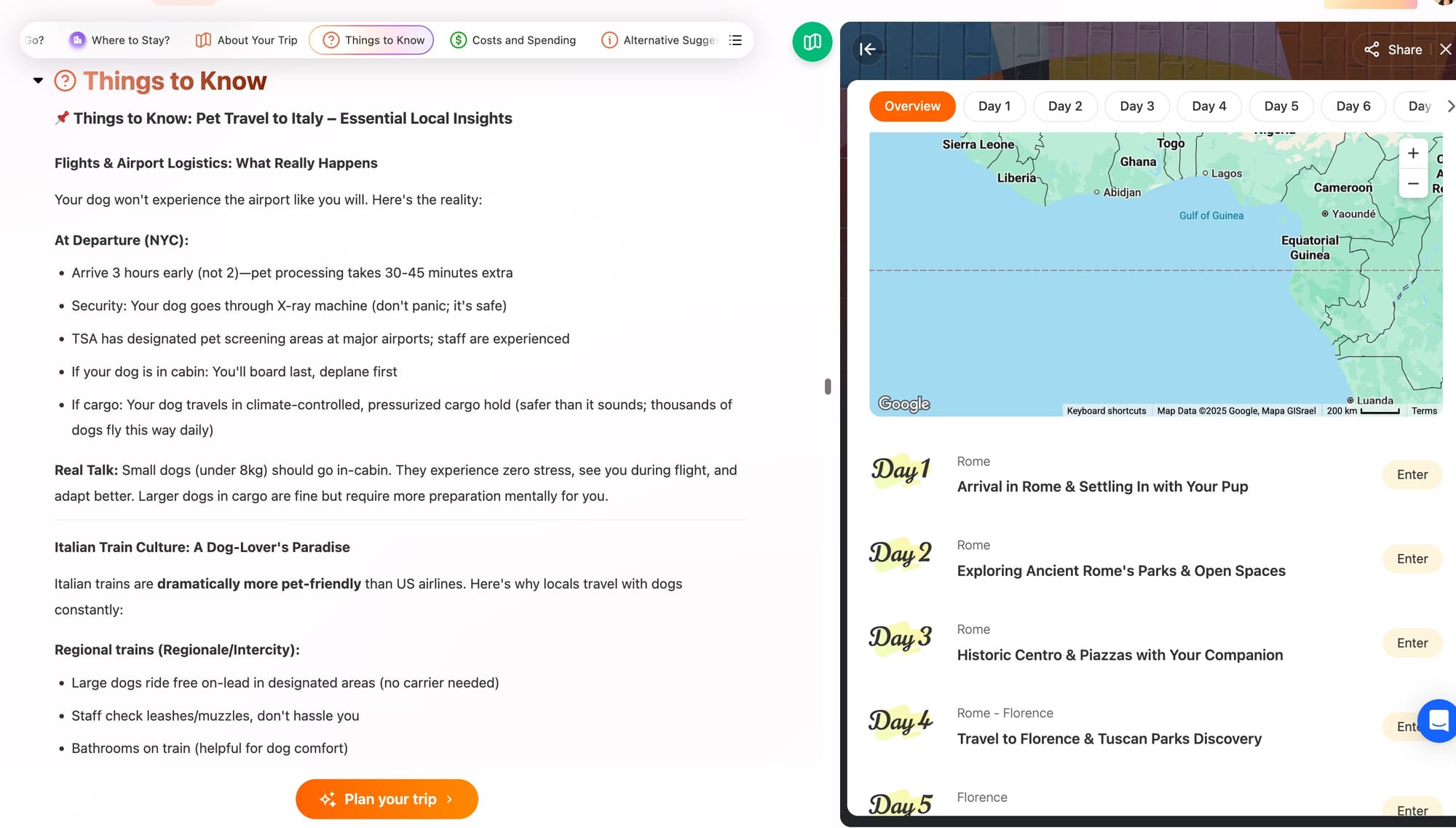
It also suggested where rest might be needed and explained common travel rules for pets.
In the end, the user received something much closer to a real-life preparation guide, not just a sightseeing list.
What This Means for Users
With this update, planning on iMean AI becomes more structured and more grounded in real travel situations.
Flights are not simply filtered. They are considered in context.
Trip plans are not only generated. They are organized with care.
Special needs like children and pets receive clear support.
This makes planning calmer, clearer, and easier to manage.
Looking Ahead
This update is one important step in an ongoing journey. We will continue improving accuracy, personalization, real-time reliability, and planning intelligence. Our goal is simple. Planning should feel manageable and reassuring. It should help people travel with more clarity and less stress.
iMean AI Trip Planner Tutorial | How to Plan Your Trip Step by Step