
If you still feel overwhelmed or even have no idea how to plan a multi-city trip, you might as well read this article. I'm not here to tell you that everyone can know by searching on Google, but something niche, personal, and efficient based on my own experiences.
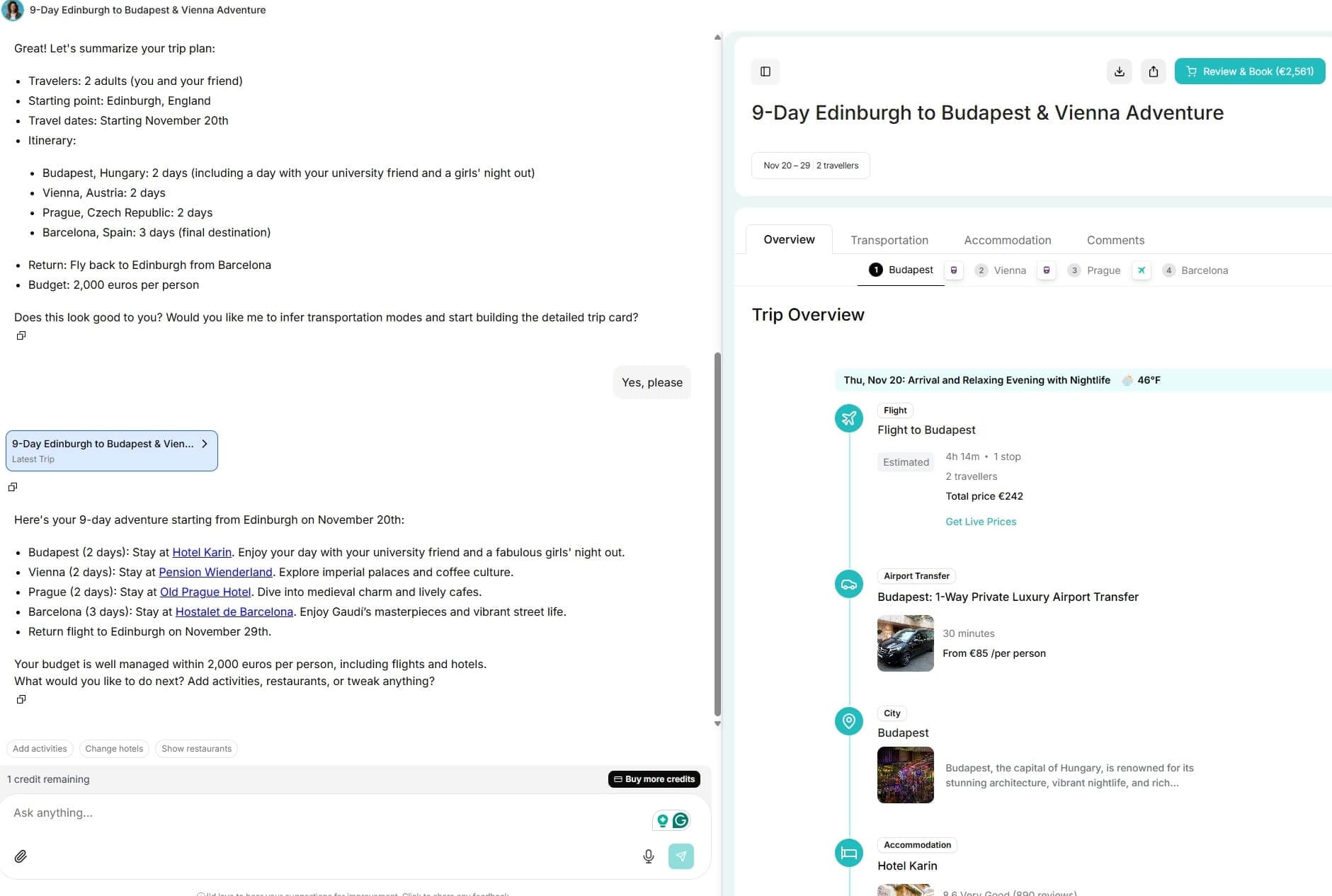
A friend and I had an ambitious idea: to leave Edinburgh on November 20th, fly to Budapest, meet another friend there who could only spend one day with us in the city, and then spend two full days exploring it. The next move is going to Vienna for two days, then Prague for another two days, and finally spending three days in Barcelona before flying back to Edinburgh. Four countries, four cities, a fixed budget of 2,000 euros per person, and a mix of trains and flights.
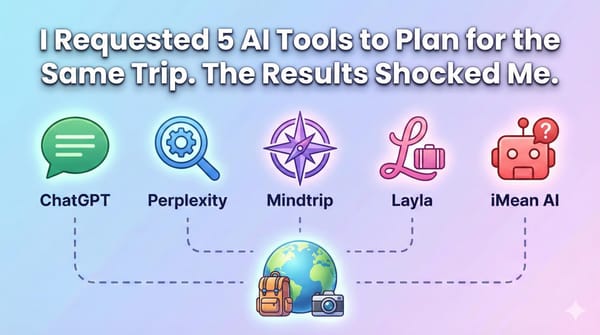
Facing a large amount of work, I decided to let technology walk in. I once asked ChatGPT for help on my trip and felt good. So, I would like to use professional AI itinerary generators and test their strength for this time. They are Layla, Mindtrip, and iMean AI, which are all called 'one of the best AI trip planners'.
How Each AI Tool Approached the Same Complex Request
Layla: Pretty, Fast, but Broke Easily
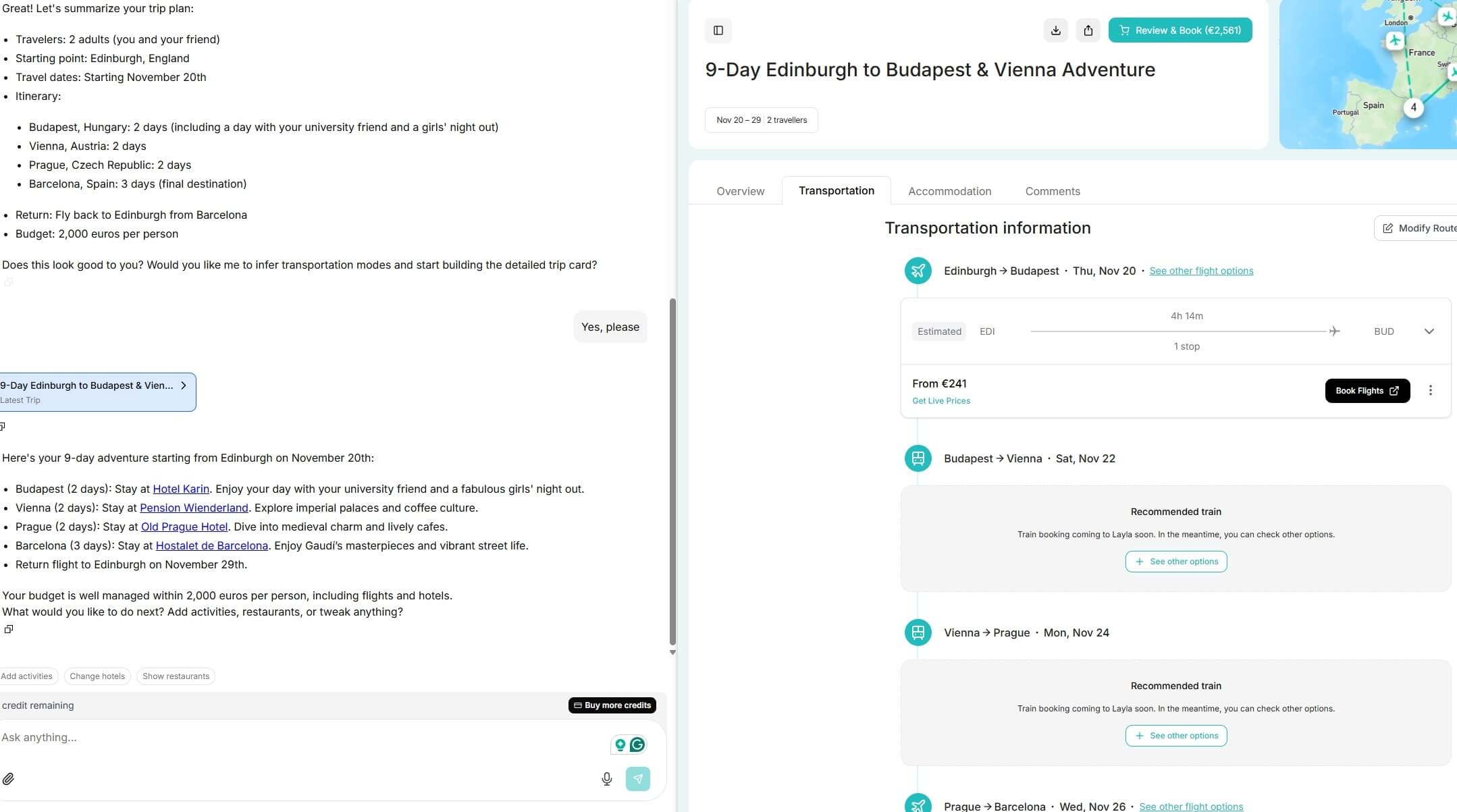
Layla is like an always-on multi-city trip planner, ready to create custom itineraries in seconds, and it has a clean vibe. It understood that I wanted a multi-stop itinerary, but it struggled once the routes got complicated.
What Worked
- It responded fastest.
- It provided valid links to book flights and accommodations. Plus, it considers other transportation options between similar cities, such as trains and buses.
- The whole trip looks very detailed, and each recommended place is accompanied by ratings, budgets, and locations.
- The talking tone of Layla is just like a friendly friend, and she is available 24/7 here.
What Failed
- It returned some routes that didn’t exist on the dates I gave. And it can be inaccurate quite frequently with details such as transport timings and opening hours.
- The price of some services is unreasonable. For example, the market price of the pick-up service at the airport is 50 euros (heard from my friend), and its payment link is 170 euros.
- It ignored the part where my friend could only join for one day.
- Only one free planning chance.
Mindtrip: Great Interface, Struggled With the Details
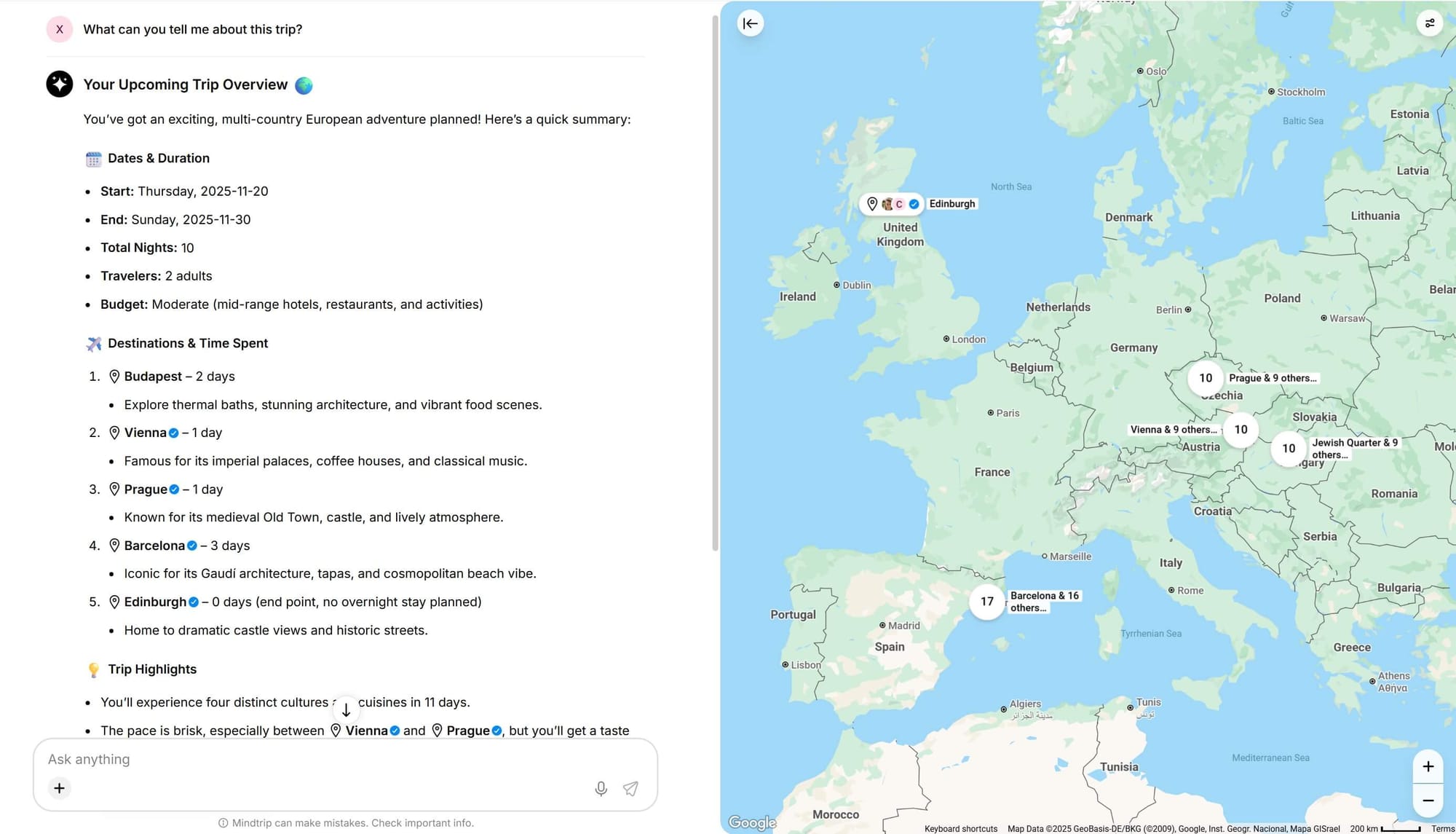
Mindtrip stands out with its sleek interface. The UI makes trip ideas look inspiring. But when I asked for a full multi-country itinerary, things started to fall apart.
What Worked
- It can give brief routes and things to do while mapping up.
- It can automatically recognize information within conversations and looks reliable.
- The trip vision board is shareable, and each of my friends can tweak the itinerary.
What Failed
- No flights or trains are shown.
- It didn’t track costs against the 2,000-euro limit. The budget part got messy.
- Options and booking info were limited, no comparisons or filters. So basically, I didn't know why I chose the itinerary.
iMean AI: The Only One That Could Handle the Whole Story
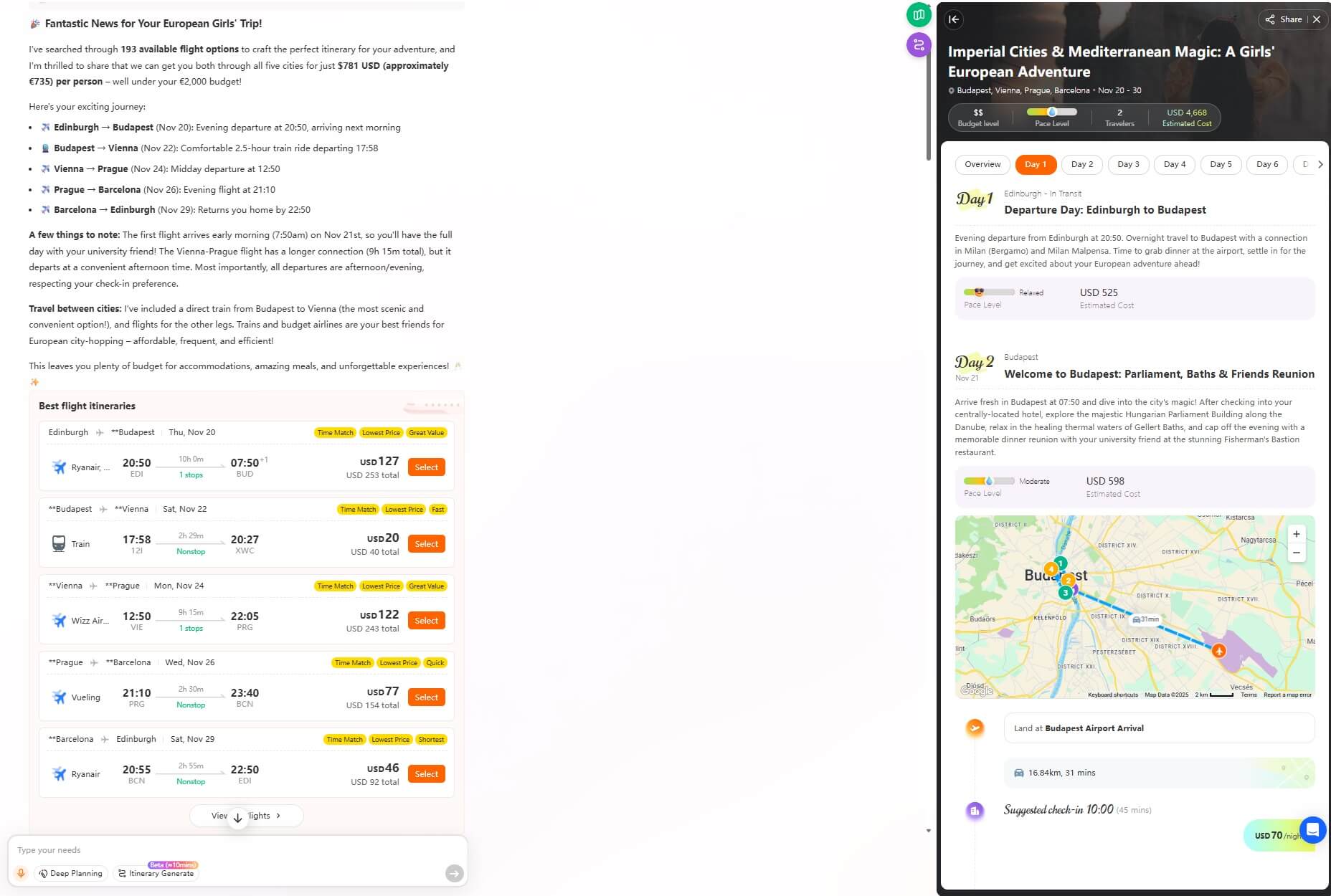
This is actually the first multi-destination itinerary planner. Also, it was the one tool that didn’t break when I added more “real-life chaos.” Adjusting the itinerary with iMean AI gave the feeling of talking to a friend who actually knows trains, hotels, and timing.
What Worked
- It kept track of every constraint: budget, check-in windows, date changes, the friend joining and leaving.
- It mixed flights and trains in a logical way without inventing fake transit routes. Meanwhile, it gave me the cheapest suitable options with reasons and links to book.
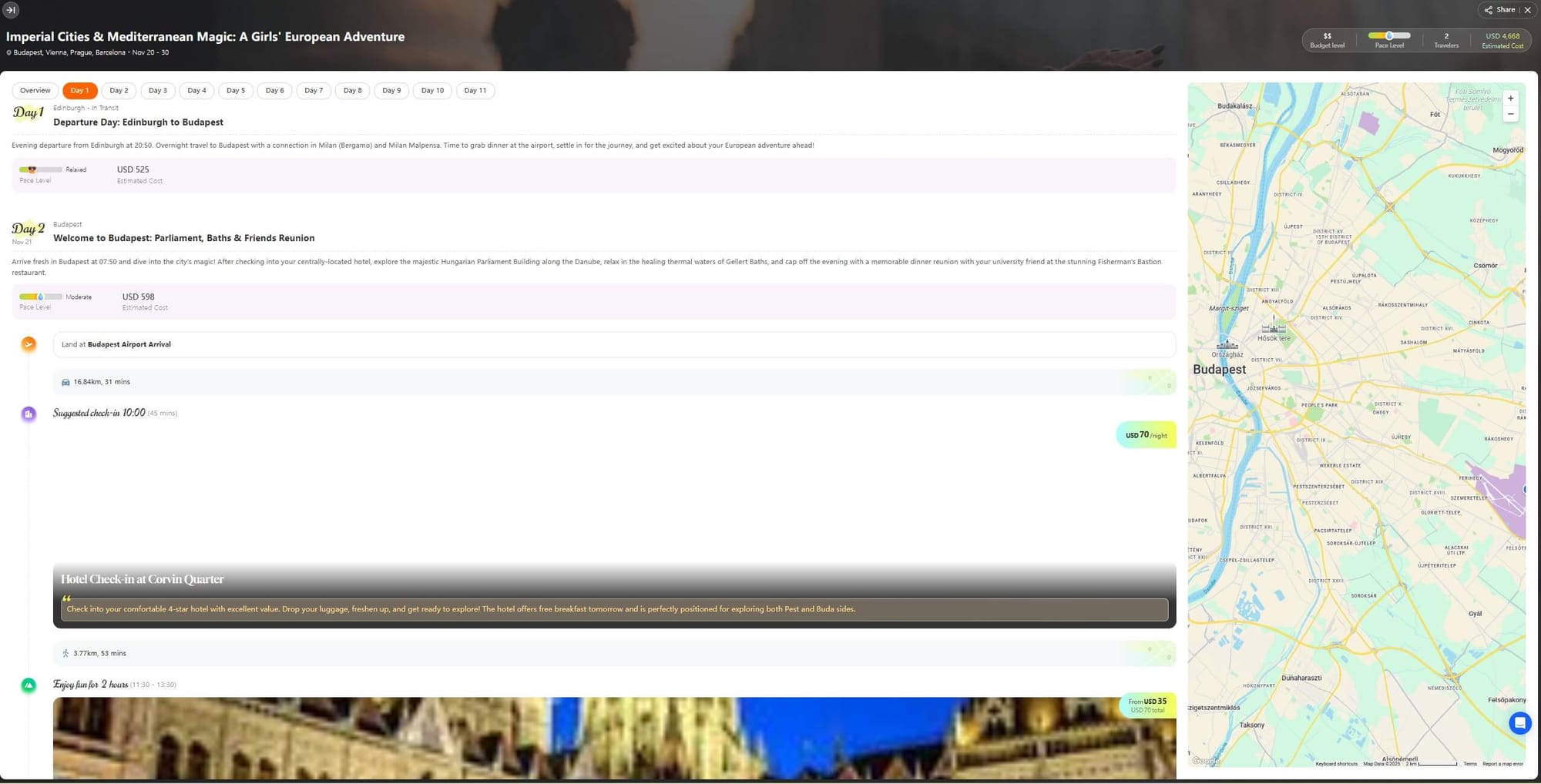
- In addition to providing a detailed itinerary, there is also the distance between each location and the recommended transportation methods.
What Failed
- It took more time to generate an itinerary. Sometimes the website got lost while I was waiting.
- There are some mistakes in its expression. It wrote "check in", which means returning to the hotel, making me a little confused at first glance.
So Which AI Tool Handles Complex Trips Best?
When I gave all three tools the same multi-country itinerary request, the differences became clear. Instead of focusing on the “vibe” of each tool, I paid closer attention to the actual planning results: route accuracy, hotel relevance, handling of constraints, and ability to keep the itinerary practical.
Of course, Layla was helpful for ideas, and Mindtrip was strong for visuals and hotels. However, I would like to say that iMean AI performs the best, and it's the only one that can handle the whole story.
What stood out about iMean AI was the natural back-and-forth. Other tools felt like “chatting with a tool.” iMean AI felt more like chatting with someone actually planning the route with me.
It also produced the cleanest result among these multi-destination itinerary planners, something I could follow day by day without needing a second tool to fix errors.This is why, for complex routes or when testing a true best AI trip planner scenario, iMean AI came out on top.
Try This Yourself — Exact Reusable Prompt
If you want to run your own version of a multi-city test, here’s the exact kind of prompt that worked well for me.
Copy-and-paste Prompt Template:
“Help me plan a multi-city trip. I will start in [departure city] on [date]. I want to visit [City A] for [X] days, then [City B] for [X] days, and finally [City C] for [X] days before returning to [home city]. My total budget is [amount] per person. Please recommend realistic flights and trains between each city, hotels that match the budget and location needs, and a day-by-day itinerary. Make sure all transportation routes and places are real.”
That’s it. You can replace the cities, length of stay, and budget with your own. What's more, you can add your personal requirements, such as the vibe of your trip, something you must do, and something you tend to avoid.
When you’re ready, go ahead and plan trips with iMean AI for yourself. You might be surprised by how much easier your next big itinerary feels once you try it out.