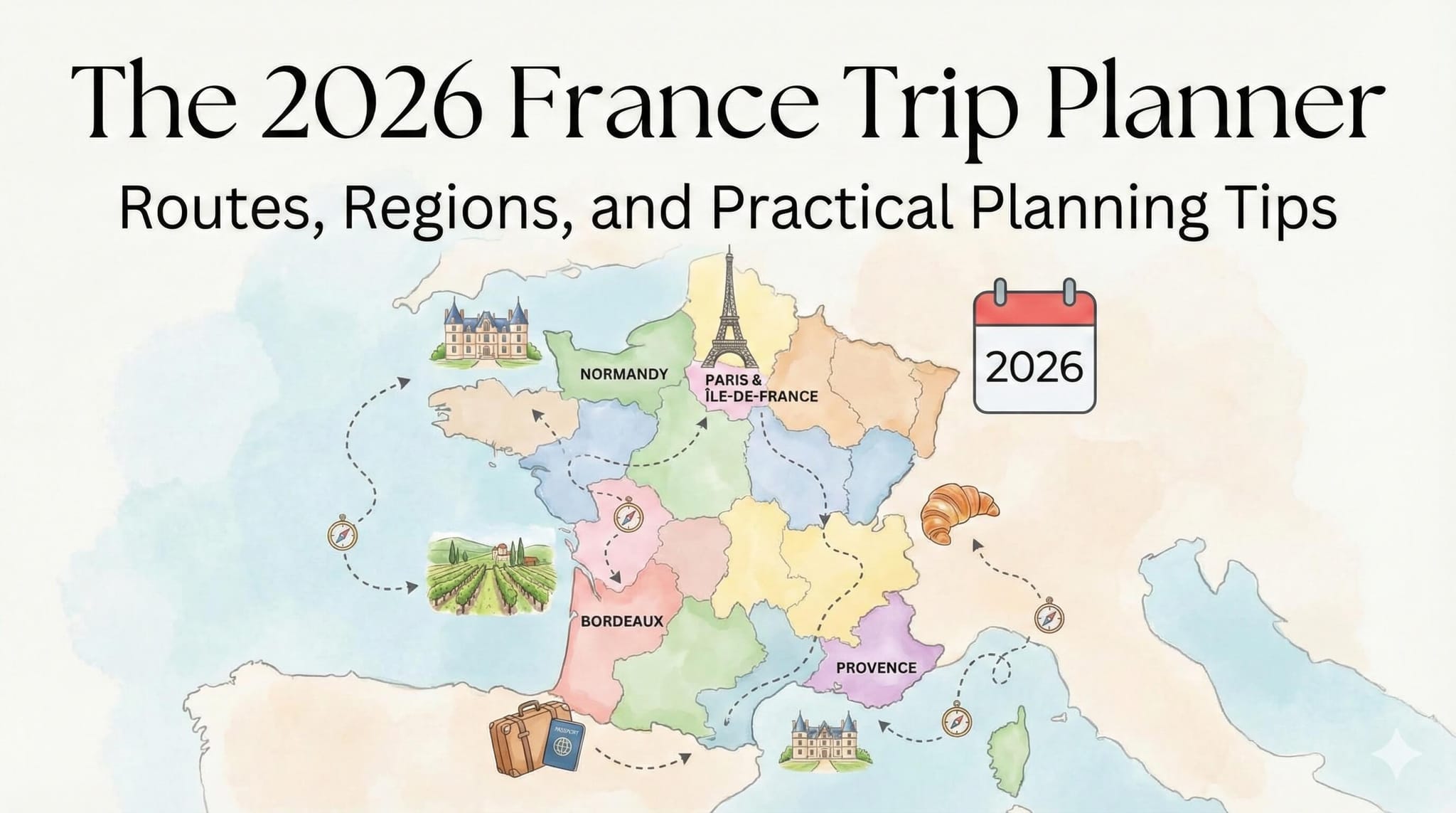
As the product manager of iMean AI, I have seen our best AI trip planner help numerous people plan trips all over the world, including popular France itineraries. France has various regions. They are each unique in their own way, so people can be overwhelmed by making itineraries on their own. Different from regular trip planner websites, iMean AI can give you a full picture instead of pieces.
In this guide, I’ll walk you through a clear roadmap for planning your 2026 France trip from when to go, where to stay, how to get around, and how to use a free trip planner to pull all your ideas into one workable plan. If you’ve been overwhelmed by choices, this is exactly the step-by-step you need.
Best Time to Visit France
France is so incredibly varied geographically with snowcapped Alps in the east, wild shorelines along the English Channel in the north, spectacular beaches in along the Med in the south, and the fertile forests and vineyards meeting the Atlantic in the west. The best time to visit France depends on where you want to go, and what you want to experience.
- Spring (March–May)
France in spring is a perfect picture, with blooming flowers (universally in May), mild temperatures, and a vibrant atmosphere.
Expect fewer crowds compared to the peak summer months and the weather is generally pleasant, with occasional showers that bring lush greenery and colorful blossoms. Spring also sees events like the Cannes Film Festival, outdoor activities, and the reopening of many seasonal attractions. Remember to bring an umbrella because it may rain at any time.
- Summer (June–August)
Summer is an excellent but peak time to visit France. The climate is inviting with its warm embrace, particularly in the south, where temperatures fluctuate between 75°F and 86°F, while Paris offers a milder 61°F to 75°F. Summer is the best for beaches and a true Mediterranean experience, but expect lines, heat, and higher prices.
- Fall (September–October)
It might even be one of the best seasons to visit France. The days can be pleasantly warm, even hot, with lower prices for hotels and flights. September and October are not the wettest months of the year, and the countryside can be gloriously pretty in its autumn colours. The Mediterranean and the Atlantic Ocean normally remain quite warm enough for swimming through to the end of October and for those who enjoy cycling and country rambling, conditions are often perfect.
- Winter (November–February)
France in the winter is a true delight, offering a magical and diverse array of experiences. Winter is considered the off-season in France, which means fewer tourists, allowing for a more relaxed experience at popular attractions and museums. December is a great time to visit France's Christmas markets and enjoy festive light shows, particularly in cities like Paris and Strasbourg.
- How Many Days Do You Need?
For a first-time trip, I recommend 7–10 days if you plan to combine Paris with one or two regions. If you're focusing on Paris only, 4–5 days works well. Travelers heading to the south (Provence or the French Riviera) often prefer a full week to slow down and enjoy the scenery.
If you plan to visit wineries, lavender fields, or ski towns, check seasonal patterns early. Some areas are fully closed in winter, while others shine only in summer, though.
How to Plan Your Trip with an AI Trip Planner
Here’s the three-step method I now use:
Step 1: Tell the AI your travel style and trip basics
I usually start with the simple stuff: number of days, which cities I’m considering, and what I care about (food, museums, coastal towns, etc.). iMean AI then helps narrow down what’s actually realistic with friendly chat. France looks small on the map, but long-distance transfers eat up time. Having the free trip planner instantly suggest the best order—Paris → Lyon → Nice, saves me from trial and error.
Step 2: Use AI to generate a detailed itinerary
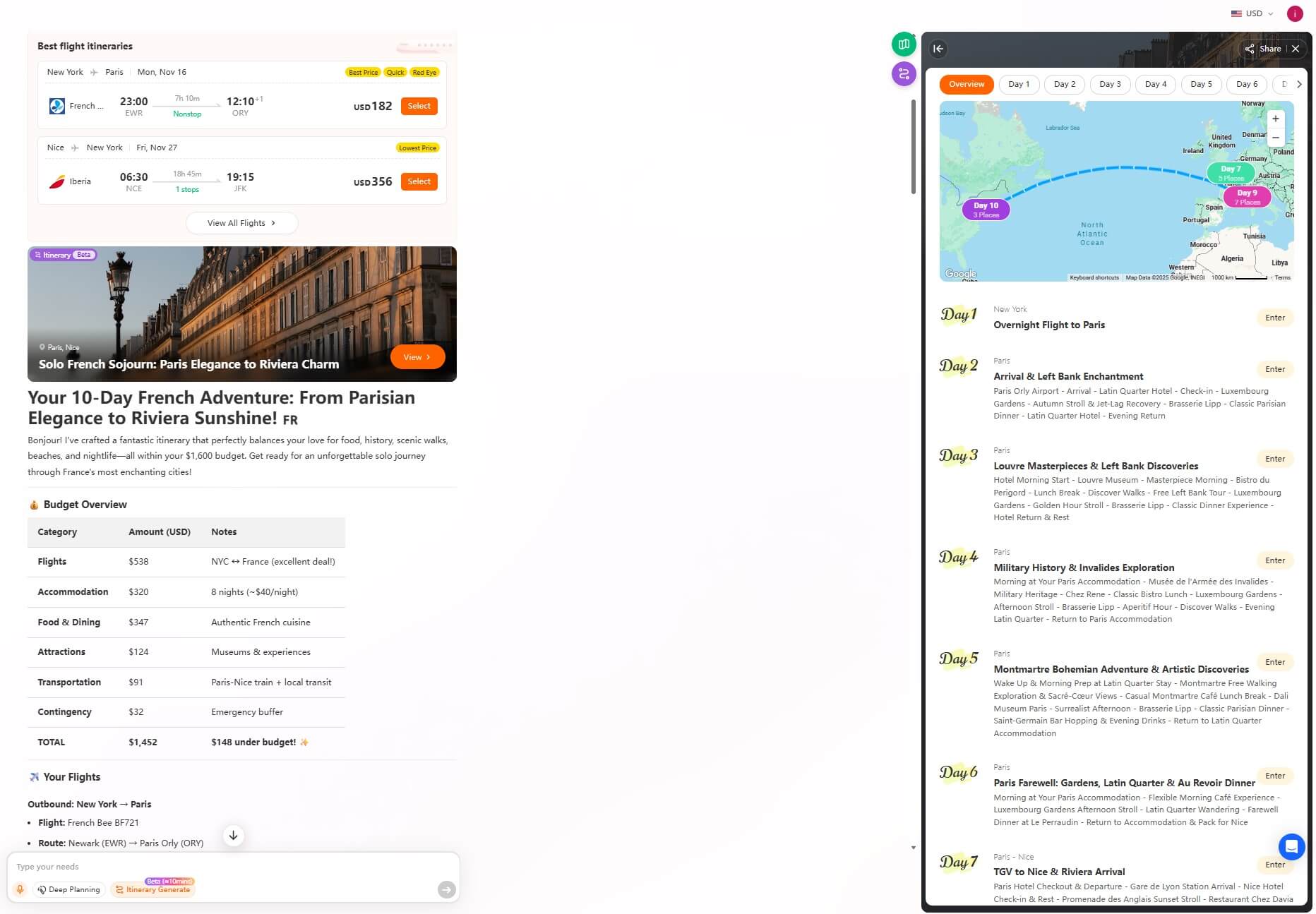
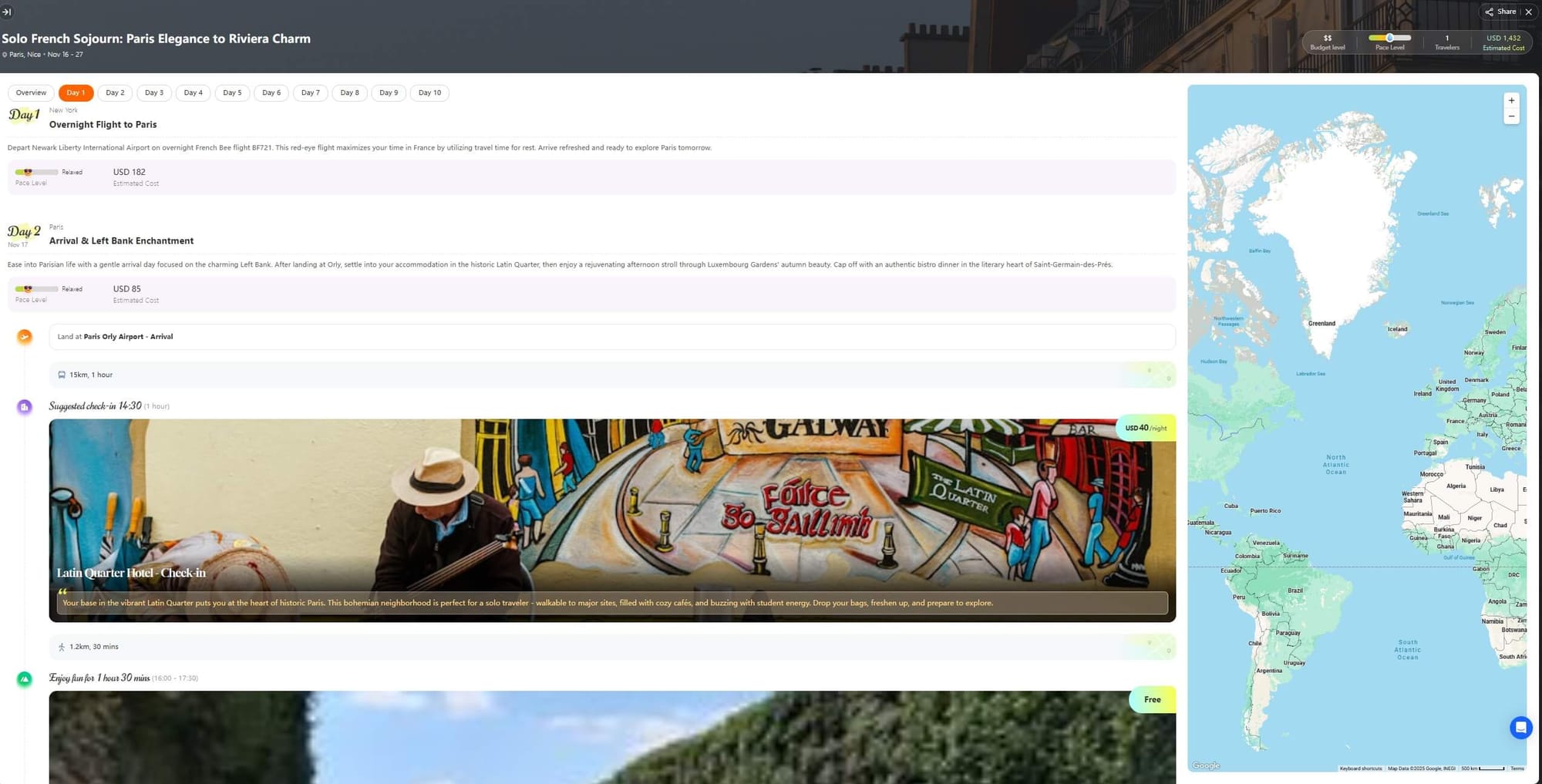
This part saves the most time. iMean AI itinerary planner can build a day-by-day itinerary with attractions, realistic walking distances, train connections, and meal suggestions. For France specifically, it’s helpful because many museums close on certain days or require timed entry, and it avoids recommending places that don’t exist or events that aren’t running (which I’ve definitely seen on other tools).
Step 3: Edit and fine-tune the itinerary
Once the plan generates, I can adjust the pace, swap neighborhoods, or switch hotels. I also like that iMean AI lets you generate a shareable itinerary link, which is useful for travellers who travel with friends who all have opinions.
Where to Stay in France
- Le Marais, Paris
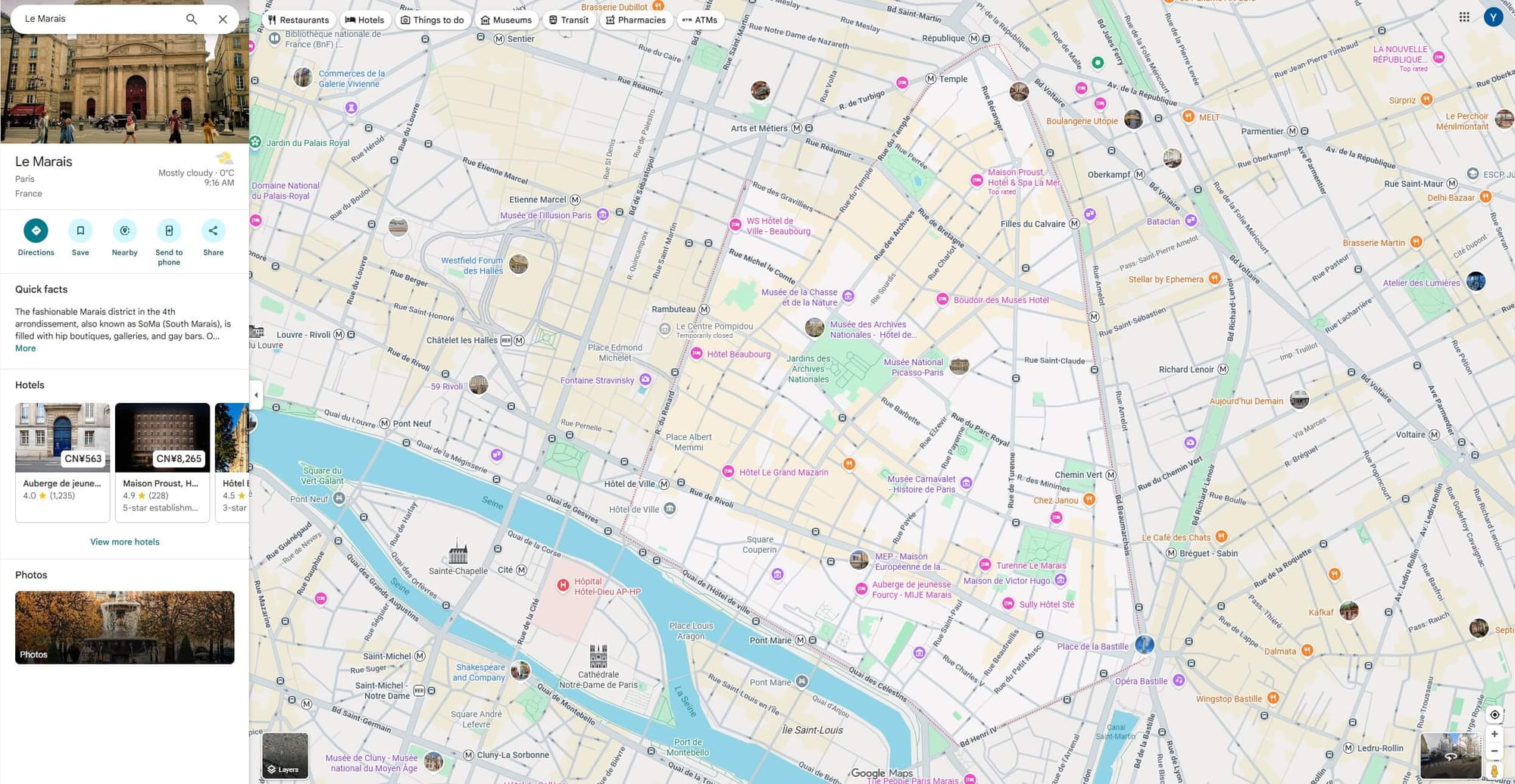
Le Marais is a historic district on the right bank of Paris spanning the Third and Fourth Districts, from the Pompidou Art Center in the west to the Place de Bastille in the east. This area has amazing restaurants, a good bar scene but not too rowdy, fantastic shopping, and overall, super artsy and charming. If you stay right near Place de Voges, which is absolutely stunning. Felt safe the entire time.
- 11th arrondissement, Paris
Not too expensive nor touristic, a bunch of cozy cafes, the rue de la Roquette is a great place for little food joints and some vintage stores. It also neighbours the Marais (trendy neighbourhood of Paris), which is great for vintage shopping, although more touristic and expensive than the 11th. Generally, anything above the Seine is more lively and urban, and the southern part is way calmer and family-friendly.

- Old Town (Vieux Nice), Nice
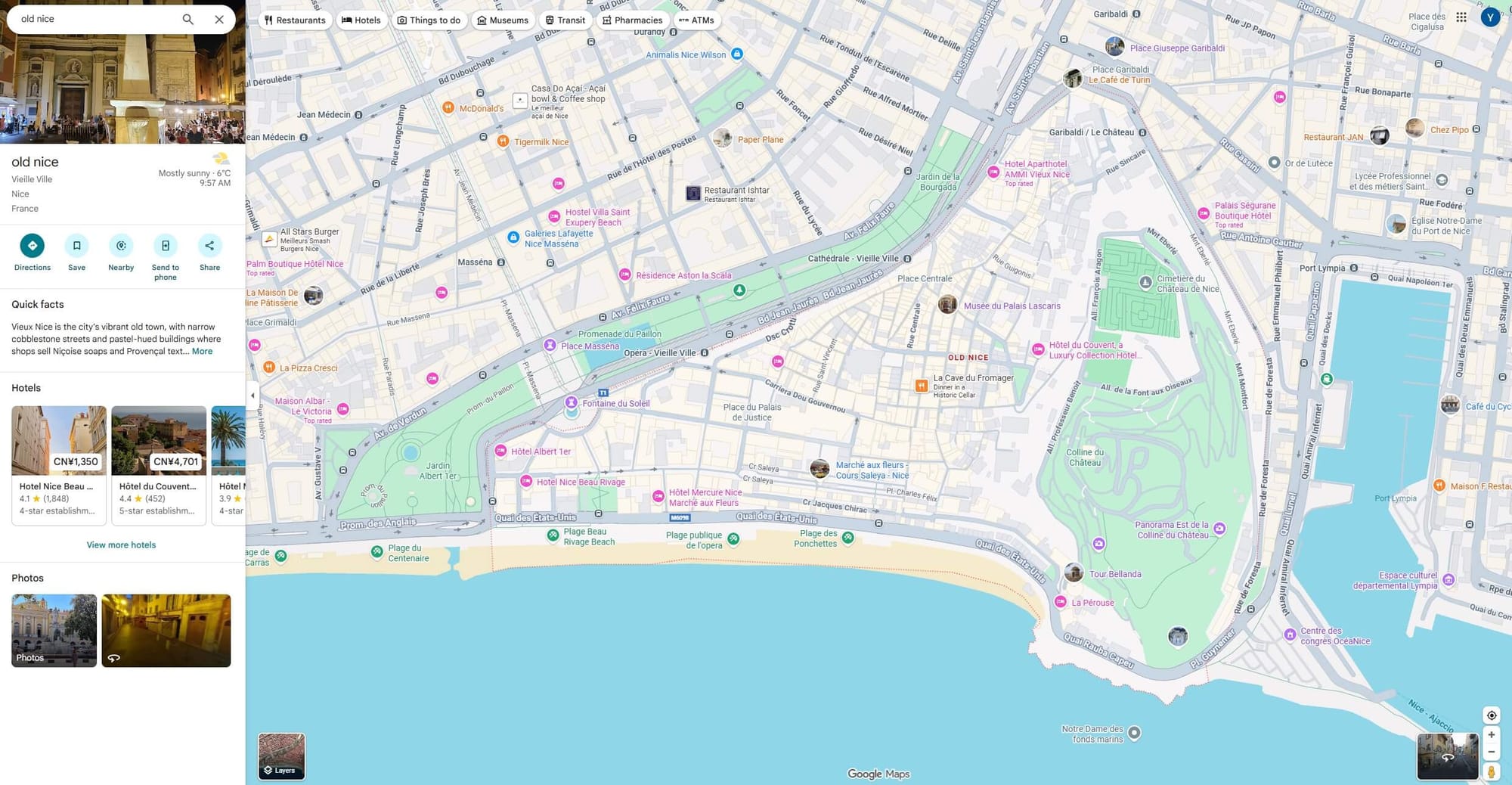
For anyone adding the south of France to their route, Nice’s Old Town is one of the most convenient (and scenic) places to stay. The neighborhood sits right between the beach and a maze of colorful, Italian-influenced streets filled with open-air markets, gelato shops, seafood restaurants, and cafés. Staying here means you can walk everywhere. At night, the area stays lively without crossing into party-town territory.
The only drawback is that streets can get busy in July and August, but if you come in spring or fall, Old Town feels relaxed and almost village-like. It’s the perfect base if you want beach days mixed with easy day trips along the Riviera.
Top Things to Do in France
- Route 1: Paris → Reims → Strasbourg
This route blends urban energy, Champagne country calm, and Alsatian charm in a way that feels effortless. Paris gives you the big-city start with walkable neighborhoods, layered history, and easy train links. Reims slows the pace without losing sophistication. Strasbourg finishes the loop with fairy-tale streets and a winter-market atmosphere even outside December.
The order works because transfers are short and each stop feels distinct. You never backtrack, and the cultural shifts keep the trip feeling fresh without adding stress.
- Route 2: Bordeaux → Arcachon → Biarritz
This coastal-leaning route works for travelers who want food, scenery, and a relaxed pace. Bordeaux anchors the trip with accessible wine regions and compact historic areas. Arcachon adds ocean views and dune landscapes that feel dramatically different yet sit less than an hour away. Ending in Biarritz gives you beaches, Basque culture, and sunset-friendly promenades.
The flow is intentionally southward so travel time decreases and days stay flexible. Each stop contrasts the last(urban to coastal to resort town), making it a refreshing route without rushing through long distances.
- Route 3: Nice → Èze → Monaco → Menton
This Riviera loop stays compact but varied. Nice works as a base with walkable promenades and reliable transport. Then Èze adds clifftop scenery about the coast. Monaco brings a sharp contrast, shows an urban vibe, which is surprisingly easy to navigate if you stick to elevators and pedestrian paths. Menton softens the ending with citrus gardens, pastel buildings, and quieter beaches.
These towns sit on the same coastal line, travel times are short and days stay open. The mix of viewpoints, seaside walks, and old-town areas keeps the route interesting without overwhelming your schedule.
Transportation Tips for France
- City Transportation
Major French cities are metro-friendly. Paris has one of the densest systems in Europe, meaning walking + metro is usually the fastest combo. Buses are reliable but slower during rush hours. Renting a car in cities is rarely worth it—parking is expensive and traffic is unpredictable. However, for regions like Provence or the Loire Valley, a car gives you far more flexibility.
- Intercity Transportation
The high-speed TGV network connects most major cities: Paris to Lyon in 2 hours, Paris to Nice in under 6 hours. Flights work well for longer routes like Paris → Nice or Paris → Marseille. But trains are usually more comfortable and have fewer delays. If you’re exploring multiple smaller towns, renting a car gives you more freedom, especially in Provence, Dordogne, and Normandy.
- Transportation Cards and Passes
The Paris Navigo card works for the metro, buses, and some suburban trains, which is better for longer stays. Note that the weekly pass is universal for zone 1-zone 5, and the validity period is from Monday to Sunday, not 7 days from the day you buy it. For intercity travel, booking TGV tickets early usually gives you the best prices, but passes aren’t necessary unless you’re doing frequent trips within a short window.
Final Thoughts
Planning a France trip is just about picking the right pace the right regions, and the right neighborhoods rather than checking every box. A good plan makes everything more enjoyable, whether you’re walking through Montmartre, sipping wine in Burgundy, or watching the Riviera sunset. If you want a personalized, editable day-by-day itinerary for France, try iMean AI, your best trip planner is always here for you.