I‘ve visited Italy five times, and I can purely say that if you want to taste the very best of Italy, a professional Italy trip planner should be on your list. While Italy’s art and food scenes are a huge part of the country’s culture, there is so much more to explore while visiting. The deeper I went, the more I realised how tricky Italy could be, and Regular trip planner websites can't make it easier.
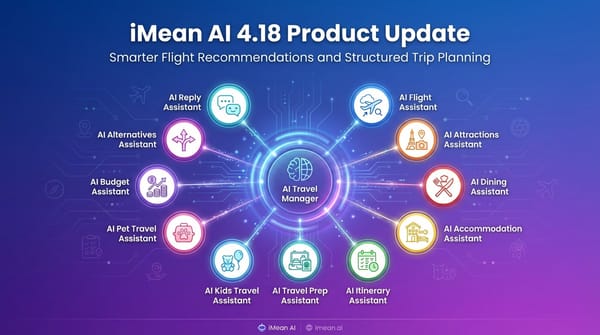
However, while basic agents leave you problems to solve, iMean AI'll be with you every step of the way to ensure a spectacular trip that you'll remember forever, as one of the best AI trip planners. This article is here as a detailed, step-by-step roadmap reference to iMean AI and my practical experiences for planning Italy the right way, which I wish someone had handed me.
Let’s start from the beginning.
Best Time to Visit Italy
What matters a lot is setting the right expectations for each season and not trying to do too much. Here’s how different times of year actually feel, based on weather, crowds, pricing, and overall vibe.
- Spring (March–May)
Spring is one of Italy’s most balanced seasons. With mild weather, flowers start blooming everywhere, and cities feel energetic but not too chaotic. March is still quiet, while April and May get busier, but never to the point of summer crowds. If you want an easy day trip, spring is an excellent choice. But I think it's not the best time to go to the beaches, it may still be a bit cool.
- Summer (June–August)
Summer is Italy’s famous high season with fine beaches, especially in July and August. Many locals leave the big cities in August for holiday, so some shops may close temporarily, while tourism peaks. If summer is the only time you can travel, aim for June or early September. Crowds are still there, but more manageable, and the heat feels less draining. Remember the trick is pacing: early mornings, long lunches, and late afternoons help you avoid the worst of the rush.
- Fall (September–October)
People think September is “off-season,” but it’s absolutely right. It’s still busy in popular destinations because the weather is nearly perfect: warm enough for the beach, comfortable in cities, and ideal for walking trips. October brings cooler days, fewer crowds, and golden light that makes every piazza look cinematic. If you want great weather without summer heat, fall is ideal.
- Winter (November–February)
Winter is Italy’s most underrated season, chilly but not harsh, and major cities stay fully active year-round. What makes sense is the absence of crowds. Rome, Florence, and Venice still have many visitors, but nothing like the overflowing summer months. Everything becomes calmer, making winter the best value season. If you prefer a more local, authentic vibe, winter will surprise you in the best way.
How Many Days Do You Need?
No matter when you go, the key is not cramming too much into a short trip. Italy rewards slower travel. Here’s a simple guideline:
- 3–5 days: One city (Rome or Florence, or Venice)
- 7–9 days: Two cities
- 10–14 days: Three cities, or two cities + one smaller town/region
- 15+ days: Add Tuscany, Puglia, Sicily, the Dolomites, or Emilia-Romagna
How to Plan Your Trip with an AI Trip Planner
I’ve planned trips the traditional way for years. But I found everything can get easier after iMean AI takes the scattered information in my head and turns it into something structured within seconds. Here’s exactly how to plan a trip to Italy with iMean AI:
Step 1: Tell it the basics
Just type something super simple, including travel dates, destinations, budgets, and what you are into(trip pace, transportation preferences, any physical constraints, anything you don’t want). For example:
“10 days in Italy in September with my friends, visiting Rome, Florence, and the Amalfi Coast. We like food, history, scenic walks and nightlife. There are four of us. The budget is 2000 dollars per person”
That’s it. iMean AI processes your preferences, pace, and even things like transportation logic or distance between cities. The goal here is just to give it enough context so it knows what kind of traveller you are.
Step 2: Get a complete itinerary
Once iMean AI understand your interests, it will create a full, ready-to-use Italy itinerary, day by day. What I really rely on here is how it quietly fixes issues I wouldn’t catch myself, like timing conflicts or awkward transfers. The result isn’t final, but it gives me a well-organised Italy plan I can start shaping into my own while avoiding the classic mistakes like unrealistic day trips or backtracking across the country.
Step 3: Tweak the itinerary to fit personal style
If you have anything to modify in the itinerary, just tell iMean AI in the chat. The AI trip planner is basically like a flexible assistant, nailing everything done just like your empathetic friend. By the time I finish, I have a fully customised Italy itinerary that’s built around my pace, my preferences, and the way I actually travel instead of some generic one-size-fits-all list.


Where to Stay in Italy
Here are three areas I recommend staying in Italy. I can tell that whatever the types of travellers you are, they consistently work well for you.
- Trastevere, Rome
A lively, walkable neighbourhood full of restaurants in a perfect location. A bit of a longer walk to see things. Plus, the food is apparently the best there. It’s perfect if you want an atmosphere without being too far from the major sights. Evenings here feel local and warm, and it’s easy to reach the historic centre on foot. Whether you are a first timer or an expert on Italian travel, you will enjoy the vibe here.

- Santo Spirito / Oltrarno, Florence
It's a central neighbourhood, quieter and less expensive than the centre. Here you find local restaurants and wine bars alongside artisan boutiques selling paper and leather goods, and residential buildings.
Stroll away from the Pitti Palace, and you'll discover small cobbled streets and the lovely Santo Spirito area. This neighbourhood church has a charming piazza lined with cafes and bars where locals gather at all hours of the day to converse, drink coffee or even better, aperitivo in the early evening.
When you want to go see the sights, it's just 15 minutes across the bridge to the Uffizi Gallery and a little further onward to the Duomo. You'll find great value AirBnBs, some lovely boutique hotels and luxurious properties with views closer to the river in Oltrarno.

- Centro Storico, Bologna
Centro Storico, or “Old Town” for anyone who hasn’t brushed up on their Italian, is Bologna’s historic city centre. For first-time visitors, this is the best place to stay in Bologna because of its proximity to many of the city’s major tourist attractions. Many more attractions are within walking distance of the symbol, but most tourists don’t know that, below the bustling streets of Bologna, lies a network of underground canals. You can catch a glimpse of Bologna’s canals through the window on Via Piella. This corner of the city is appropriately named Little Venice.

Top Things to Do in Italy
Route 1: Rome → Vatican City → Florence (Optional Pisa Trip)
It's a route most first-timers would like to follow. It's giving the “classic Italy highlights” without overloading your schedule. It blends ancient history, religious landmarks, Renaissance art, all connected by efficient train routes.
- Why this route works
Starting in Rome grounds you in the ancient world: forums, temples, piazzas, and neighbourhoods that haven’t changed in centuries. Once you’ve absorbed the city’s rhythm, spending half a day in Vatican City adds a completely different layer. Moving on to Florence slows the pace in the best way. The city’s compact centre, walkable streets, and concentration of Renaissance masterpieces make it ideal after a heavy start in Rome and the Vatican. If you are interested, you can stay in Pisa for half a day and take some cute, silly photos with the Leaning Tower of Pisa. It’s a one-hour train ride.
- Something to Avoid
Make sure you're on time for the ticket you've booked. If you’re following this route, keep Pisa as your only day trip. It maintains the trip’s natural flow without turning it into a logistical challenge.
Route 2: Venice → Verona → Milan & Lake Como
This route is for travellers who enjoy culture, scenic views, and a touch of elegance.
- Why this route works
Venice is a place best experienced, letting you adjust to Italy’s slower pace immediately. The only thing I would say is take the gondola ride. But you can wander to a place not too crowded, then take a gondola through the small canals. You can only do it in Venice. Verona adds romance without crowds, and because it’s compact, you can cover a lot without feeling stressed. Milan anchors the northern region with world-class museums, modern neighbourhoods, and easy connections to Lake Como for a day or two of lakeside escapes.
- Something to Avoid
Many travellers spend too little time in Milan, treating it as only an airport hub. But Milan is Italy’s fashion, food, and design powerhouse. I suggest give it at least two days.
Route 3: Naples → Pompeii → Amalfi Coast
This is for travellers who want intensity, archaeology, and dramatic coastal scenery in one sweep.
- Why this route works
Historical depth followed by natural spectacle creates a “big-moments” style Italy itinerary that people remember for years. Naples is chaotic and alive. If you have seen "My Genius Girlfriend" or "Jojo's Wonderful Adventure", you will feel more passion in this city. From there, Pompeii is an easy half-day detour, and walking through its preserved streets feels like time travel. Continuing from Pompeii to the Amalfi Coast makes perfect logistical sense and gives the trip a satisfying emotional release. After the dust of the ruins, places like Positano and Ravello feel almost surreal in color and landscape.
- Something to Avoid
Many travellers underestimate how different each Amalfi town is. Base yourself where the logistics match your style. Some are better for ferries, some have fewer stairs, and some are quieter than others.
Transportation Tips for Italy
- Within Cities
Most Italian cities are walkable. Basically, taking the subway and walking is enough for travellers to explore cities. Renting a car inside major cities is usually a bad idea because of ZTL zones and limited parking. In some cities, such as Florence, buses are very unpunctual(my personal experience). It's better to take trams.
Uber's services in Italy are not as popular as those in the United States. Locals use Freenow and ITTAXI. Personally speaking, it's better not to take a taxi so as not to be overcharged easily. If you're taking a taxi, double-check the destination to ensure you're headed to the correct location.
- Between Cities
Trains are the easiest and fastest way to travel between regions. High-speed trains connect Italy’s major cities, while regional trains cover towns and countryside areas. Flights only make sense for long north-south routes like Venice to Palermo. Renting a car works best in Tuscany, Puglia, or the Dolomites.
- Passes & Cards
Each city offers its own transport cards and museum passes. These can save money if you plan to use public transport frequently or visit multiple museums in a short time. By the way, you can buy paper tickets or e-tickets on the mobile phone software. I recommend e-tickets because they are more convenient to show when you meet the staff to check the ticket.
Final Thoughts
Italy is one of the most rewarding countries to explore, but it’s also one of the easiest to plan incorrectly. A good AI itinerary doesn’t just save time, it also brings me a smarter, smoother, more enjoyable adventure. Planning a trip to Italy with an AI trip planner has completely changed the way I travel.
If you’re planning Italy soon, try giving iMean AI a detailed prompt, let it generate a full plan, and customise it until it feels perfect. That’s exactly how I built my best Italy trips and why I’ll never plan the old way again.