I’ve visited South Korea 4 times, and I'm here to help you plan your dream trip to South Korea with my treasured Korea trip planner. Korea looks small on the map, but it is surprisingly complex once you start digging into neighborhoods, routes, and actual travel times. Different from regular trip planner websites, as an AI trip planner, iMean AI can lead you to map out a clear, realistic plan by chatting like a friend.
In this guide, I’ll walk you through everything from timing to routes to transportation, building you a simple, step-by-step roadmap for Korea.
Best Time to Visit Korea
With four distinct seasons, South Korea has something to offer, no matter when you travel to the country. If this is your first trip, I suggest 3–5 days for Seoul only, or 7–9 days if you want to add Busan or a short nature escape. For a deeper mix of food, culture, and neighborhoods, 7–10 days gives you room to breathe without rushing.
- Spring (March–May)
Typically lasting from April to June, spring is often seen as the best time of year to visit South Korea, with average daily temperatures a pleasant 15 - 18°C. During this time, the flowers are in bloom and green spaces are bathed in the delightful hues of the pink cherry blossom, especially in the city of Gyeongju. Most cities celebrate the arrival of spring with cherry blossom festivals and other events.
- Summer (June–August)
The brief summer lasts from July to August and is the hottest time of the year in South Korea. Temperatures may range between 23°C and 30°C, but this is also the wettest time of the year, with the monsoon rains bringing half of the country’s annual rainfall during these months. The locals respond by heading to coastal cities such as Busan and Jeju Island.
- Fall (September–October)
The mild temperatures (average temp: 19-21°C), low rainfall, and natural beauty make autumn a strong rival to spring as the best time of year to visit South Korea. Come fall, South Korea’s cities and national parks don shades of yellow, orange, and red with relatively lean crowds. It’s the perfect time for city exploration and outdoor activities such as hiking.
- Winter (November–February)
Falling between December and March, the long winter is cold but relatively dry, and certainly charming. Crisp, white snow can be expected, creating romantic views you can enjoy without the madding crowds of spring. Winter sports enthusiasts can enjoy skiing and snowboarding at the ski resorts in the Gyeonggi-do Province and in Gangwon-do, which sees a higher-than-average annual snowfall.
How to Plan Your Trip with the AI Trip Planner
Actually, the flow is simple with three steps using iMean AI, and I already have a day-by-day plan that actually matches how people move through Korean cities. Here’s how to typically use it.
Step 1: Tell the AI What Kind of Trip You Want
You can start by describing the basics: the number of travellers, destinations (Seoul, Busan, Jeju, etc.), budget, how many days you have, and things you care about(what kind of pace you prefer, anything to avoid or keep, certain days more flexible, etc.). The whole conversation with the AI trip planner feels natural rather than robotic.
Step 2: Let the AI Build and Refine the Itinerary
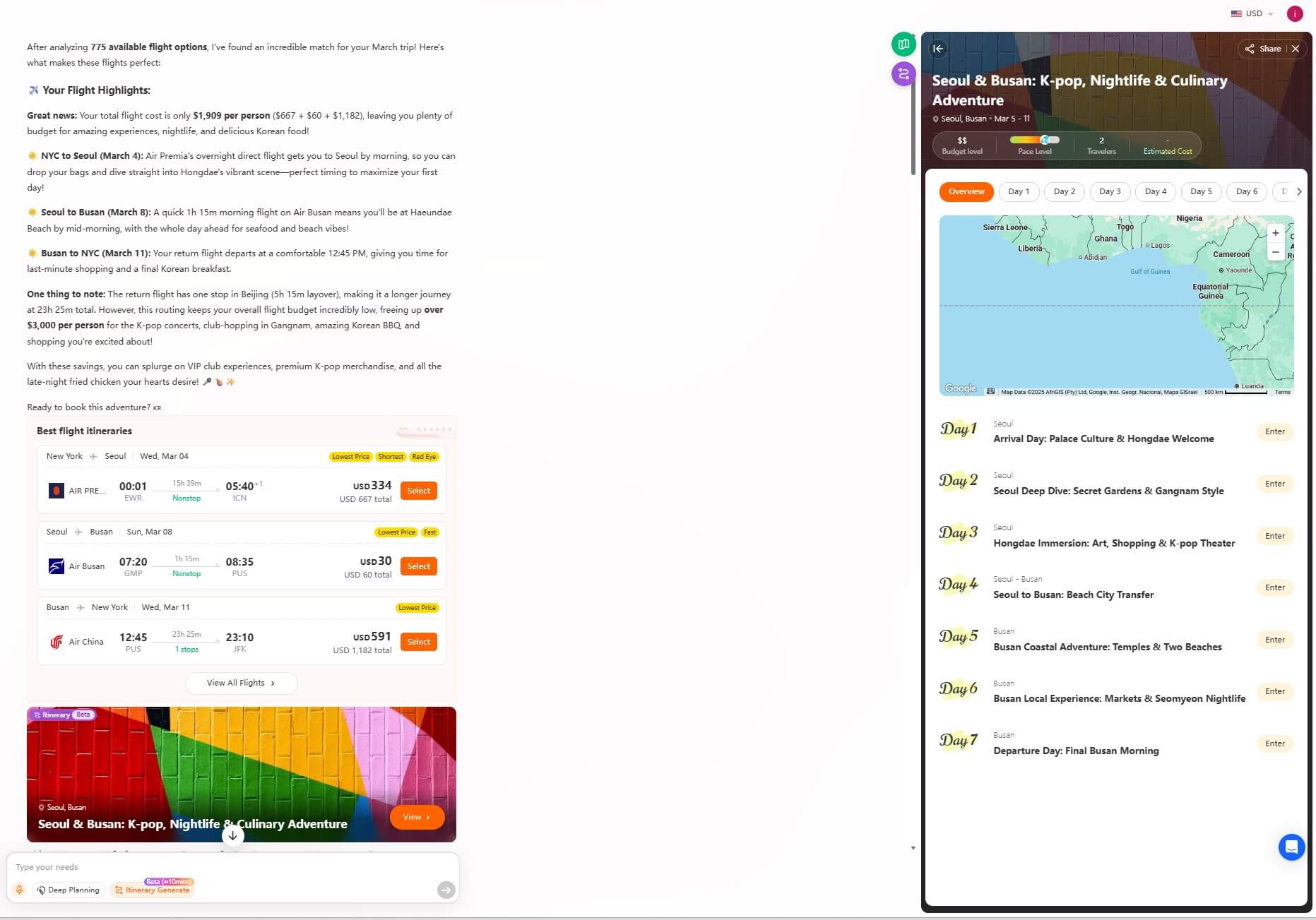
Within minutes, you'll get a full day-by-day itinerary. It includes recommended neighborhoods, activities, restaurants, and a logical daily schedule. If you have anything to adjust, just say so. It can update the plan in real-time with the system trained specifically around travel scenarios. It also won’t suggest places that don’t exist, something I’ve unfortunately seen other tools do.
Step 3: Share or Save the Itinerary
Once you're happy with the draft, you can save the itinerary link to open it later or share it. Here is my Korea itinerary that you can check out.
Where to Stay in Korea
- Hongdae, Seoul
If you want a mix of culture, food, and easy subway access, Hongdae is the neighborhood I always recommend first. From there, you are also walking distance to Yeonnam, Shinchon, Hapjeong, Mangwon, and Sangsu. Hongdae has lots of hotels, guesthouses, and other accommodations to choose from, too. It’s a major hub for subway lines and the airports, so you can easily make your way around town from there. What's more, it has a lovely vibe and a bit of everything, like bars, restaurants, food, etc.

- Haeundae, Busan
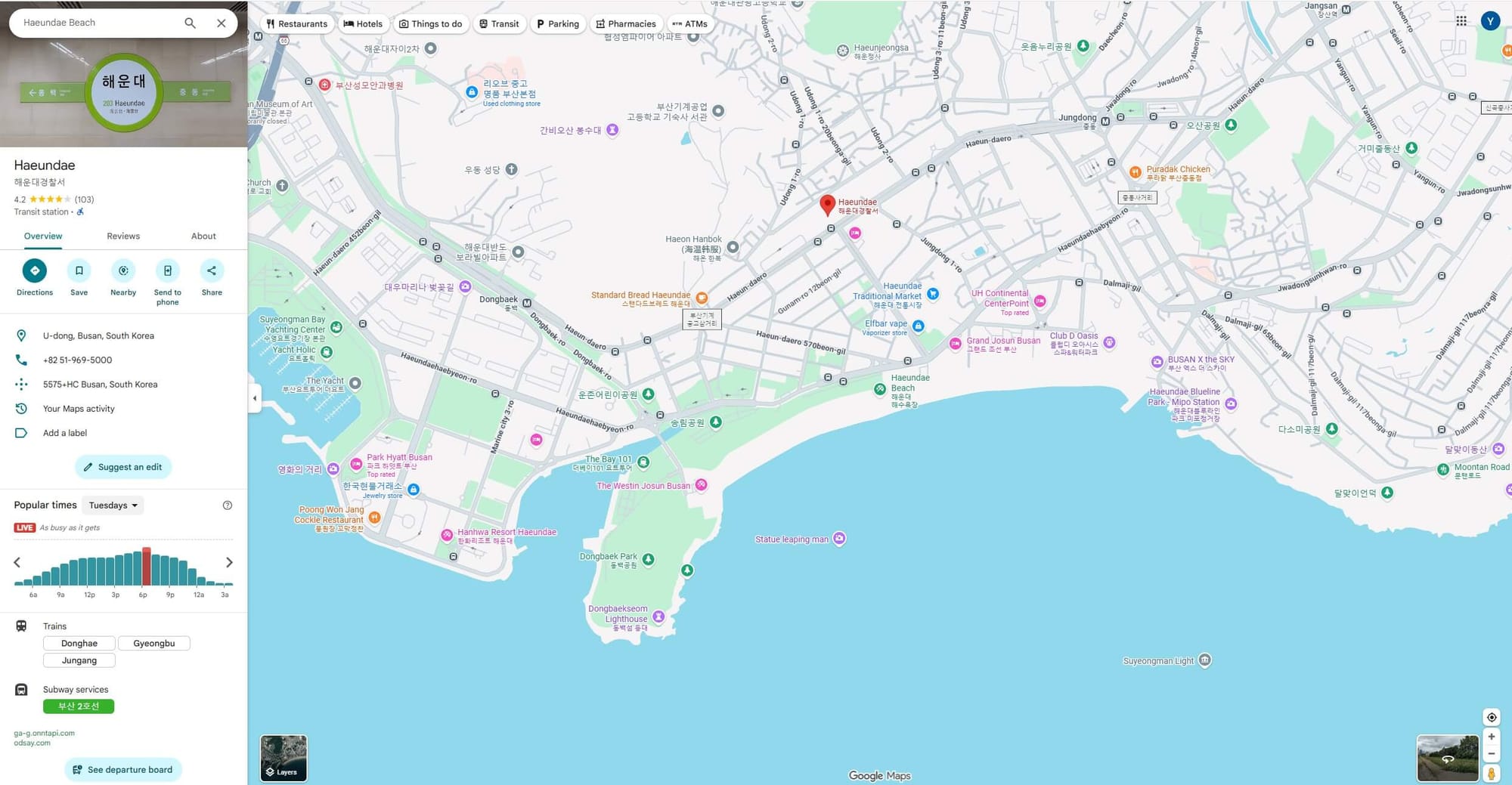
Haeundae is always my first choice: it’s beautiful, right by the ocean, close to many tourist attractions, and has plenty of nice hotels. Basically, it is the easiest base for exploring Busan. You can get beaches, coastal walks, and a clean, modern layout that makes navigating the city straightforward, even on a short visit. It’s especially great if you want a break from Seoul’s fast pace.
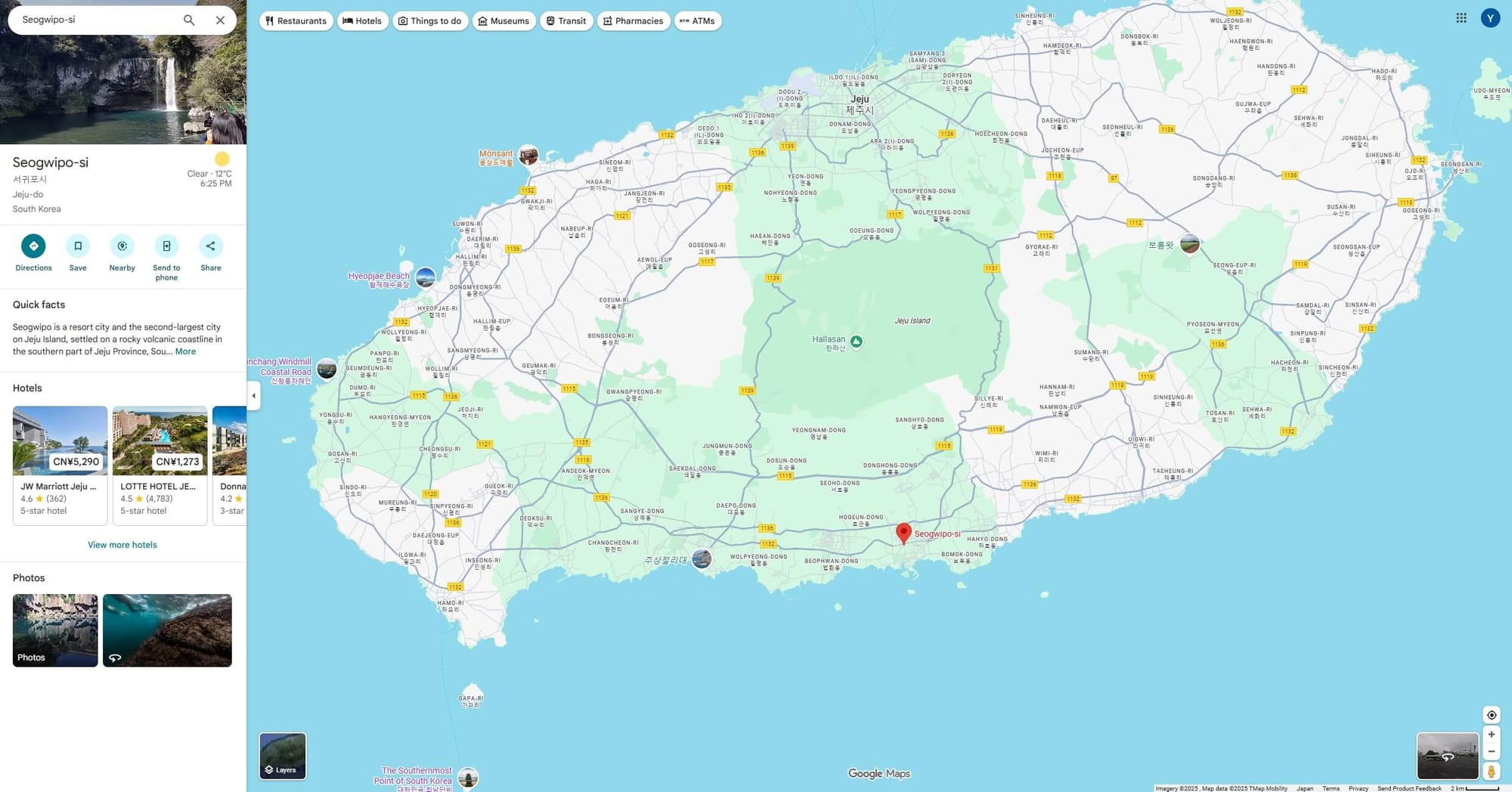
- Seogwipo, Jeju
If your trip includes nature, waterfalls, or coastal hikes, Seogwipo is perfect as the most convenient part of Jeju. It’s quieter than Jeju City but still has plenty of restaurants, night markets, and easy access to major outdoor spots. There are great escape rooms in Haeundae. You can eat some sweet popcorn and watch a movie, or just walk up and down the beach.
Top Things to Do in Korea
- Route 1: Seoul → Suwon → Jeonju
This route gives you a clear view of Korea’s historical backbone. Start in Seoul, where modern city life surrounds royal palaces and traditional markets. Then spend a day in Suwon exploring the UNESCO-listed fortress that wraps around the old town. End in Jeonju, home to the well-preserved Hanok Village known for food, craft streets, and a slower traditional rhythm. By the way, it's better not to rush Jeonju for its charm in slow wandering.
- Route 2: Seoul → Gangneung → Sokcho
This is your coast-and-mountains journey. Take a direct bus/train from Seoul to Gangneung for beaches, coffee street, and a calmer East Coast mood. From there, head up to Sokcho, the gateway to Seoraksan National Park, where you can hike scenic trails or enjoy fresh seafood markets. In this case, you can switch from city to beach to national park without complicated transfers in just two days. Don't forget to check Seoraksan's weather because trails often close during bad conditions.
- Route 3: Busan → Gyeongju → Daegu
This route blends ancient history with modern urban life. You can enjoy coastal views and urban energy at the same time in Busan. Then move on to Gyeongju, the “museum without walls,” where burial mounds, temples, and ancient sites sit across peaceful fields. As the final destination, Daegu is known for markets, street food, and a compact downtown that’s easy to explore in an afternoon.
Transportation Tips for Korea
Getting around Korea is easier than people think, but the options vary depending on where you’re going and your comfort level with public transportation.
- City Transportation: Subway / Bus / Walking / Rental Car
Subway: This is the backbone of city travel. Lines are well-marked in English, trains run frequently, and most major attractions are conveniently located near stations.
Bus: Amazing coverage, but trickier for first-timers because routes can be confusing. The announcements are clear enough once you get the hang of it.
Walking: Whether Korean cities are walkable depends. A lot of roads give the feeling of climbing the hills. You may cover more miles than expected, so bring comfortable shoes.
Car Rental: I don’t recommend driving inside Seoul or Busan unless necessary. But for Jeju or nature-focused routes, renting a car is very common.
- Intercity Travel: Train / Flight / Car
KTX Train: Fast, comfortable, and the best way to go from Seoul to Busan.Domestic Flights: Ideal for Jeju or distant southern cities. The turnaround is quick, and airports are easy to navigate. Car Rental: Works well for Jeju, national parks, or scenic drives, but is unnecessary for city-to-city trips.
- Travel Cards / Passes
Korea uses a simple reloadable transportation card system. T-Money: Works for subways, buses, and some taxis. Easy to buy and top up at convenience stores. It’s straightforward and saves time, just tap in and out.
Final Thoughts
Planning a trip to South Korea doesn’t have to feel complicated once you find the right tool. If you want something that builds a personalized, editable, and practical itinerary without the usual planning stress, try iMean’s free trip planner. It’s the easiest way I’ve found to reach a dream trip, exactly how you like to travel.