

Our pets are family (because they are), and many pet owners want to explore the world without leaving their family members behind. So I researched dog-friendly travel in 2026. Through my research, I quickly learned that dog-friendly travel isn't one-size-fits-all, which means my article wouldn't just be a list of pet-friendly destinations, but a comprehensive guide including where to go, how to get there, and what to consider before you pack. If you want to enjoy the journey with your pets, let's proceed.
Why Pet-Friendly Travel Needs Real Planning
Before we begin, I would like to explain why real planning makes sense. From pet policy changes to extra fees, finding dog-friendly travel isn't as straightforward as you might think.
- Different airlines have different rules about carriers, weight limits, and whether pets can fly in the cabin. Some airports are easy to navigate with animals, while others give you long walks, crowded lines, and limited relief areas. Plus, if you are flying, an important step is to contact the airline to check if there is any other paperwork required.
- You love your pet. However, that doesn’t mean that the owner of the hotel or Airbnb where you’re staying will love them, too. So, you should make sure when booking your accommodations that they offer some perks for pet owners.
- Destinations also treat pets differently. If you are planning a long trip, crossing borders, or traveling internationally, it’s essential to have your pet’s health records on hand. Many places and countries require that incoming pets have an up-to-date health certificate signed by an accredited veterinarian to prove that they are healthy and vaccinated.
So a real pet-friendly trip planner isn’t just giving you a list of cute animal cafés. It’s helping you think through logistics.
Where to Go: Best Types of Pet-Friendly Destinations
Nature-Focused Destinations
Wide-open environments often rank among the best pet-friendly destinations. If you want open space, slow rhythms, and fewer sensory stressors for your pet, nature destinations are hard to beat. I’m talking about coastal areas, lake regions, mountain towns, and national parks (the parts where pets are allowed). These places give pets room to move around, breathe fresh air, and adjust gradually to new surroundings.
But they also come with real considerations. Trails vary in difficulty, and not all wildlife areas allow pets for ecological reasons. Some beaches may have rules like allowing dogs only at certain hours or seasons.
- Examples:
- Oregon Coast, USA
- Lake District, UK
- Banff Townsite Area, Canada
- South Island small towns, New Zealand
Slow-Paced Cities
Some towns and small cities are surprisingly great for pets, especially if they have walkable streets, outdoor dining, and a calm pace. Pets tend to handle environments like this better than large, busy urban areas. A lot of these cities also have weekend markets or open-air cafés where pets are welcome. These destinations are great for travelers who enjoy culture and food.
But every city has its quirks. Public transportation rules can vary, and some places require muzzles, carriers, or special passes. Sidewalk heat can be an issue during the summer months. So even in a relaxed city, you still need to think about your pet’s comfort.
- Examples:
- Portland, Maine (USA)
- Hobart, Australia
- Ghent, Belgium
- Victoria, Canada
Pet-Friendly Culture Regions
There are regions where animals are treated more like family and less like “guests.” You’ll often see dogs relaxing under café tables or walking through small shops. These are the types of pet-friendly destinations that feel naturally supportive for travelers with pets, and it’s easy to settle into a smooth routine.
But “pet-friendly culture” doesn’t mean “no rules.” Public transit may still restrict certain breeds or require carriers. Indoor museums may not allow pets. And while people may be friendly, official regulations still matter.
- Examples:
- Northern Italy (e.g., Turin, Verona)
- Germany’s smaller cities (e.g., Freiburg, Lübeck)
- France’s southwestern towns
- Japan’s pet-friendly resort areas, like Karuizawa
How to Travel with Pets: Transportation, Hotels, and Rhythm
Transportation
- By Air:
Flying with a pet requires preparation. Airlines differ in rules for cabin vs. cargo travel, carrier dimensions, and seasonal restrictions. Cabin travel limits your pet to staying inside the carrier, which can be tough for animals unused to confinement. Security checks take longer, and layovers may not have pet relief stations. If your pet gets anxious with noise or motion, long-haul flights may require slower itineraries.
- By Train
Trains are usually smoother for pets, offering quiet cabins, stable temperatures, and less vibration. However, train rules vary globally: some allow only small pets in carriers, while others require leashes and tickets for larger dogs. You still need to consider crowd levels and whether your pet can settle in for longer stretches without overstimulation.
- By Car
Cars give you the most control over pace, brakes, and environment. Pets can have familiar bedding, predictable smells, and more freedom to stretch. But safe restraints are essential, and you need to plan bathroom stops and avoid temperature spikes. Never leave a pet in a parked car, even briefly. And if your pet gets carsick, shorter driving days and more ventilation help. This mode works especially well for travelers exploring regional routes and those wanting more flexibility in pet-friendly travel.
Hotels & Stays
Here are the factors you should consider about the accommodations:
- Allow pets: Whether they allow pets, in any capacity.
- Fee: How much is the pet fee charged by the hotels that allow pets?
- Relative fee: To normalize for fancier hotels, look at what the fee was relative to the overall room rate.
- Potential for $0 fee: Extra points are given to hotels with brands that explicitly don’t charge pet fees at all properties within that brand.
- Search feature: If a hotel offered a user-friendly search feature to filter for pet-accepting hotels.
- Consistent policies: If the pet policy is the same at every property, versus if there are variations in terms of size limits, price, etc.
- Extra amenities: If a hotel offers amenities like bowls, pet beds, or treats.
Take them into consideration because these details can actually make or break the comfort level of the trip.
Itinerary Rhythm
A pet-friendly trip needs a margin. Pets absorb smells, sounds, and new environments differently from humans. They need adjustment periods, shaded breaks, hydration stops, and downtime after busy outings. Packing your day with back-to-back attractions is a common mistake. With the help of iMean AI, the pet-friendly trip planner, you can easily get a smoother travel experience. I once used it for my trip to Freiburg.
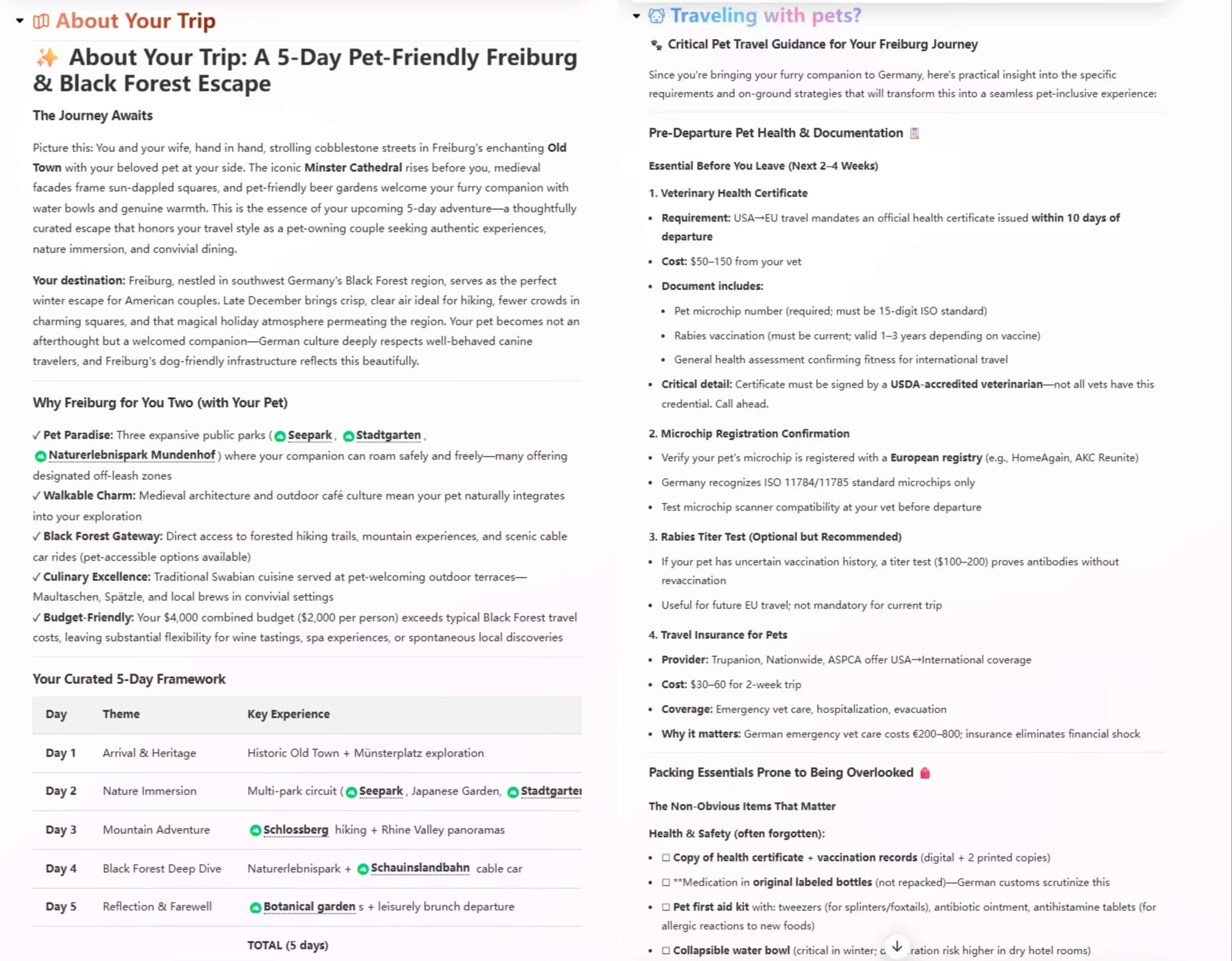
Planning Framework
Before You Go Checklist
- Get a vet check-up before you go: Before your trip, schedule a check-up with your vet to confirm that your pet is in good health and avoid any nasty surprises on the road. Ensure your dog is up-to-date with vaccinations and has the right parasite prevention for your destination.
- Take a test drive: If your pet isn’t used to traveling or hasn’t been on a long journey before, build their confidence with short test drives. If they seem comfortable straight away, great! If not, keep taking them out (with lots of treats on hand) to get them used to the car.
- Check and respect local rules: Leash laws and pet policies vary by destination. Some beaches and national parks ban dogs, some allow them on a leash, and some let them run free. Always follow the rules of the place you’re visiting to keep your pet safe and you on the right side of the law!
- Ensure they can be easily located: You can implant a microchip under your pet’s skin, making it easy to track them, even if they wander off. Or, if you are not willing to undergo such a procedure, ensure that your contact information on their tags is up-to-date, so that whoever finds them can easily contact you and return them to you safely and soundly.
On-the-Road Checklist
- Hydration & food management
Bring a collapsible bowl, bottled water, and snacks. Avoid feeding right before motion-heavy travel to prevent nausea. - Temperature control
Monitor the car temperature constantly. Use sunshades, ventilation, and cooling mats if needed. Airplanes can be cold, so small pets may need a thin blanket. - Safety restraints
Use seatbelt harnesses or anchored carriers. Never let pets sit in the front seat where airbags could injure them. - Planned rest stops
For road trips, schedule breaks every 2–3 hours for bathroom time, stretching, and stress relief. - Clean-up supplies
Carry waste bags, pet wipes, sanitizer, a small towel, and biodegradable cleaners for unexpected messes.
Final Thoughts
Traveling with a pet is absolutely doable when you align your plans with your animal’s comfort level. Every pet reacts differently to new spaces, so the pace, route, and destination should reflect what your companion actually needs. Some pet-friendly trip planners like iMean AI can help organize routes, compare stays, and make the planning stage feel smoother, but your own judgment and your pet’s behavior matter most. With realistic expectations and thoughtful prep, travel with pets becomes not just manageable, but genuinely meaningful.