
The world is big, and my own world expands with each journey. I love adventures in a completely unfamiliar city. I value every opportunity to set off and enjoy experiencing different cultures, which helps me better understand who I am. However, planning trips used to be my biggest headache. I tried traveling without any plan, but regretted not using my time and money better. That's when I started to plan with AI. It has accompanied me on many journeys. AI is not all-powerful. AI plus human judgment is the best combination.
When AI Helps Me Plan a Trip
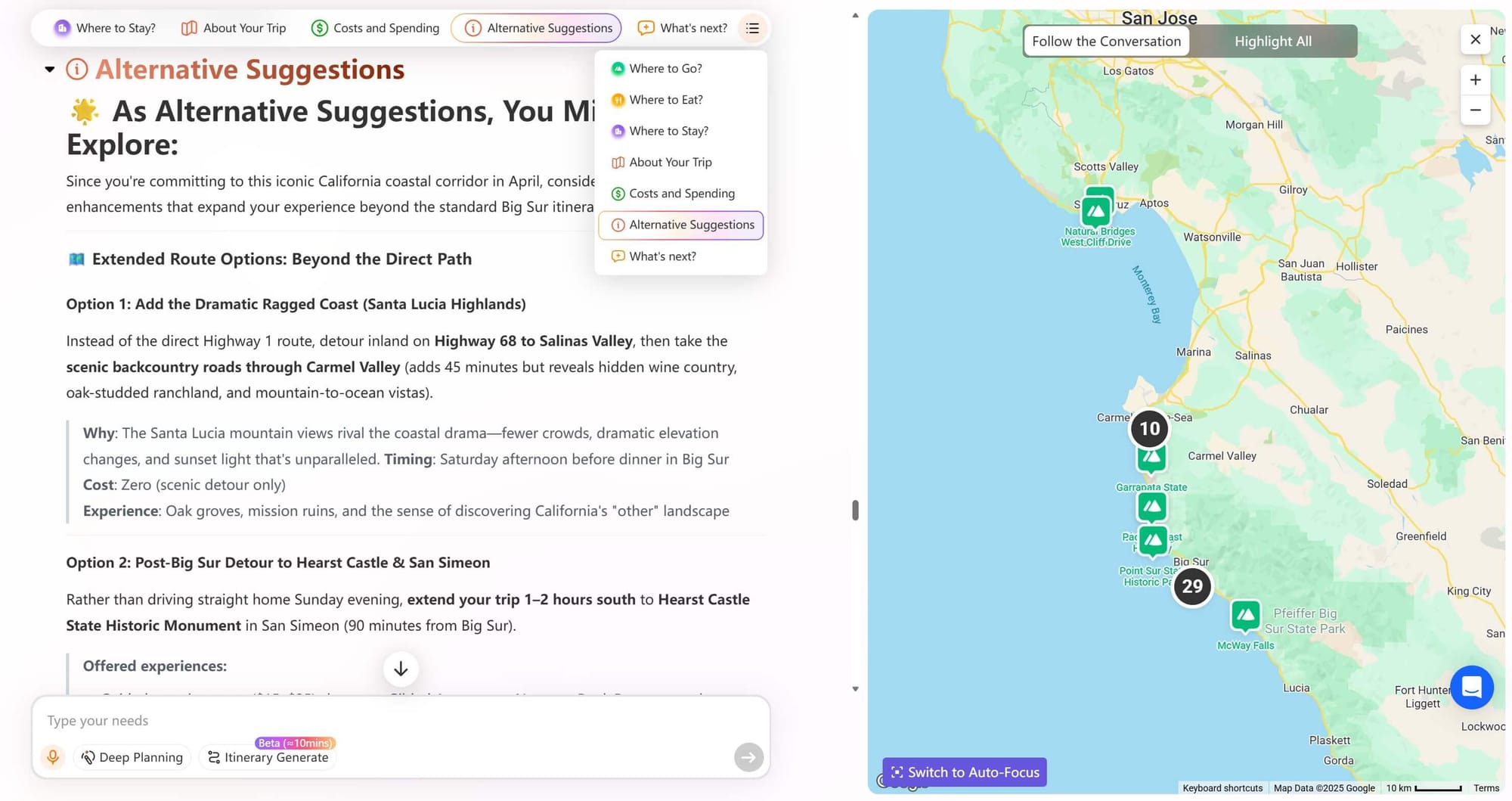
It was an ordinary night of scrolling in bed. I saw a photo of Big Sur. Foggy cliffs, empty roads…, I couldn't suppress my urge to set off. What if I go tomorrow? But I don't have camping gear. How to plan the route? I was tired after a long day's work, and planning just made my brain feel stuck. So I tried an AI trip planner my friend recommended.
I was surprised. Within just a minute, I got a well-structured plan including where to go, eat, and stay. Since it's only a two-day trip and I didn't have a tent, where to stay was crucial. The AI took it into account and recommended hotels that fit my needs. Also, it gave me some booking tips, which were really useful. What impressed me most was its advice: Big Sur's power is diminished by constant documentation. Presence matters more than Instagram. For a moment, it felt more than a machine.
Another trip planned with AI, and this time, I was amazed by its budget control. I wanted to have a budget trip from San Francisco Bay to Edinburgh for 5 days for under $2000. Money was tight, but I really wanted to go. So I input my needs for the AI trip planner once again. It not only listed every detail of the budget, but also filtered out suitable recommendations of flights and hostels. I could clearly track where my money was spent.
The time I appreciated AI the most was when I planned a trip to Italy with my 62-year-old mother, my sister, and her 9-year-old son. Planning a trip with the elderly and a child means diverse needs. But the AI performed well. And it did save me a lot of time and energy for information searching and decision-making.
When AI Gets It Wrong
AI is not all-powerful. When I don't have a clear goal, the itineraries are never what I want. But through this process, I gradually realized what kind of trip I wanted. I have learnt to chat with ChatGPT to clarify my destination and preferences first. Then give the AI trip planner my clear prompt.
Prompt is essential. Make sure your dates are clear and your preferences too, or the AI will assume your travel vibe. Do add limits to your preferences, for AI could be over-focused. Once, I told AI that I prefer coffee and art. So many related activities were packed into the itinerary.
Also, AI might miss real-time information. Some AI tools are weak in real-time web searching, which can even lead to AI hallucinations, information that seems accurate but isn’t. It saves me time when making the plan. But for a real trip, it's unworkable and costs me more time. So, how to deal with it?
- Choose a more reliable AI trip planner that has mature web search capabilities and a logical travel reasoning framework, rather than relying solely on an LLM. These help minimize AI hallucinations.
- Double-check key information yourself. Like hotel check-in time, pet policy, and the opening hours of sights and restaurants. Just a few minutes can save you from unexpected trouble.
AI can not make decisions for your personalized itinerary. I recommended many AI tools for my friends, but he didn’t enjoy the itinerary at all. Why? Because he always uses the itinerary directly, without checking whether the arrangement truly matches his preferences. AI is just a tool. You are the one making the decisions about your trip.

How to Combine Human Travel Experience with AI Trip Planning
Human travel experience is for making decisions. What really matters to you? What to prioritize and what to skip? The more I travel, the clearer I know what kind of trip I want. On my first visit to Australia, I want both the city vibe and the natural wonders of a short trip. The AI did give me the plan I wanted, but in the end, I didn't really explore the cities deeply, nor did I have enough time to fully experience the nature.
If you are new travelers, don't worry. Chat with AI to help you make decisions. For example, you can ask:" How many days are needed for an in-depth city trip?" For adventure, which city should I choose?" This helps you craft a clear prompt for the AI trip planner.
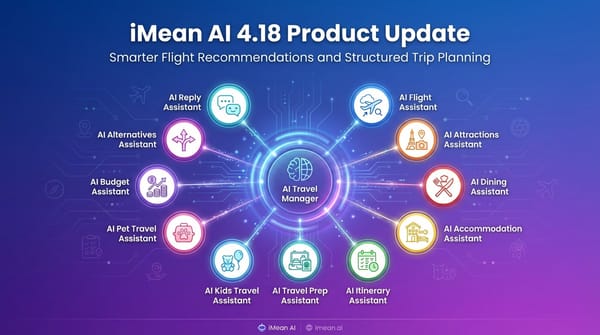
What does an AI Trip planner do for trip planning? Based on your prompt, it combs through tons of information to pick out what fits your needs and generates a workable itinerary. Also, it can search for suitable hotels and flights. Not just consider your budget, but also time, your preferences, and other important factors. One website to handle what usually takes more than 20 websites, saving the time and energy of travelers.
After the plan is completed, what travelers should do is review the itinerary, confirm the key details, and make adjustments. Over time, with experience, trip planning can be easier and easier. I have learned better how to make an AI trip planner as my reliable assistant.
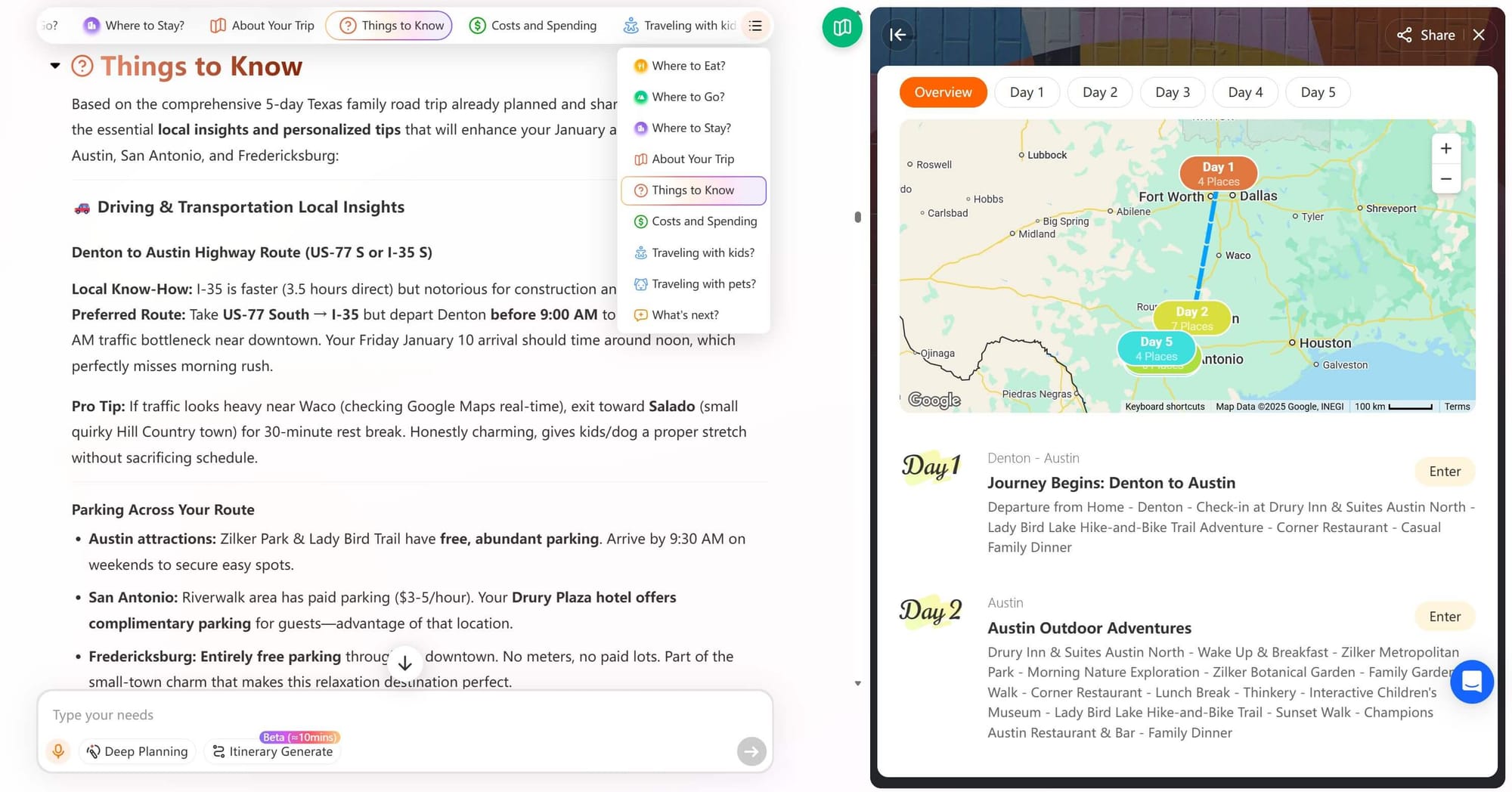
My Prompt for AI Trip Planning
AI + Human Experience = the Best Way to Plan a Trip
If you don't know how to start, this is the prompt I used most with iMean AI.
I would like to plan a trip for [number of travelers] [gender/description] with a budget of around [budget] per person. The trip will last [number of days] days at a [slow/moderate/fast] pace. We plan to spend [number of days] in City 1, [number of days] in City 2, …, and [number of days] in City N. Depart from [departure city] on [departure date] and return to [return city] on [return date]. Additional notes: [friends joining, special events, or preferences like girls’ night out, outdoor activities, food experiences]. Please help me with the itinerary.
If you’re curious how AI could support your own travel planning, try using it as a co-planner and see what changes for you.