
Planning a complex trip often reveals the limits of travel tools. The best itinerary planner for complex trips isn’t the one that generates plans fastest, but the one that can handle real constraints, multiple destinations, and changing needs. For example, a good multi-city itinerary planner helps travelers reduce rework and ensure their plans are feasible in the real world. From overlapping schedules to family or multi-city trips, travelers need tools that reduce rework and ensure real-world feasibility.
Why "Best Itinerary Planner" Is Harder Than It Sounds
Have you ever been attracted by the "best itinerary planner" and shocked by its "perfect trip" in seconds? However, once you actually try to use those plans, these "perfect plans" are hard to follow in real trips. Detours can waste time and energy. Popular attraction recommendations can't meet personal preferences. Or inaccurate information leads to itineraries that are impossible to follow. The ability to generate doesn't mean a plan is executable. Whether an Itinerary planner is good or not depends on whether the plan is workable in real trips.
What Actually Matters in a Real Itinerary Planner
For an itinerary planner to truly be effective in real-world trip planning, it must go beyond simply listing destinations. It should create logical routes, balance transportation and time, accommodate multiple destinations, and remain flexible for adjustments and diverse travel needs.
- Logical route sequence
- Reasonable transportation and time costs
- Supports multi-city / multi-destination itineraries
- Easy to modify and adjust
- Adaptable to diverse needs like family trips, long journeys, and complex itineraries
Traditional Planners vs AI Itinerary Planners
Search on the internet, and you will find that people recommend multiple ways of trip planning. Each of them has its pros and cons. Except for the most traditional way of using Excel, Google Maps, and flights and hotels search engines to plan a trip, trip planning tools can be roughly divided into two types: traditional planners and AI itinerary planners.
Traditional Planners
Traditional planners provide information, recommendations, and user comments. Users pick activities and attractions they want and arrange them manually. They are more like an information hub supplemented by user-generated content. Users can read reviews, see photos, and get real-world tips from other travelers.
What works:
Users take full control of the itinerary planning and adjust the itinerary according to their own preferences and travel path. The information sources are connected to the real world and user reviews, which ensures the reliability of itineraries. What's more, as travelers plan, they get to know more about the destinations, routes, and transportation. Step by step, they also gain a sense of achievement along the way.
What doesn't:
The information the platform provides can be limited. And also, user reviews may be manipulated, which can make the information unreliable. Travelers who lack travel experience and the ability to search for information and plan itineraries may focus more on details and feel stressed when faced with complex information. These travel itinerary planner tools are not well-suited for trips with complex needs, such as long-distance journeys, multi-destination trips, and family trips with children or pets, which require time and effort to plan the trip smartly.

AI Itinerary planners
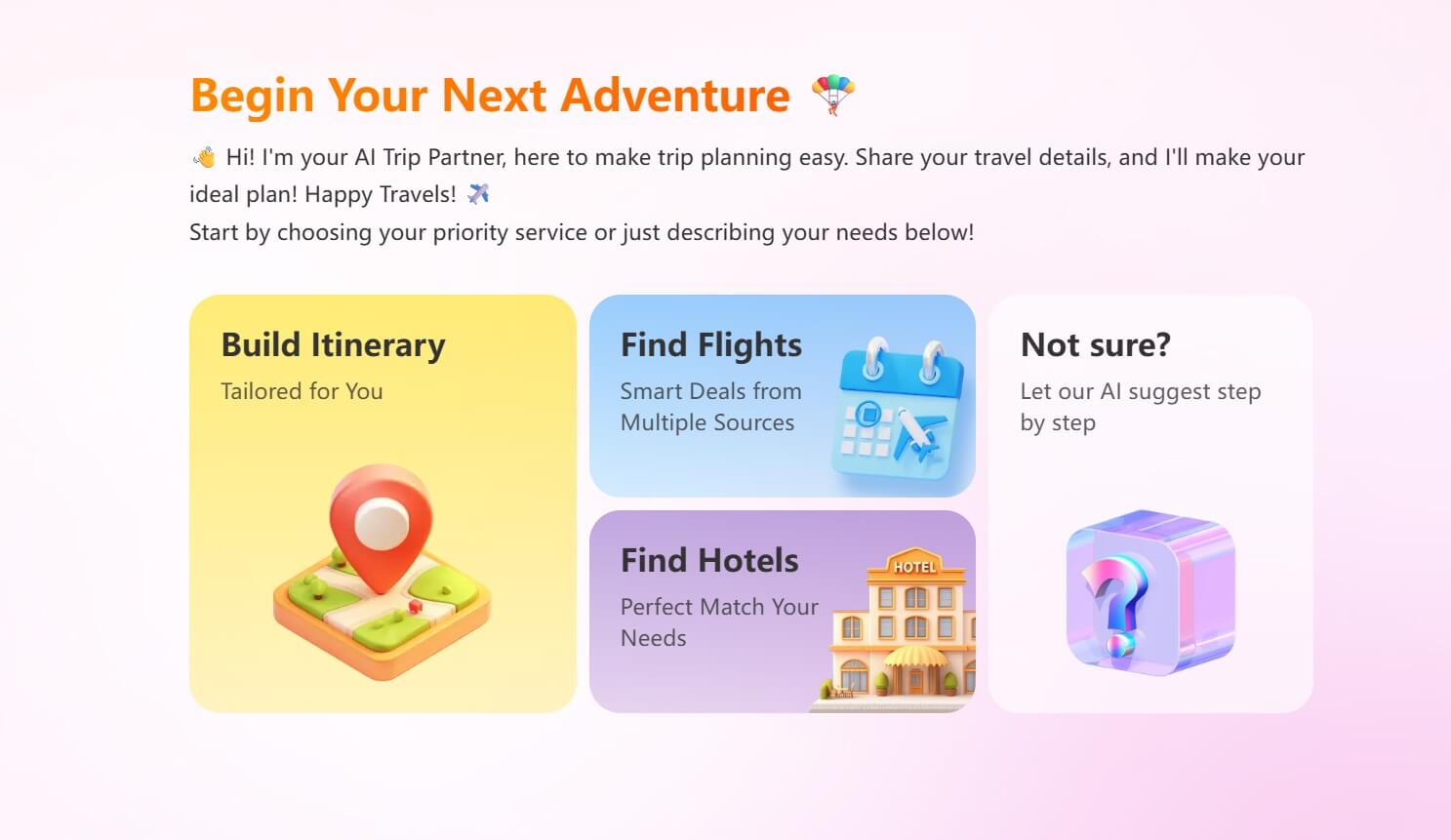
AI itinerary planners expand the way people plan their trips and bring major changes. With prompts, travelers can get the complete itinerary in minutes. What can an AI itinerary planner do, and what are its limitations?
What works:
AI Itinerary planners are good at searching and filtering the information, saving travelers from being overwhelmed by a sea of data. After understanding users' intent, it can generate a plan that meets their needs logically in minutes or even in seconds. During route generation, some AI trip planners can automatically optimize the itinerary based on maps, budget, time, and some other key factors. If travelers are not satisfied with the itinerary, they can adjust it repeatedly.
What doesn't:
However, the ability to search is not a guarantee of a workable itinerary. Not all AI travel planner tools can verify facts before speaking, and real-time updates are often limited. So travelers need to double-check details before the trip. What's more, AI can not guess your preference unless you clearly tell it what you want, or it may assume your vibe. The same goes for other details like dates, budget, and preferences. The more detailed your prompt is, the more personalized your itinerary will be. Most importantly, AI cannot make decisions for you. You are the decision‑maker of your journey.
A Real-World Comparison
For real-world trip planning, different itinerary planning tools perform differently. The most traditional way of using Excel, Google Maps, and search engines is not only convenient but also enjoyable when planning short trips or traveling within familiar cities. However, if the trip is complex, connecting all destinations, accommodations, and transportation can be challenging. Not to mention meeting the needs of different travelers.
For the traditional itinerary planners we mentioned above, they save travelers a lot of time on information searching based on their recommendations and reviews. But travelers still need to arrange the order and timing of activities manually, to make sure the itinerary is executable. For complex trips, this requires a significant amount of time and effort.
AI itinerary planners help travelers gather and filter information, and then automatically generate routes and travel plans. The travelers' role is mainly to make decisions and double-check key details. AI acts like a powerful assistant, but not all-powerful. Most AI itinerary planners perform well for regular trips. But when it comes to complex travel needs, not all AI itinerary planners can handle them, such as a 10-day trip across 3 to 4 countries or a multi-generational family trip with the elder and children.
Therefore, whether a trip planner tool is truly useful and reliable depends largely on its ability to handle complex trips.
Where iMean Fits In
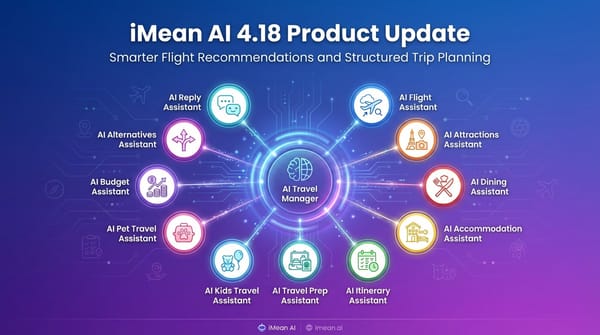
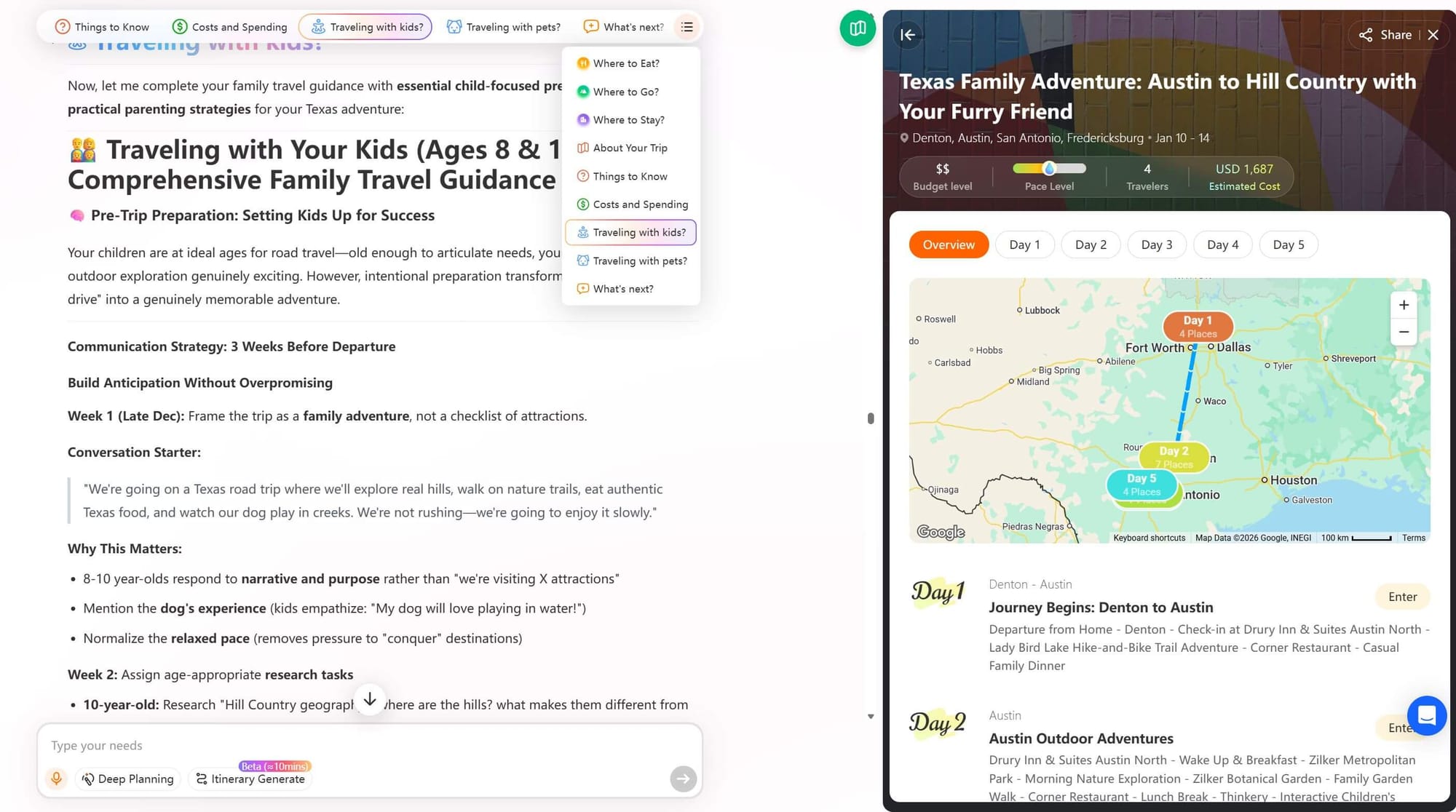
iMean AI trip planner is well designed for complex trips. Instead of relying on a single agent, it uses a structured agent system to handle complexity. The system includes 12 AI travel agents: 1 manager and 11 assistants focusing on specific aspects such as restaurants, accommodation, budget, children, and pets. The requirements and preferences that users input are accurately identified and assigned to different AI agents, reducing the risk of key information being overlooked.
What's more, the answer is well-structured. Using the fixed navigation bar at the top, users can check if their needs are taken into consideration conveniently.
With its clearly defined AI agents, iMean AI performs well when handling complex trips, especially for multi-city itineraries, highly constrained schedules, a family trip with children or pets, or a long-distance trip.
Final Thoughts
The 'best' itinerary planner isn’t necessarily the one with the most features or the flashiest interface. Instead, it’s the tool that minimizes rework and guides you toward a plan that is actually executable. For complex trips, having a clear structure, logical sequencing, and adaptable flexibility matters far more than speed. Choose a planner that reduces friction and keeps your travel organized, rather than one that simply promises a perfect plan. Try using iMean AI for your next complex trip and see how structured planning can save time and reduce rework.