Why Travel Itineraries Rarely Go Exactly as Expected?
Sometimes, even the most well-planned trip won't go as you expected. Many travelers don't know they have already made many trip planning mistakes when planning. The stress of rearranging the itinerary, the frustration of missing your favorite attractions, and the accumulated physical and mental fatigue may lead the trip into a nightmare. Moreover, Common travel mistakes like packing too many activities into a single day or failing to check opening hours can easily disrupt your plan. I guess you wouldn't want to share your "totally failed travel story" on Reddit.
- Overpacking or inefficient routing
- Underestimating transportation time
- Unreasonable budgeting
- Wrong flight and accommodation choices
- Ignoring travel companions' preferences
Most of us actually don't know how to plan a trip, even if we know these common mistakes. Why? Because there's too much to consider. But lately, AI trip planners have been getting more powerful, so maybe we can let them do the planning.

What Travel Planning Challenges Can AI Help You Solve?
Planning a trip sounds simple, but it is actually complicated and energy-consuming. When unexpected situations happen, you also need to figure out how to fix an itinerary. These are challenges that an AI trip planner can solve.
- Generating a complete itinerary based on users' needs
- Personalizing the trip to users' preferences, pace, and budget
- Optimizing routes and daily activities for efficiency
- Offering quick alternatives when something doesn’t fit
- Comparing flights and hotels across platforms
- Provide directly bookable flights and hotels
- Offering practical travel planning advice
One of the biggest challenges of AI trip planning is AI Hallucination, which leads to unreliable or unrealistic itineraries. How does iMean verify facts before it speaks? The answer is here.
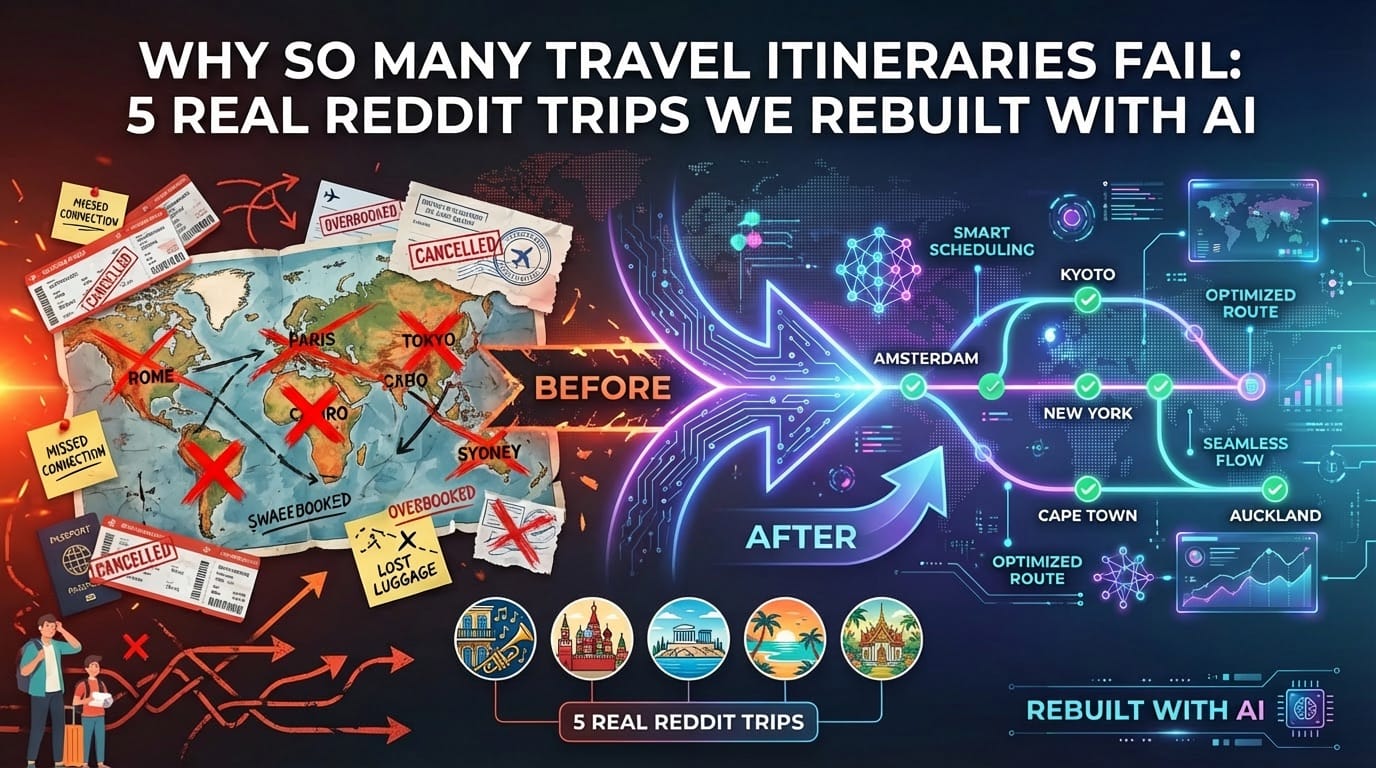
5 Real Reddit Trips We Rebuilt with AI
Case 1: Budget-limited City Travel in New Orleans Rebuilt by AI
Traveler Introduction
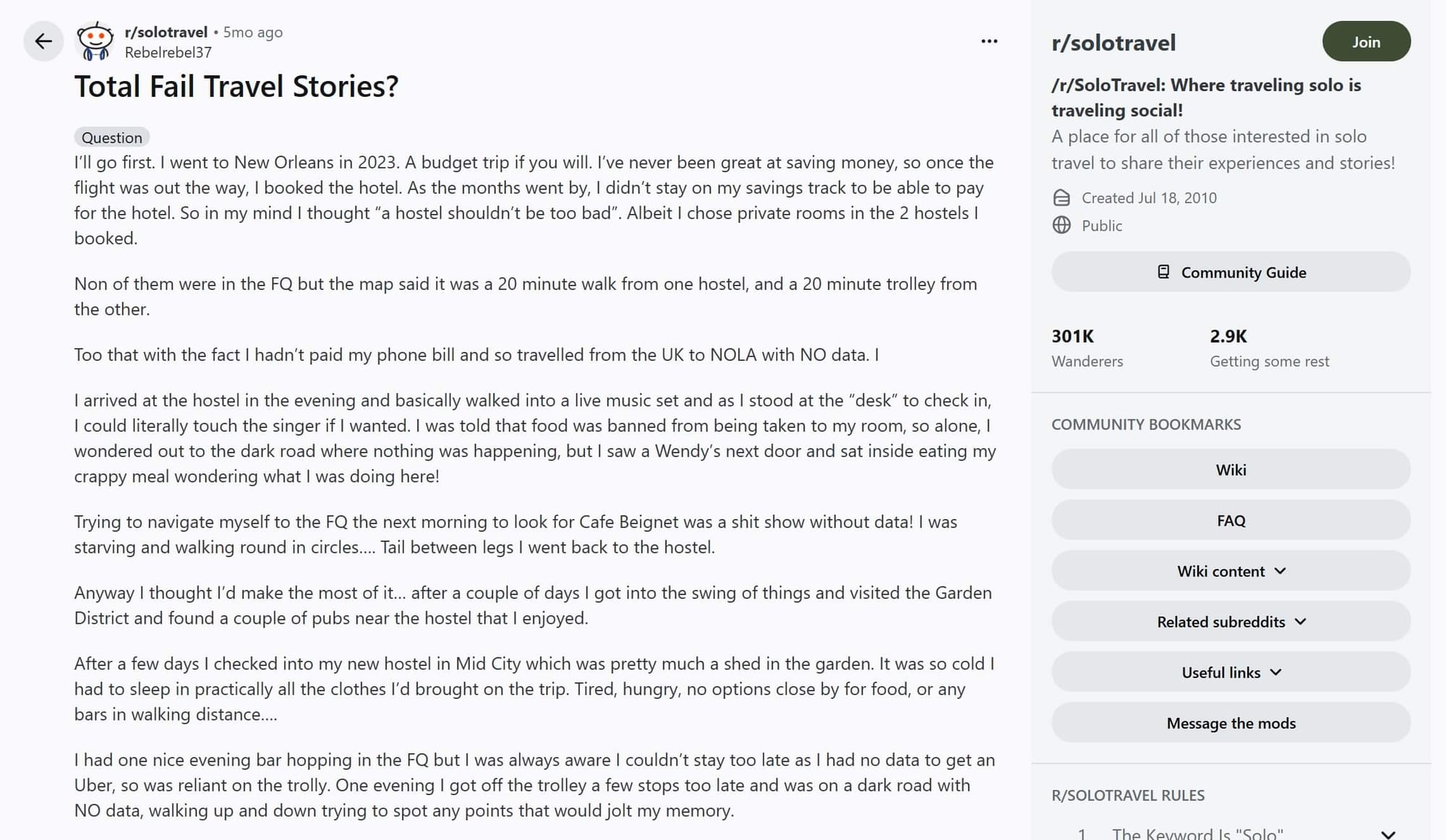
A young adventurer from the UK planned a budget trip to New Orleans for a 5-day trip. He loves exploring cities on foot, trying local food and drinks. Budget-limited but want more cultural experience.
What he planned to do
The itinerary he planned was simple. Besides flights and hotels, all the rest are casual city walks. After booking the flights, he planned to save money to book hotels, but he couldn't save enough and had to book two hostels. Before the journey, he imagined a relaxed trip: trying beignets, walking around in the French Quarter, exploring the Garden District, and enjoying the city's vibe. Transportation? Walking and the trolley are enough.
What actually happened
The reality was chaotic. The first hostel was noisy, and food was not allowed in the room. He had to wander in dark streets to find fast food. The second hostel was cold and far from the main city zone. It's inconvenient to go out at night, because there are no trolleys, and walking is too far. Uber is not a good choice for a man who lives in hostels. He even got lost when trying to find a bar. The trip had its highlights, such as the Garden District and some pubs. But the cold nights, hunger, and the fear of getting lost outweigh the pleasure.
Travel planning challenges solved by AI
- Lack of budget planning
- Poorly structured itinerary
- Wrong accommodation location
- Impractical transportation choices
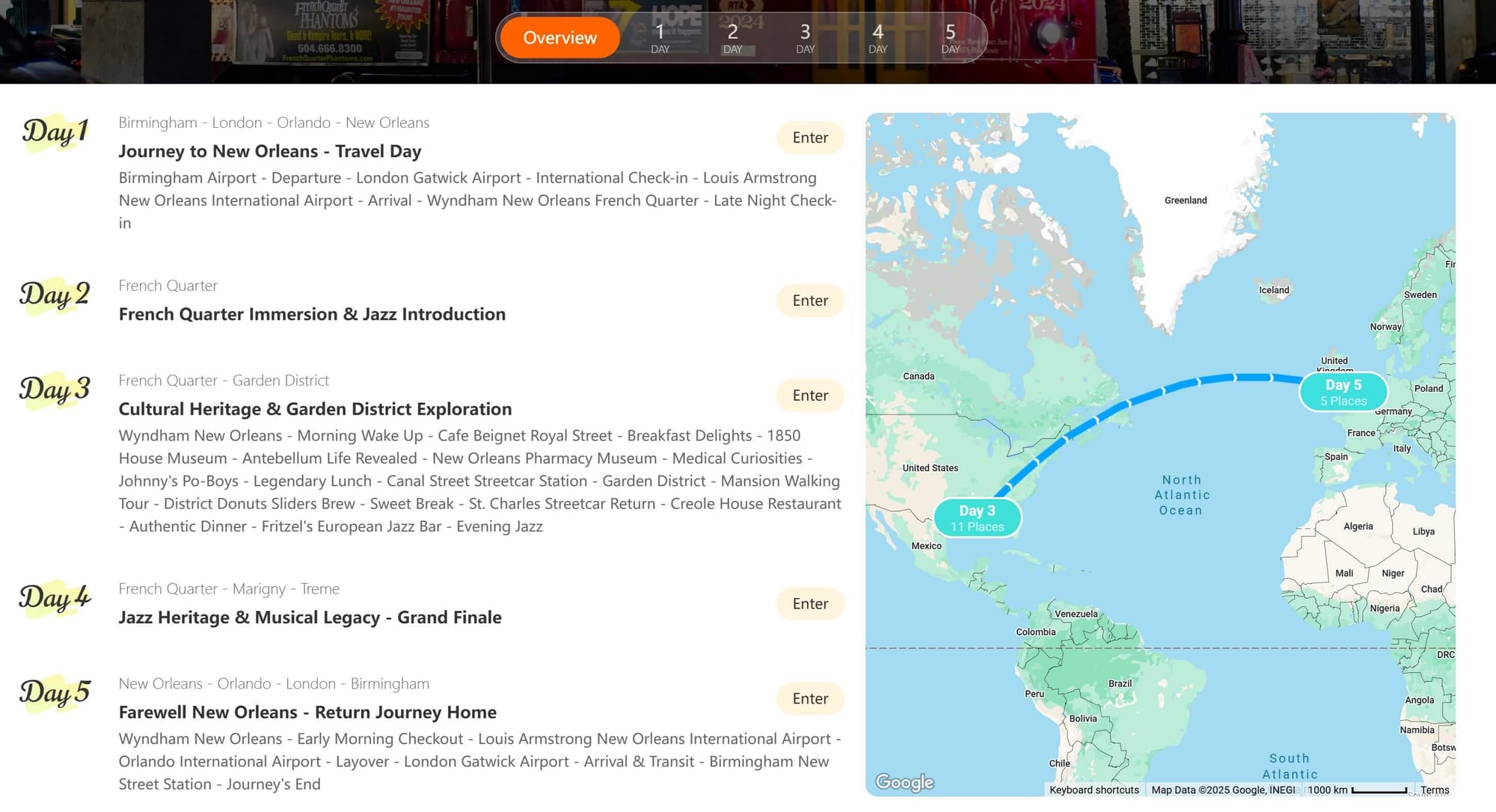
I tried an AI itinerary planner to replan the New Orleans trip. This is the itinerary I got. With 1,804 USD estimated cost in total, including the round-trip flights and hotels for 4 nights, the adventurer will have more time to explore the city and more budget to enjoy the local cultural activities.
Case 2: Multi-Generational Family Trip in Europe Rebuilt by AI
Traveler Introduction
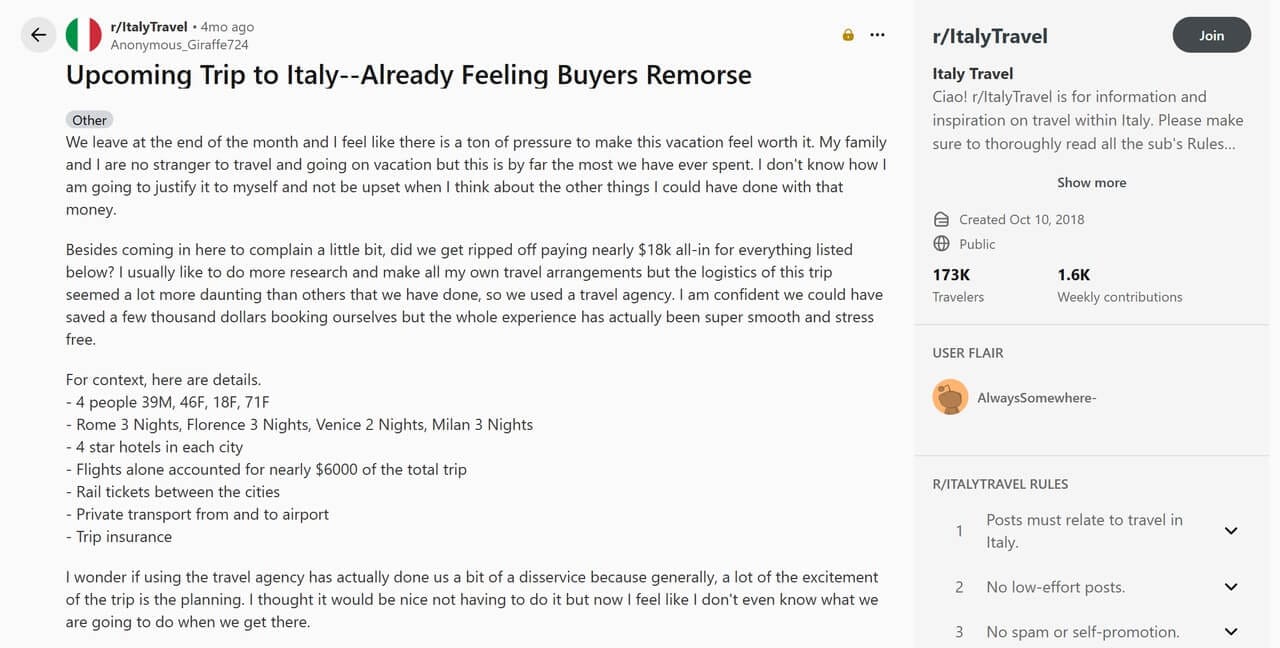
Peter, a man from Tennessee, USA, planned a European trip with his family. Four people in total. Two adults around 40, a young girl of 18, and an elderly lady of 71. He usually makes the itinerary by himself. He is budget-conscious but willing to spend more money for comfortable accommodation. But this time, due to the complex route, diverse travel preferences, and also the limited free time, he chose a travel agency.
What they planned to do
The travel agency planned a 13-day trip for them, including the departure and return days. Their journey includes 3 nights in Rome, 3 nights in Florence, 2 nights in Venice, and the last 3 nights in Milan. With the insurance of a travel agency, they expected a smooth, stress-free, and immersive journey. No more planning, just enjoying themselves.
What actually happened
Yes, with the power of money, the trip might be logistical and smooth. But they spent nearly $18,000, which led to anxiety about the cost. Peter felt like there was a ton of pressure to make this vacation feel worth it. He felt conflicted about whether using the travel agency had actually done them a bit of a disservice. Actually, there are still many aspects of life that need money.
Travel planning challenges solved by AI
- High financial pressure and anxiety over the high cost
- Lack of personal involvement in trip planning
- Emotional discomfort despite practical convenience
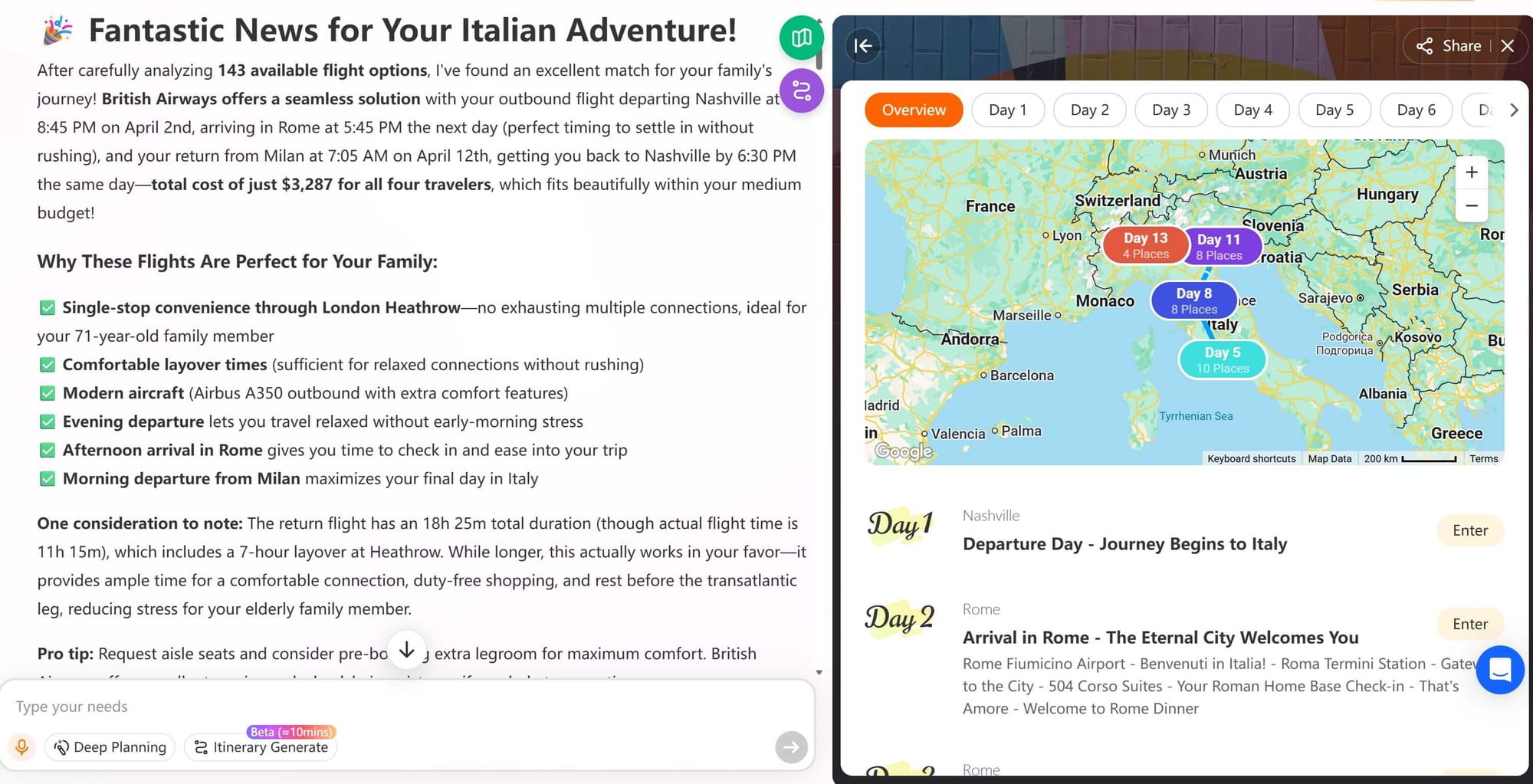
The main dilemma for Peter was the conflict between high-cost travel agencies and energy-consuming travel planning. To enjoy a stress-free trip, he has to pay more. An AI trip planner offers a better choice. With its help, users can ease the stress of itinerary planning while saving money. In there, you can book flights, hotels, and generate the complete itinerary all on one website. This is the new itinerary that AI generated, just needs $ 12,165 in total, which is 33% less than the $18,000 price from that travel agency.
Case 3: A History-Focused Female Traveler’s Journey to Greece Rebuilt by AI
Traveler Introduction
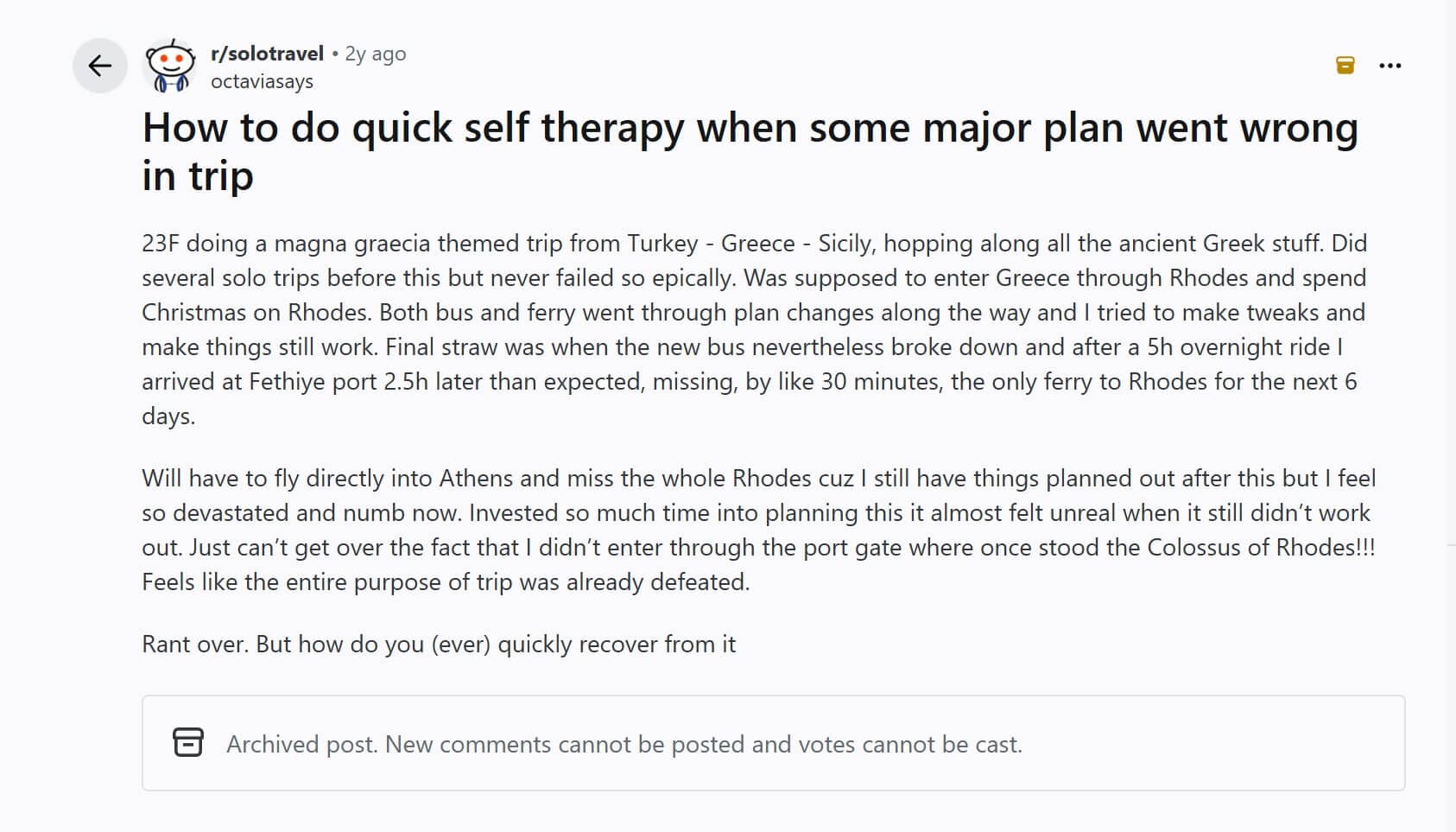
Ploy was a 23-year-old girl from Asia. She loves the history of ancient Greece and plans to take a journey along the route of ancient Greece's expansion. She has had many solo girl trips, so she is confident about making the logistical itinerary.
What she planned to do
She planned a detailed itinerary from Turkey to Greece, and then to Sicily, and designed a special entrance via Rhodes to show her respect for history. This entrance is the most important part, which means the only "proper beginning" of the journey. What's more, she planned to spend Christmas (Dec 24–26) in Rhodes, which cannot be removed from the itinerary. Ploy is looking forward to connecting each destination with the history she has learned.
What actually happened
Actually, the well-designed journey collapsed due to the overpacked itinerary, the unexpected bus, and the ferry. She had to readjust the plan along the way to catch the ferry and enter Rhodes in time. But she failed. The wrong bus delayed her arrival by 2.5h, and she missed the only ferry for the next 6 days. As a result, she had to fly to Athens. The most meaningful part was canceled.
Travel planning challenges solved by AI
- Overly packed itinerary without extra time for unexpected issues
- Misjudge the local traffic situation
- Limited alternative paths for the important event
- Pressure of adjusting the plan in real time
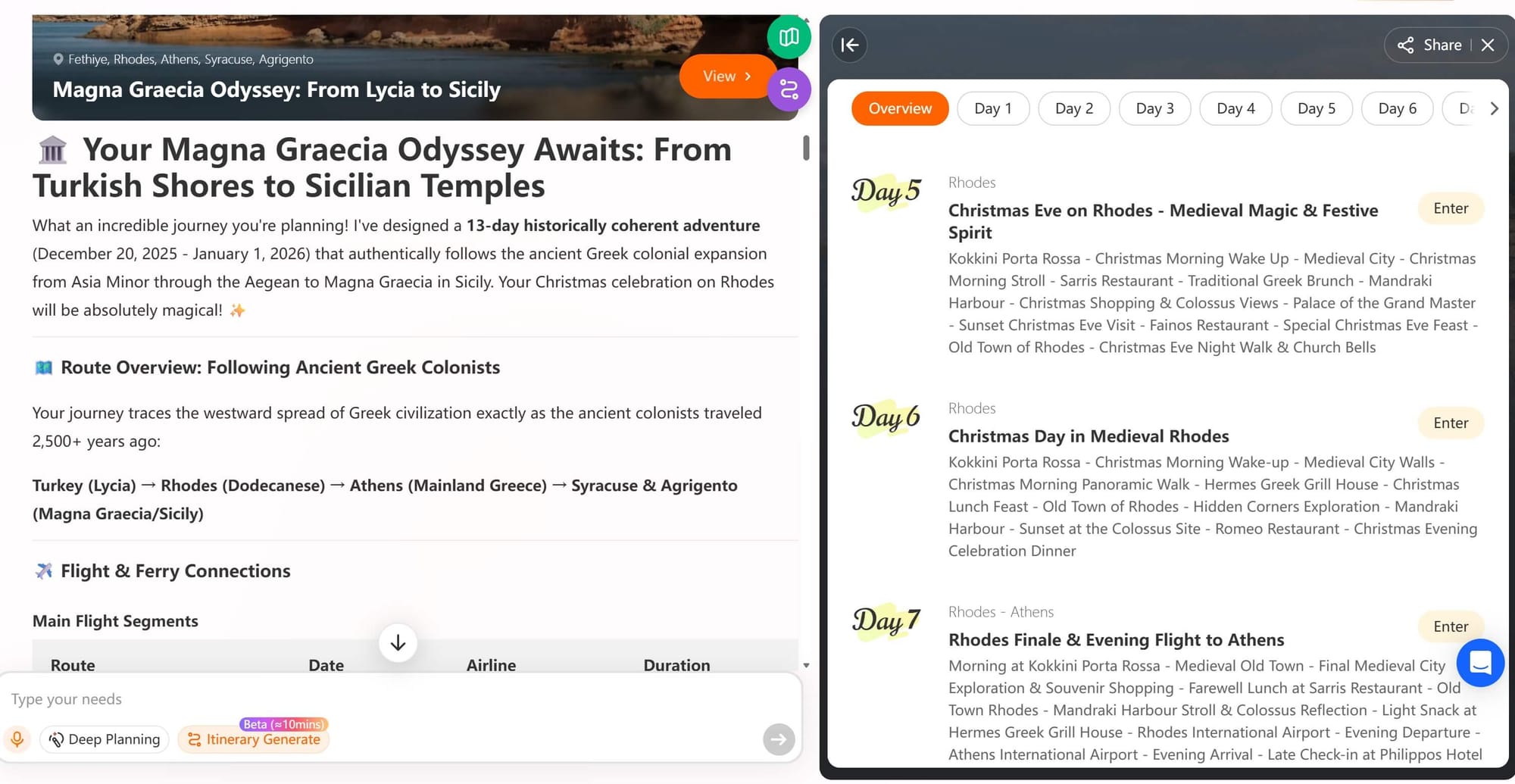
Ploy is actually good at planning and patient enough. But for an itinerary packed with meaningful stops, just the ability to plan is not sufficient. An AI trip planner is a good helper. By using it, you can not only make the itinerary without stress, but also learn how to plan a trip better. This is the itinerary we replanned for Ploy, which includes stops at Fethiye, Rhodes, Athens, Syracuse, and Agrigento. And the plan is adjustable; you can adjust the plan when things go wrong.
Case 4: A Poorly Structured Travel in Goa Rebuilt by AI
Traveler Introduction
Raj is a solo traveler from India with a very limited budget. He loves beaches, exploring cities, and enjoying the local food. He loves adventure, but also likes peaceful and gentle activities. Not good at socializing and prefers to enjoy his own time.
What he planned to do
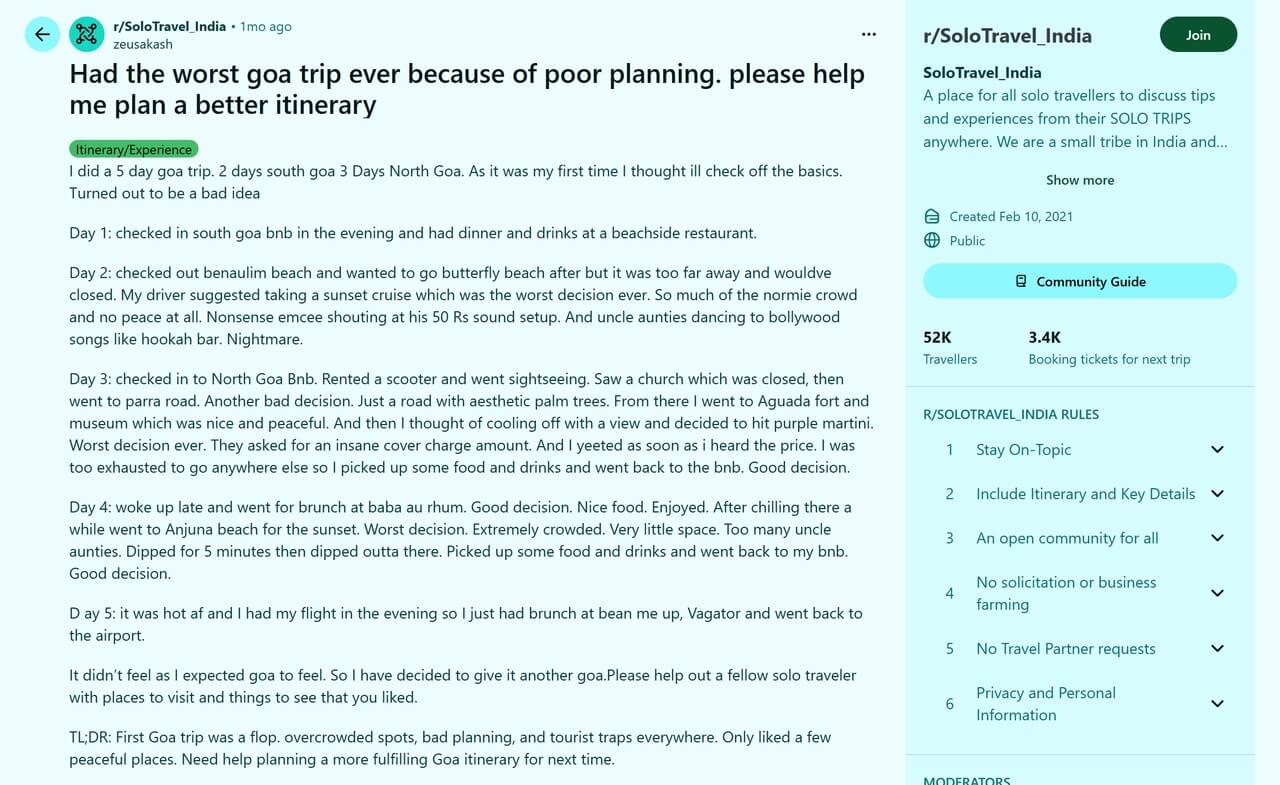
He planned a 5-day trip to Goa, 2 days in South Goa and 3 days in North Goa. Because this is the first time he has been to Goa, he wants to visit all the major spots first, and then go to the beach and enjoy the sunset. For the night, he also wanted to experience the local pubs, since no one knows him here, and he has no social pressure. In his plan, he was supposed to balance the natural attractions, cultural activities, and travel path.
What actually happened
In reality, the trip unraveled quickly. Long distances between attractions and a poorly planned itinerary ruined South Goa sightseeing. The sunset boat tour that the text driver recommended was extremely crowded. In North Goa, the closed chapel, overpriced tickets, and fatigue from rushing around made Raj tired and upset.
Travel planning challenges solved by AI
- Lack of clear personal travel preferences
- Inefficient route and time arrangement
- No budget expectation or cost transparency
- Emotional burnout
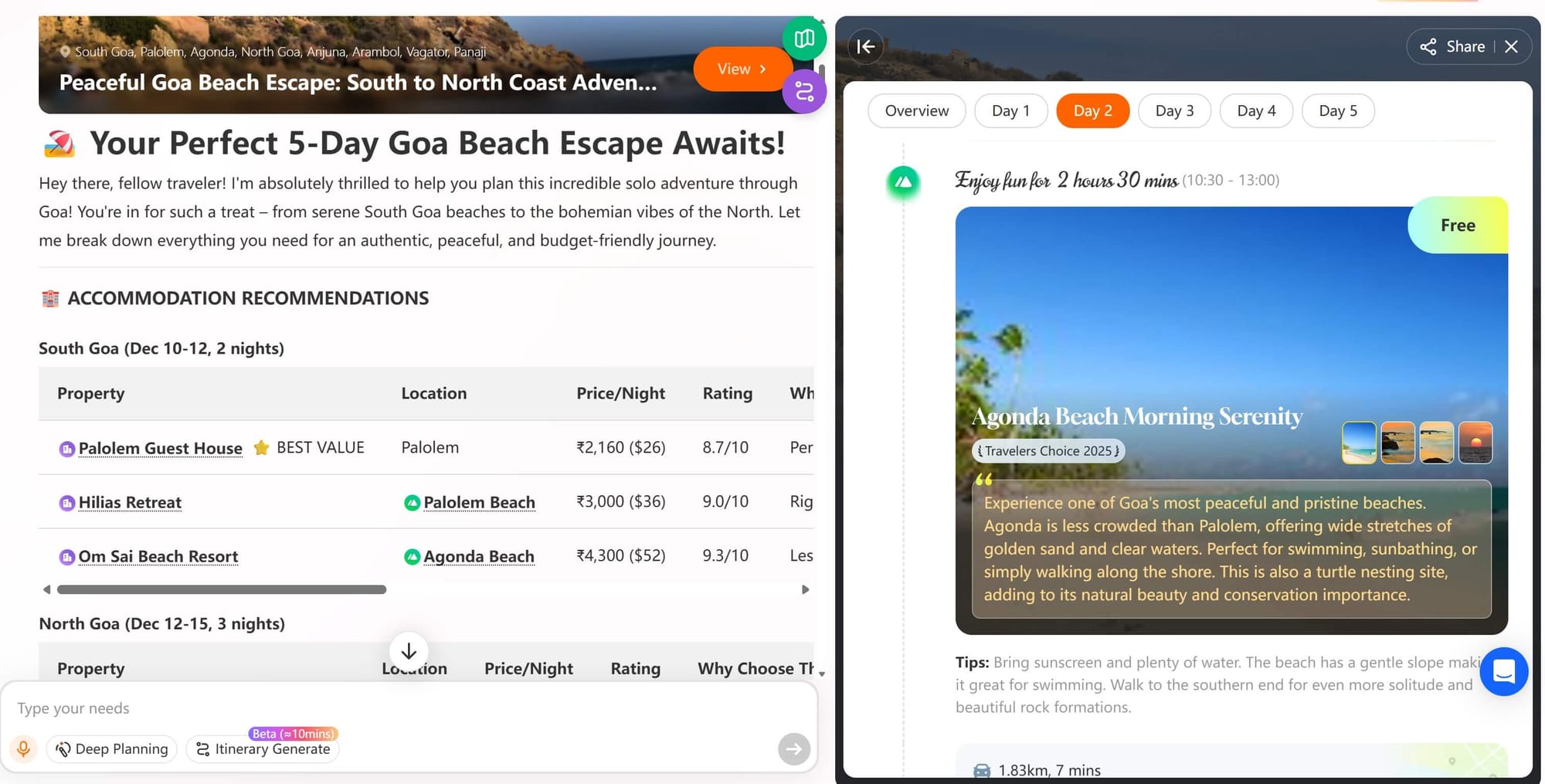
Raj lacks awareness of planning before traveling; maybe he just wants a stress-free trip. But a well-designed itinerary can truly lead to a more pleasant trip. An AI itinerary planner can help you achieve that effortlessly. Let's see the itinerary together.
Case 5: A Lonely Journey in Thailand Rebuilt by AI
Traveler Introduction
Lucas is a 37-year-old solo traveler from Canada. He used to travel with his wife, parents, or friends. This time, he wants to explore the world on his own. He likes casual walks and social activities, and doesn't like idle nights.
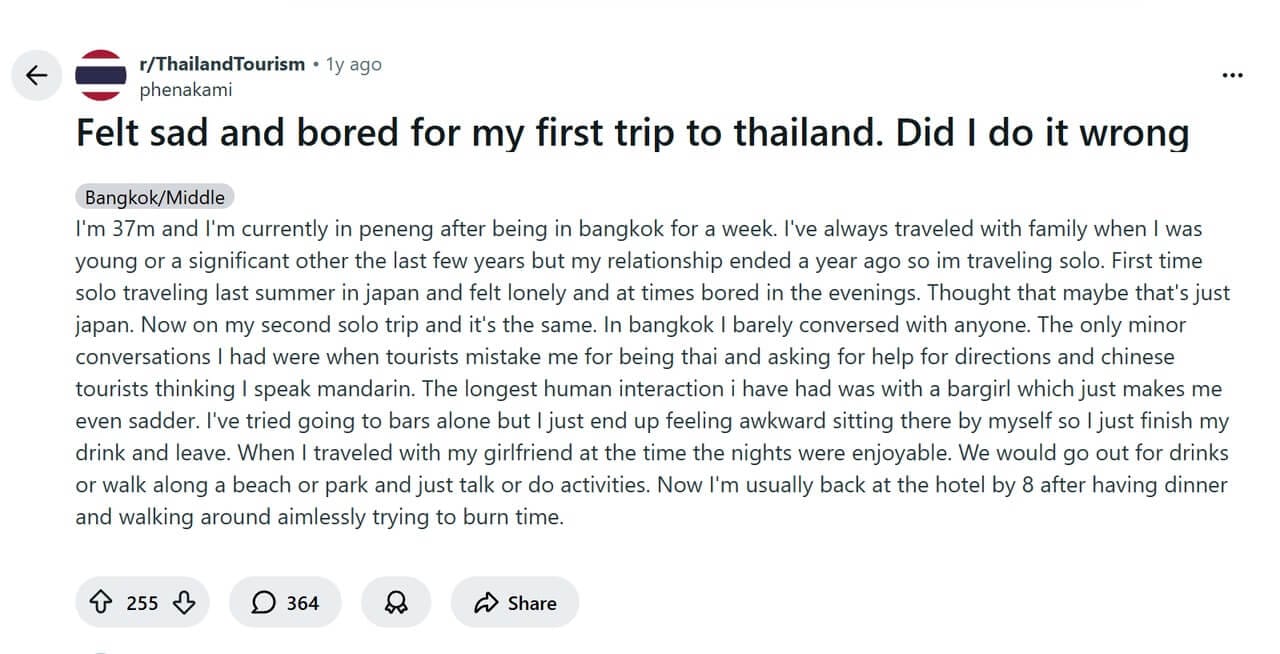
What he planned to do
He planned an 11-day solo trip to Thailand. One week in Bangkok and the rest in Penang. His goal was to explore cities, enjoy local food, and experience nightlife. The last trip to Japan was lonely, but this trip, He thought he could make new friends.
What actually happened
The evenings were lonely again. Socializing in bars failed, and he left quickly. Besides bars, he didn't know where to go, and usually walked around aimlessly. Almost all the nights were spent in the hotel. This contrasts sharply with the journey he spent with his wife, and he was overwhelmed by the sense of disparity.
Travel planning challenges solved by AI
- Limited opportunities to engage with local people
- Lack of structured plans, leading to aimless wandering
- Emotional difficulty adapting to solo travel
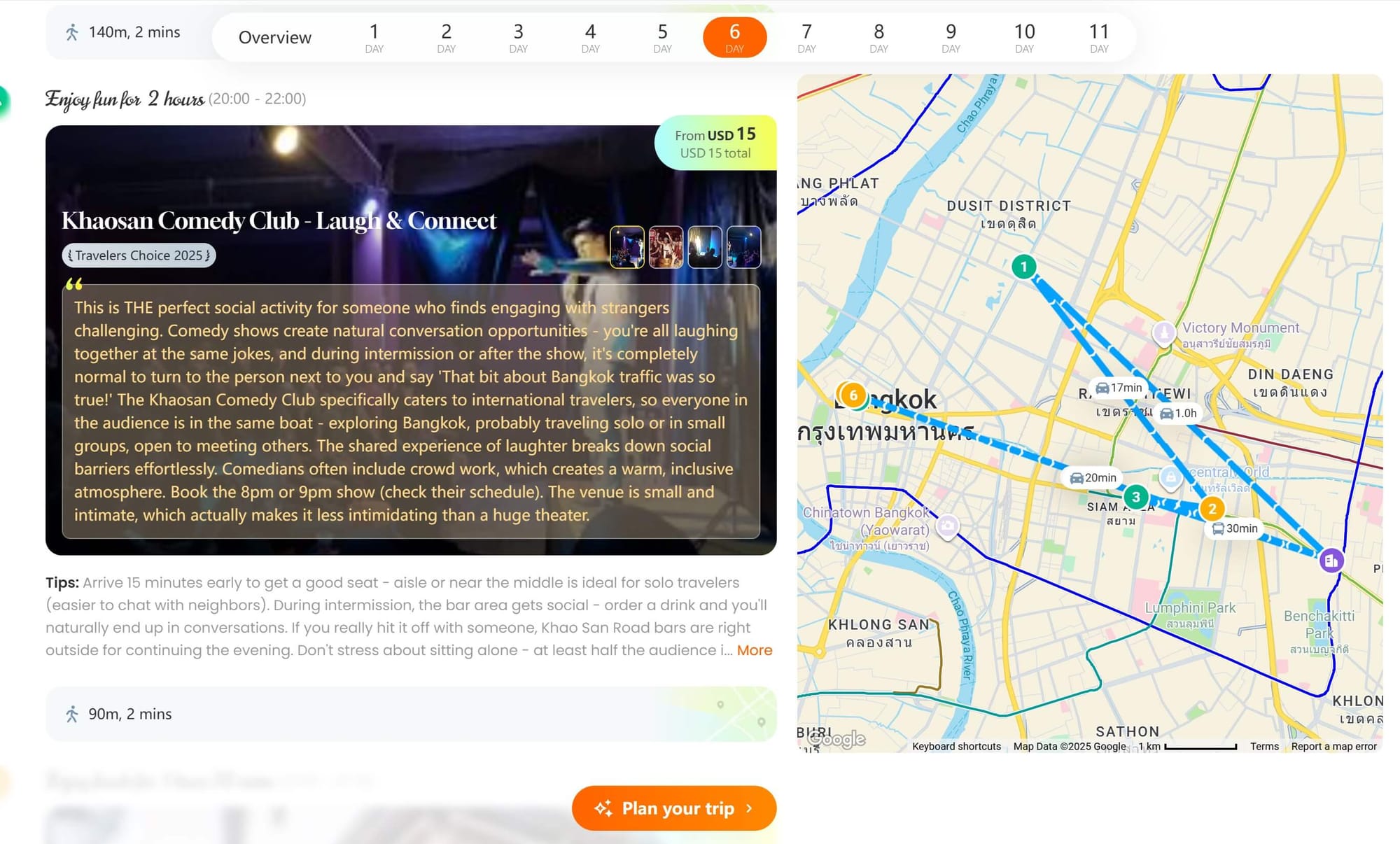
With the help of AI, we generated a well-structured itinerary with more local activities and meaningful events beyond just going to bars in seconds.
Final Thought
As these five real stories on Reddit show, our trips often have unexpected problems for diverse reasons. The better you plan before the trip, the more relaxed you will be during it. Generating a good itinerary needs a lot of time and energy, but you can use AI to do the complex work. There are some itinerary planning tips for you. Try it by yourself.
- Set a clear budget and destination
- Clear travel companions and their ages
- Define your ideal travel pace
- List your preference for activities
- Write down what you don't want to experience