

Planning a trip to New York can be a headache, especially when you are not familiar with the city. The attractions in New York are dense and diverse in style, and each of the five boroughs has its own unique characteristics. What's more, the subway system is complicated, which increases the difficulty for a New York trip planner. Too much information, and you might feel overloaded.
Traditional trip planner websites can provide recommendations, itinerary templates, and must-do lists. But they are not flexible and lack personalization. The most difficult part of planning is combining information with needs. That's what an AI trip planner can help you with. You can not only generate personalized itineraries automatically, but also connect planning with real execution, like booking flights and hotels. In this article, I will provide you with a step-by-step roadmap to plan an ideal itinerary with our free trip planner.
Best Time to Visit New York City
New York is located on the East Coast of the United States. The climate is temperate with four distinct seasons. Springs are mild and warm up gradually, summers are hot and humid, autumns are crisp and pleasant, and winters are cold and snowy. Thus, the City has something for everyone year-round, and each of its four seasons is gorgeous for visitors to explore. An important weather tip is to remember to take an umbrella for unexpected rain, no matter what season.

Peak Tourist Season for NYC
There are two peak tourist seasons in NYC: in summer, from late May to early September, and in winter, from November to December. Summer is a major vacation period for people around the world, and with diverse outdoor activities and wonderful attractions, New York City becomes a popular travel destination during this season. For winter, NYC offers plenty of fun activities during Christmas and Thanksgiving, which also attracts large numbers of domestic and international tourists.
Low Tourist Season for NYC
Low tourist time in NYC extends from January to March due to the cold weather. Winter temperatures average below freezing during January and February, but as long as you dress warmly, it’s not a big problem. Fewer crowds mean better discounts and lower expenses. If you're willing to withstand the cold, it's a great time for budget travelers and those who want to avoid the crowds.
How Many Days for a Trip to NYC
For most visitors, a 4-6 day trip to NYC is a good choice. You can balance attractions, activities, and the experience of the local lifestyle. Also, you will have enough time to see iconic sights, explore diverse boroughs, and immerse yourself in beautiful scenery.
How to Plan Your Trip with an AI Trip Planner
Using the best trip planner is just like chatting with a professional but kind trip designer. The operation is user-friendly. Input your requirements in your own words, and iMean AI will analyse the information and generate the personalized itinerary automatically. And also, you can compare the prices of flights and hotels and book them on one website directly. Here is the step-by-step roadmap for you.
Step 1: Input your requirements
Here is a simple prompt for you to start planning. You can also use your own words.
Prompt:
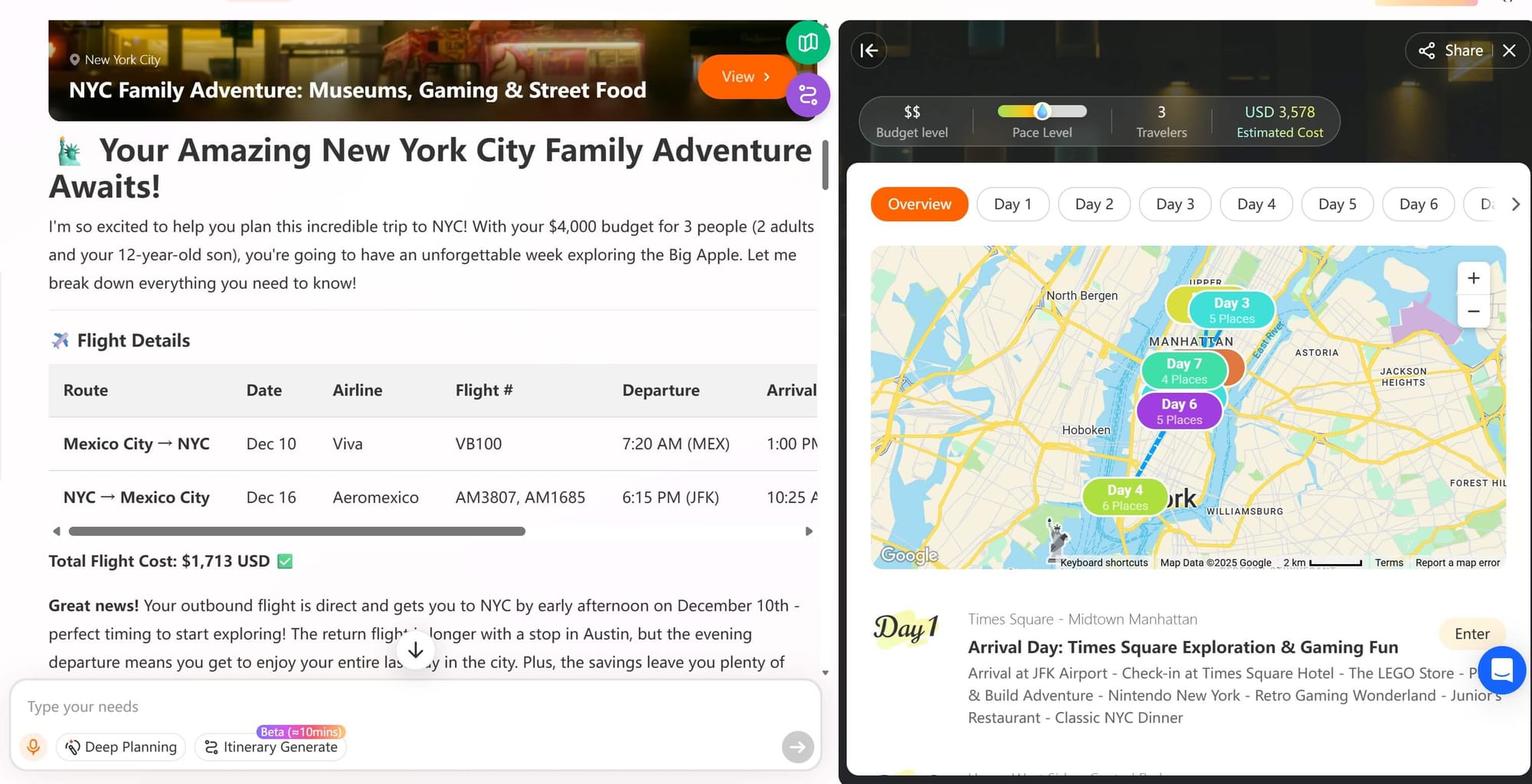
I'd like to plan a trip to New York City with a budget of around $4000 for 3 people, 2 adults, and 1 boy who is 14. Departing from Mexico City on Dec. 10 and returning to Mexico City on Dec.16. The travel pace should be moderate. We want a well-organized itinerary with kid-friendly activities. What's more, I love street food. And music. Our boy loves classic stuff, video games, and Lego.
Step 2: Adjust the itinerary
After the itinerary is generated, what you should do is check and adjust the plan to make sure the final plan is exactly what you want. Whether you want to add or remove activities or adjust your budget, tell it what you need.
Step 3: Select your flights and hotels, and book them directly
Compared to traditional trip planner websites, you don't need to compare the price of flights and hotels yourself, jumping between different tabs endlessly. The AI trip planner automatically scans the best options across the web and presents you with clear choices.
Step 4: Share your itinerary with your fellow travelers
Click the "share" button, and your fellow travelers who are not with you can also know the itinerary instantly. Moreover, they can check the travel plan anytime during the trip.
Here is the itinerary I got for the family trip to New York City for 5 days, plus two days for departure and return.
Where to Stay and Explore in New York
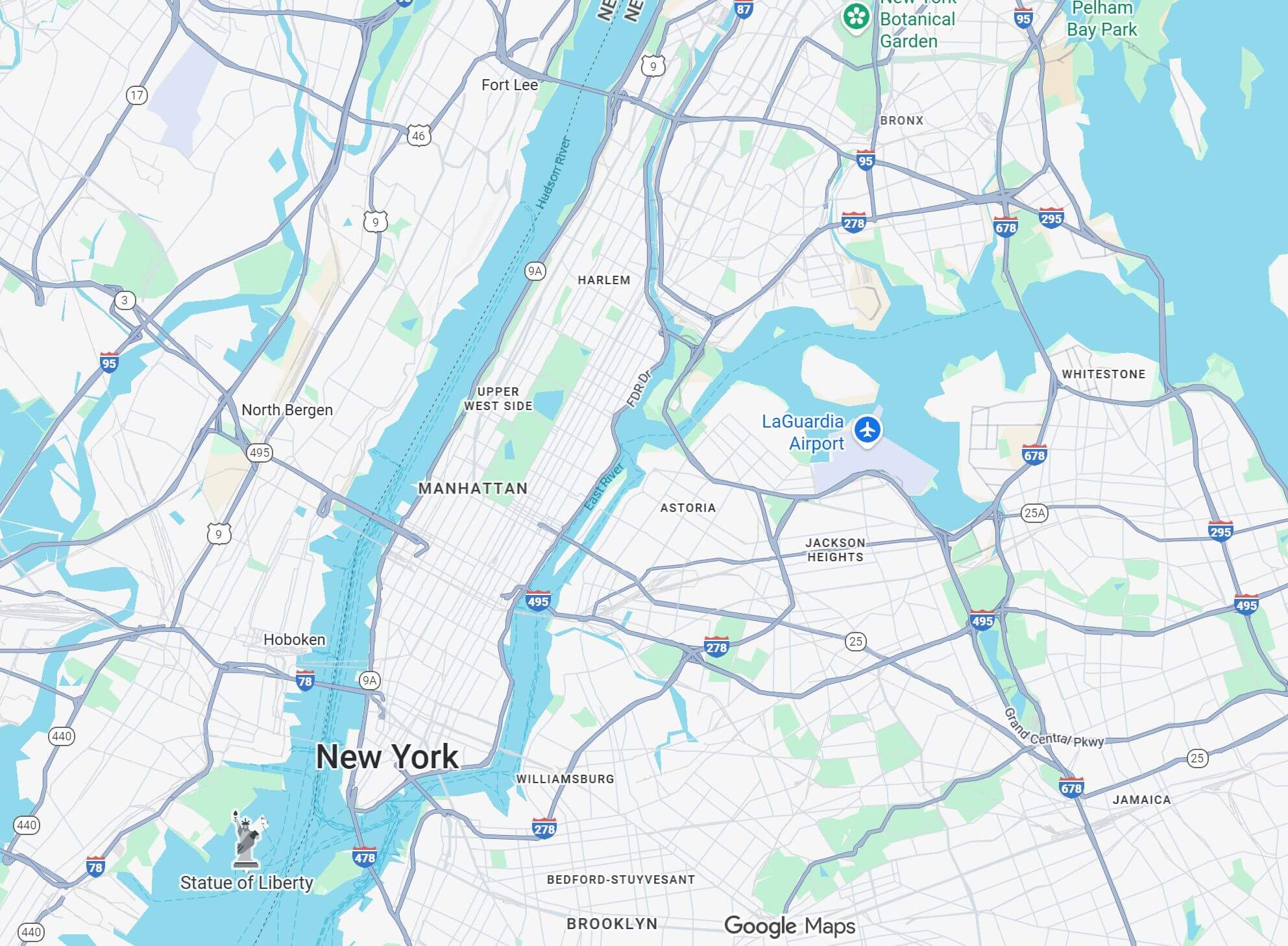
Attractions in New York City are highly concentrated, mainly spread over Downtown Manhattan, Midtown Manhattan, and Uptown Manhattan. Each area has its own charm, and better to explore them one by one.
Lower Manhattan
Lower Manhattan is the beginning of NYC's history, and also where Wall Street and the World Trade Center are. Walking through the streets, you can experience the economic influence of this city, and also the past and present of this city. Much of what’s now Chinatown was once Little Italy and the Jewish Lower East Side, and the remnants are still there if you know where to look. It's a good choice for history lovers, foodies, and travelers who want to explore local neighborhoods. But depending on the neighborhood, it can be expensive for lodging and food.
Midtown Manhattan
Midtown Manhattan is the busiest and most active area of NYC, concentrated with multiple landmarks. Times Square, Fifth Avenue, Empire State Building, and Broadway... Most of the classical scenes of New York City that you have seen in the movies can be found there. Best for couples who want romantic dates, drama enthusiasts, and movie fans. However, for travelers who prefer a relaxed pace, they might feel busy and crowded.
Upper Manhattan
It's the cultural soul of the whole city. World-class museums like the Metropolitan Museum of Art and the American Museum of Natural History are all concentrated on Museum Mile. Central Park offers an urban oasis for travelers to relax. For creators, Harlem and other multicultural neighborhoods provide diverse inspiration. Heaven for families, solo-travelers, and artistic creators. But both the Upper East Side and Upper West Side are expensive, both for lodging and dining. Some areas, particularly on the eastern side of the Upper East Side, may be farther from subway stations.
Top Things to Do in New York
To make planning easier, the attractions below are organized by area and suggested routes. This way, you can explore each part of the city efficiently and make the most of your visit.
What you can do in Lower Manhattan
- The Statue of Liberty: Whether you go to Ellis Island or just ride the Staten Island Ferry to get a great view, it should be seen. But it's smaller than in the movies.
- One World Trade Center: Amazing view from the top building in NYC. You have a 360° view of NY.
- Wall Street: If you are a person who likes finance, economics, or is just into the financial world, this is a must-see.
- The High Line: This is a must in your journey throughout NYC. It starts right on Gansevoort St with Washington St, until 34th St. It is a really cool walk to do in lower Manhattan.
What you can do in Midtown Manhattan
- New York Public Library: Nice library with an old touch and classical mysticism.
- Grand Central Terminal: This is also a must! The architecture of this building is amazing and is a classic visit while staying in NY.
- Times Square: It's the cliche tourist spot. I'm not a big fan, but I do admit that it looks spectacular at night.
- A Broadway Show: You have to see something on Broadway. But the seats are tight, so you might feel a bit crowded.
What you can do in Upper Manhattan
- Central Park: It's a huge, awesome park. People do Shakespeare plays there in the summer. A good place for visitors who want to have a rest.
- Metropolitan Museum of Art: The largest and most comprehensive art museum in New York City and one of the foremost in the world. In the Egypt section, there is an actual Egyptian Temple that you can go inside in the middle of the room
- Museum of Natural History: Probably the most well-known museum in NY. It has fossil collections, artifacts from ancient civilizations, recreations of ancient hominids, and so many other great things.

Transportation Tips for New York
City Transportation
The easiest way to travel is with a MetroCard or OMNY. One trip costs $2.90 and allows one free change within 2 hours. The 7-day Unlimited MetroCard ($34) is worthwhile for several days. Some parts of the city are great for walking, and Citi Bike is also a good choice. If you need taxis, download Uber and Lyft in advance.
Intercity Transportation
Intercity rail and intercity buses connect cities. For budget travelers, buses can be a more affordable option. For popular routes like New York to Boston or Washington, D.C., booking in advance can get better prices and seats.
Essential Transit Cards & Passes
- City Pass: A Sightseeing pass that offers discounted admission to New York attractions. Valid for 9 consecutive days, including the first day of use. Please note: most attractions require advance reservations.
- MetroCard or OMNY: MetroCards are available from vending machines in the stations. Swipe your MetroCard at the subway barrier or hold your credit card up to the OMNY reader until "Go" appears; you can also use MetroCard or OMNY on the bus.
Final Thoughts
Planning a trip to New York can feel overwhelming, but breaking it down by neighborhoods, attractions, and transportation makes it manageable. Using an AI trip planner simplifies the process, creating a personalized itinerary while letting you book flights and hotels in one place. If you want a personalized, editable day-by-day itinerary for New York, try iMean’s free AI trip planner.