My family is planning to have a "Christmas the European way” this winter. It sounds fabulous until you have to face the details: 5 people (2 adults, 2 seniors, and a 7-year-old), 3 cities, a lot of Christmas stuff, and the significant distance from Los Angeles. That's what made it an experiment for me. I put together one extensive prompt:
Please create a trip itinerary starting on December 15 (departing from Los Angeles) and returning to Los Angeles on the last day of the trip, for 5 people consisting of 2 adults, 2 seniors and 1 7-year-old child. The timeline is: London → Paris → Rome. In London we’ll be spending 4 days, in Paris we’ll be spending 5 days and then in Rome we’ll be spending 4 days. Please schedule all the necessary flights and train journeys between the three cities and arrange family-friendly hotel accommodations which are suitable for the elderly and the very young. Ensure that each transfer is seamless, and accommodate the specific needs of the holiday season in your itinerary.
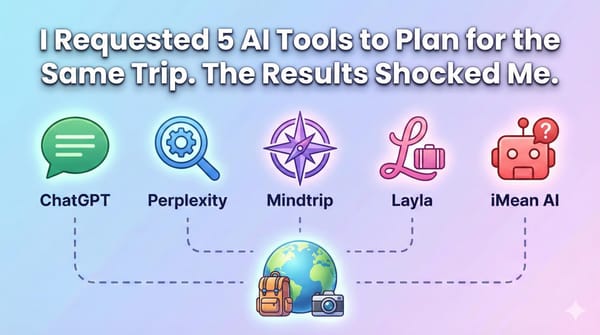
Then I submitted the above request to 5 different AI tools:
- ChatGPT
- Perplexity
- Mindtrip
- Layla
- iMean AI
All of these requests were for the same dates, the same route, and the same family, yet the results were not like 5 separate responses. They appeared to be 5 individual personalities.
One Prompt But Five Personalities
I was not assessing which service offered the "lowest cost" flight or the "best" hotel. Instead, my intent was to find their style. For example,
- How do they structure their content?
- Do they understand that I will be travelling with children and elderly people?
- Do they consider themselves as travel agents, search engines, or as friends with spreadsheets?
In my mind, these tools served many different purposes almost right away.
ChatGPT: The Travel Consultant Who Writes Novels
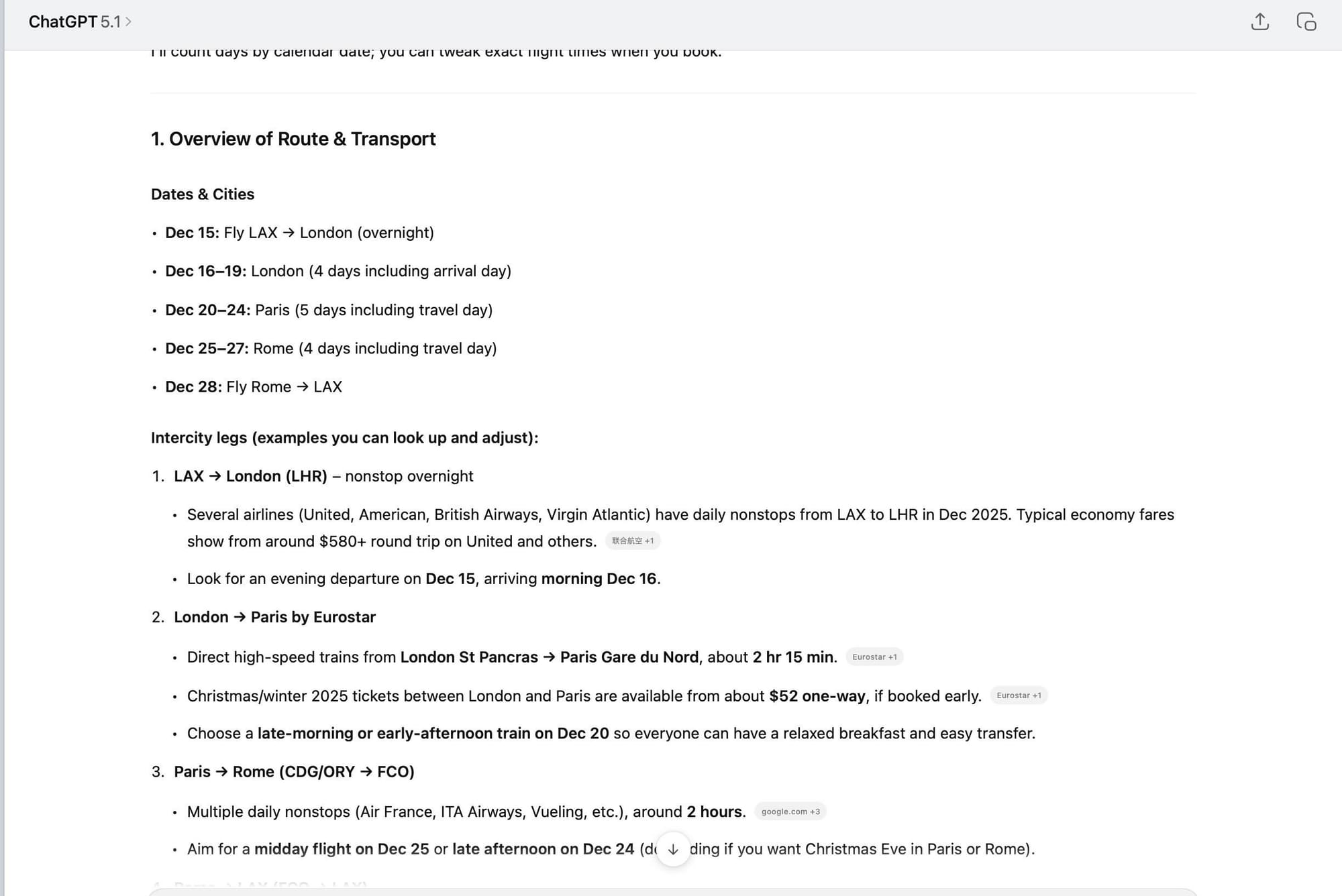
ChatGPT tends to compartmentalise everything; I think it is answering my requests, as though it has the ability to be a really good travel planner, but it is all hyped up on caffeine. The tone was warm and professional at the same time. The response did not just say, "take the earliest flight in the evening"; it provided me with a reason as to why, for me to arrive around lunchtime, thereby making it easier for me when checking into my hotel. It also reminded me to check for step-free showers and family suites. The tone and formatting will make you feel as though you received a lengthy email from a friend who possesses excellent travel logistics skills.
Perplexity: The Researcher with Receipts
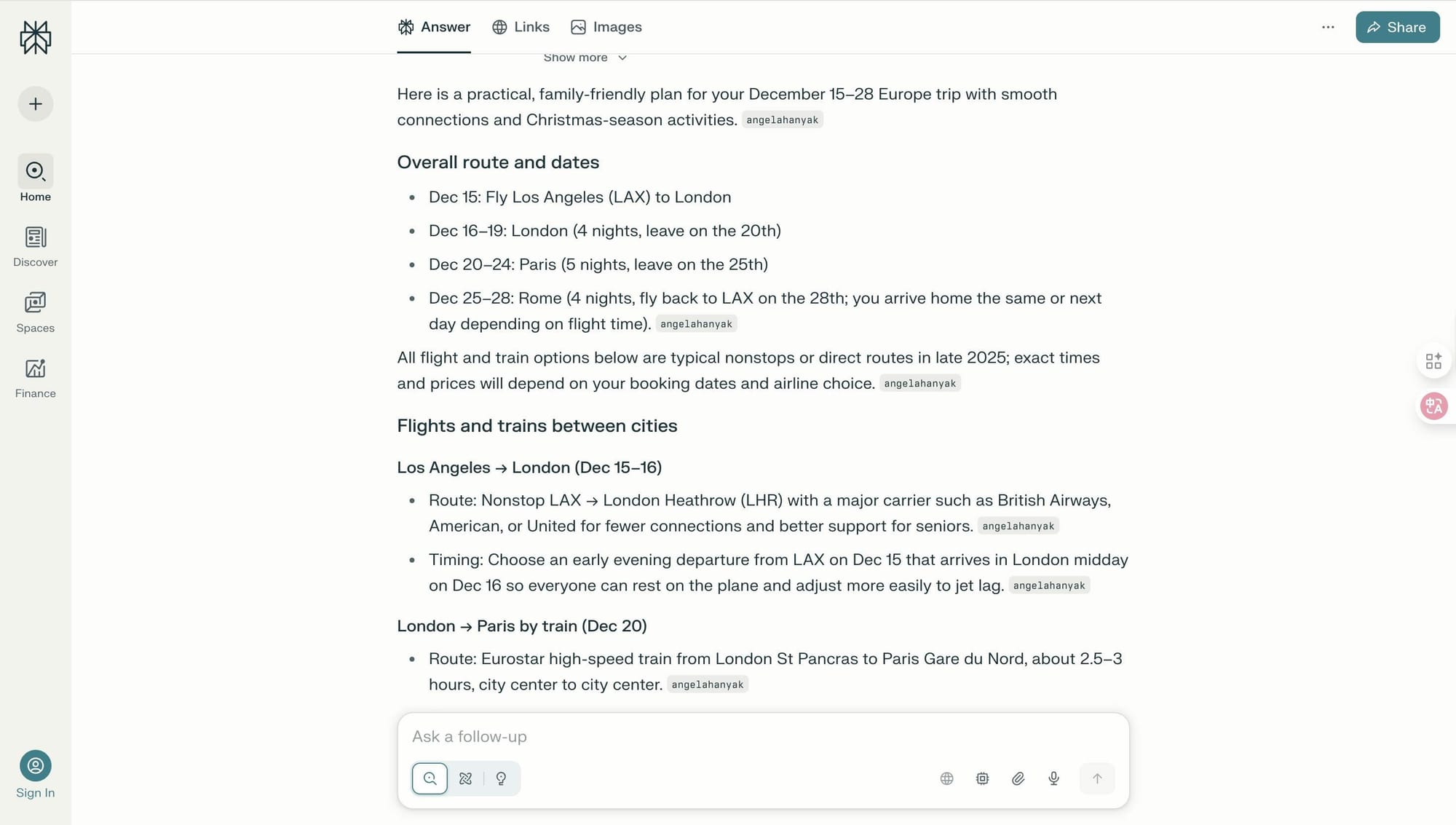
Perplexity responded to my prompt with a simple, "Ok, here is the structure of the answer along with sources." It was quite well-organised. It provided a broad overview of my route, flight options, and hotels and also presented general suggestions for senior citizens and children. Perplexity used bullet points for all of its answers with references to various travel blogs, airline websites, and family travel articles under each bullet point. The response does not appear to be a conversation; it appears to be this mini-report. If ChatGPT is my friend who breaks it all down for me, then Perplexity is a friend who gave me three links and says, “Here, I checked, you’re okay.”
Mindtrip: The Christmas Storyboard

The first time I saw a destination from Mindtrip. On one side, there was a day-by-day breakdown of where we would be going during our trip; on the other, a real-time map showing where everything was located. Mindtrip's focus is on creating an experience rather than the more mundane aspects of travel. So many people use it for its unique experiences. The images and words used to express these experiences have a distinct quality that makes the viewer have an imaginative experience. That said, the downside to this is that when it comes to travel, we cannot solely rely on what is imaginative. Many individuals use artificial intelligence travel planners to help them plan for the trip (and solve problems).
Layla: The Ready-to-Print Travel Agency Doc
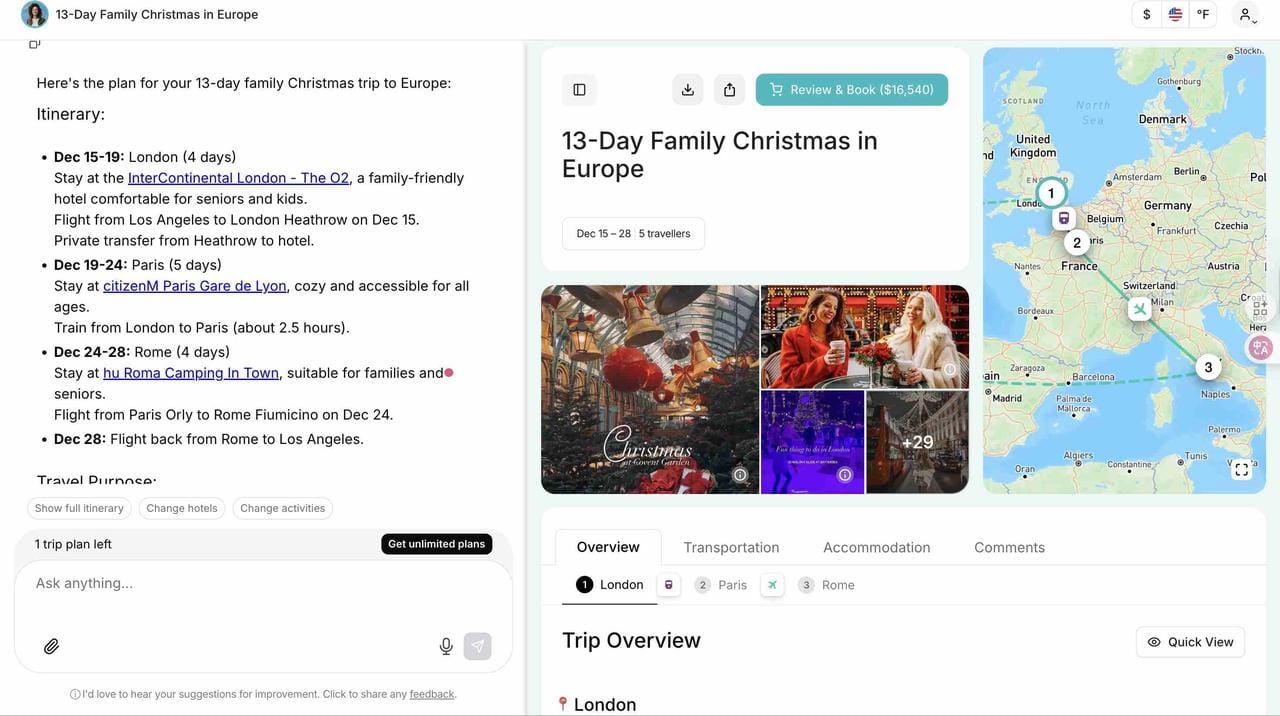
Layla headed in the opposite direction and produced a finished product that was basically a finished tour operator's brochure (a glossy pdf). Mindtrip is the creative moodboard version of a trip, whereas Layla is a real tour operator brochure at the end. Layla does not spend a lot of time on stating the reasons for things; it does not provide methods by which to explain why something occurs. Rather, Layla just tells you to do the following:
- You stay here
- You go there.
- You eat this.
Layla demonstrates an unexpected level of confidence in the recommendations it is making. It often recommends something based on the type of activities or restaurants it believes would be suited to your family. Layla is also very much action-oriented. If I were not inclined to spend my free time planning out my trip, Layla made it seem like, once I had selected an option looking out, I could just create a shopping list and book with no further effort on my part. However, I would still double-check the listed hotel room type and the information for the accessible bathrooms.
iMean AI: The Sidekick Who Thinks in Checklists
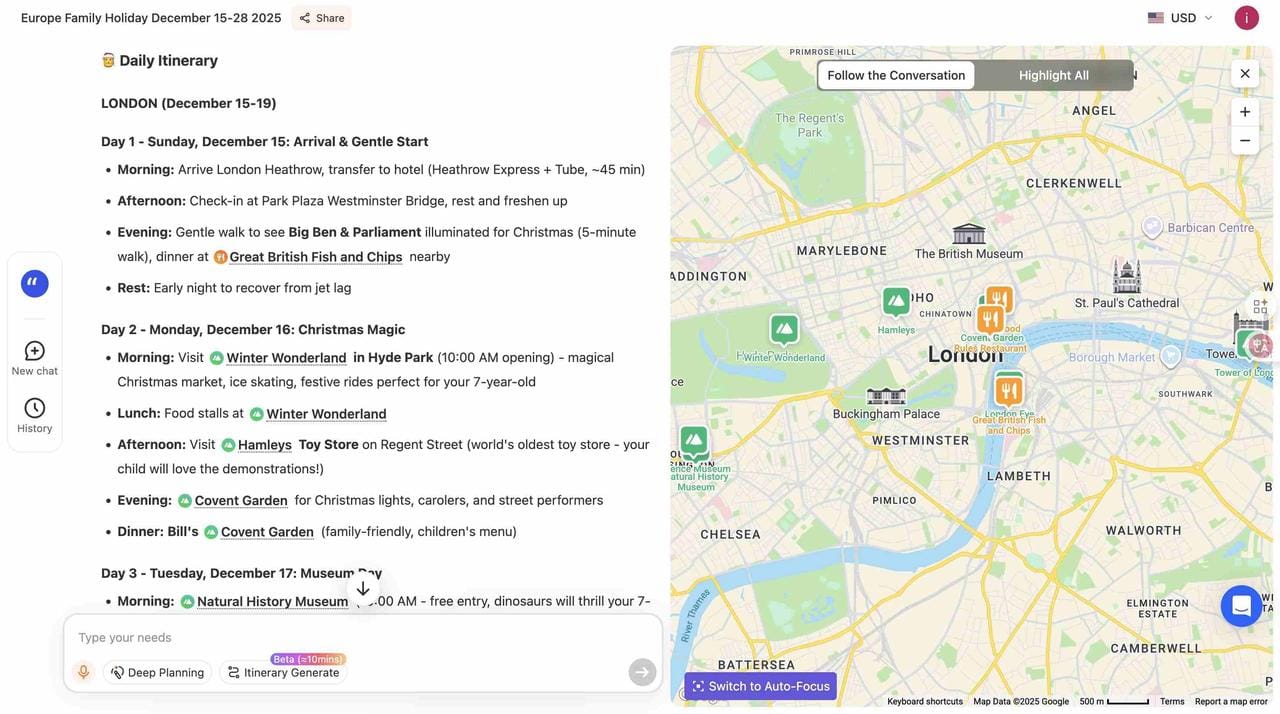
iMean AI was a product that was at the crossroads of ChatGPT and Layla. All travel advice was structured into three categories, starting with flying internationally, including suggested airlines, flight order, time, and Earthly bite-sized pieces of advice for finding a good seat. Trains and short flights in Europe followed, with price ranges and a quick blurb about advantages/disadvantages. Finally, the travel advice included city-specific recommendations for lodging and things to do.
iMean AI was notable because it offered a level of help as close to reality as possible for travel research. Every option it provided was referenced to a real-world itinerary that could be checked via the Internet by using the airline or the booking website. There did not appear to be any "fabrication" to make the plan look good; all references were just references with realistic flight fare ranges and/or directions on where to find the latest fares on the dates specified.
The other strength was its ability to serve personal needs. The tool kept returning to the seniors and the child in the group. It made me remember to ask for extra legroom seats for my parents, to pick an aisle seat near the restroom for the seven-year-old and to avoid tight connections that would mean long walks with luggage. It seemed less like a generic trip template and more like a checklist meant for an actual family with real bodies and real energy levels.
What Actually Shocked Me?
I was expecting that all five tools would give me very similar responses to my request; however, the way each tool answered has such a different writing style; they are each completely different. It’s clear to me now; rather than appointing only one winner as my final choice for this holiday trip, I will use all five tools as a mini team to come up with an appropriate travel plan. So, how will I use each tool?
- I’ll have ChatGPT run trials on the route and timing
- I’ll use Perplexity to verify facts and average pricing
- I’ll check out Mindtrip for ideas/inspiration
- I’ll ask Layla to develop a basic outline of my itinerary
- I’ll refer to iMean AI for personal family-related details
Also, this experiment has significantly changed how I view AI travel planning; AI travel planners aren’t limited to one type of function. I received the same trip, but there are many ways to interpret that trip with the exact same details.
Recommended further reading:
 Aiden
Aiden
 Chloe
Chloe
 Arthur
 Chloe
Chloe
 Chloe
Chloe