Planning trips in 2026 feels significantly different from even a few years ago, as AI travel planners are now ubiquitous. I carefully make an AI travel planner comparison, Wanderlog vs iMean AI, based on how users of these tools feel while actually trying to plan a trip. After testing these two typical AI trip planners, here is the side-by-side comparison of the outcomes.
What Real Users Say: Feedback from Reddit and Travel Communities
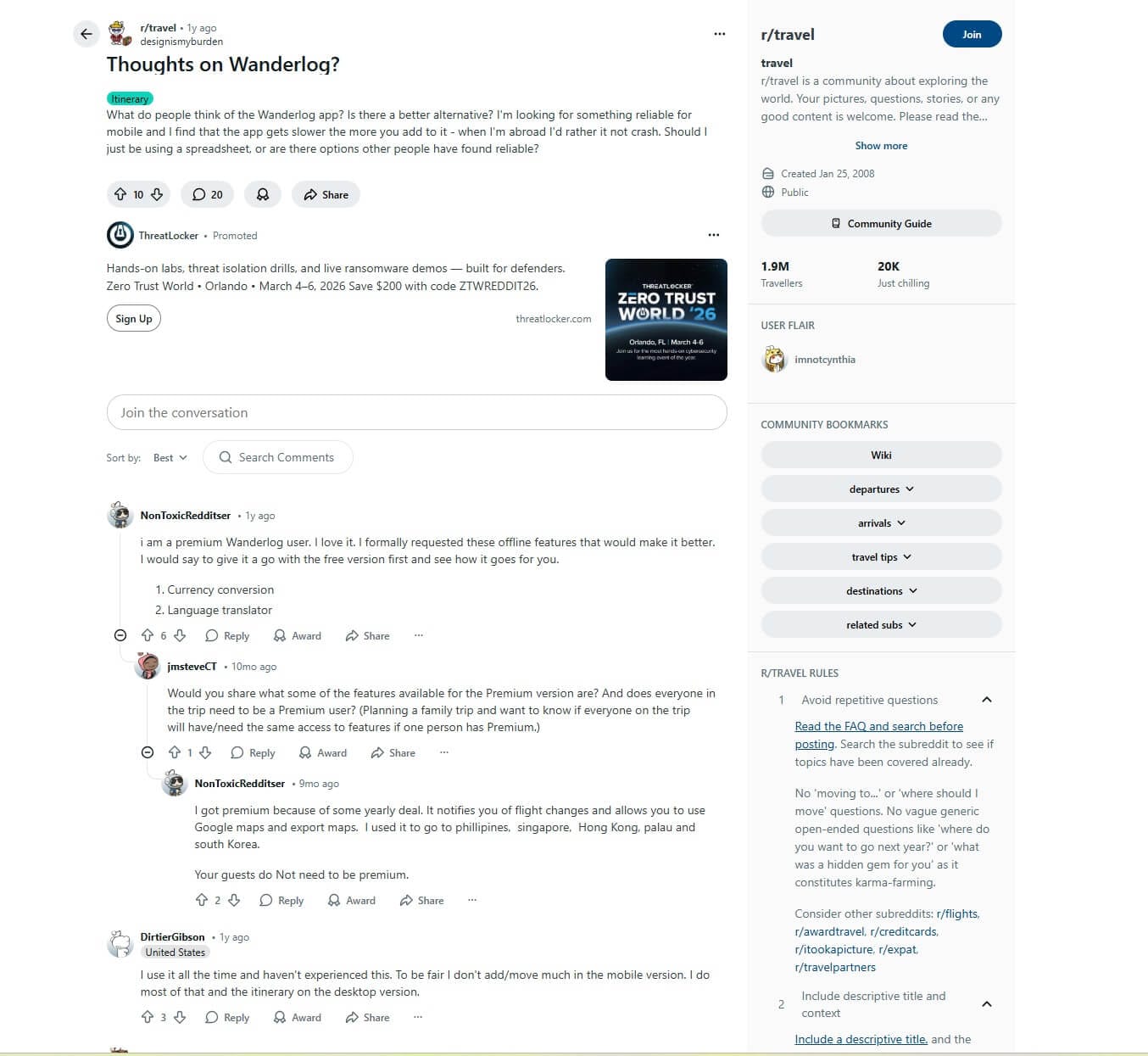
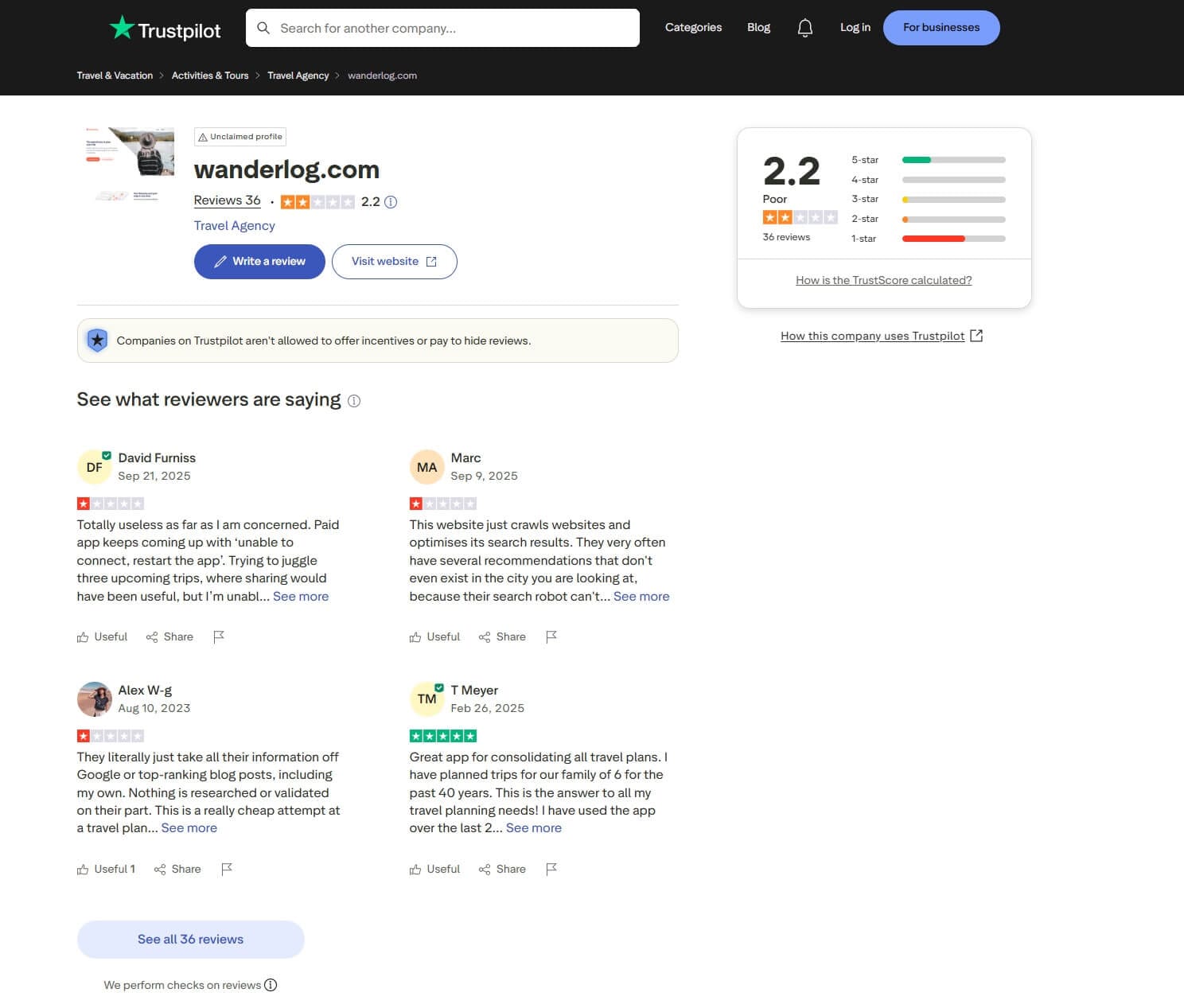
Feedback around Wanderlog is quite polarized. On Reddit and review sites like Trustpilot, many users describe it as a reliable place to organize trips once plans are mostly decided. It’s often praised for adding details to itineraries, especially for group travel.
At the same time, complaints universally exist. Several users mention that Wanderlog doesn’t help much for inspiration when destinations, routes, or pacing are still unclear. Others point out that it always provides invalid or unverified information (AI hallucination).
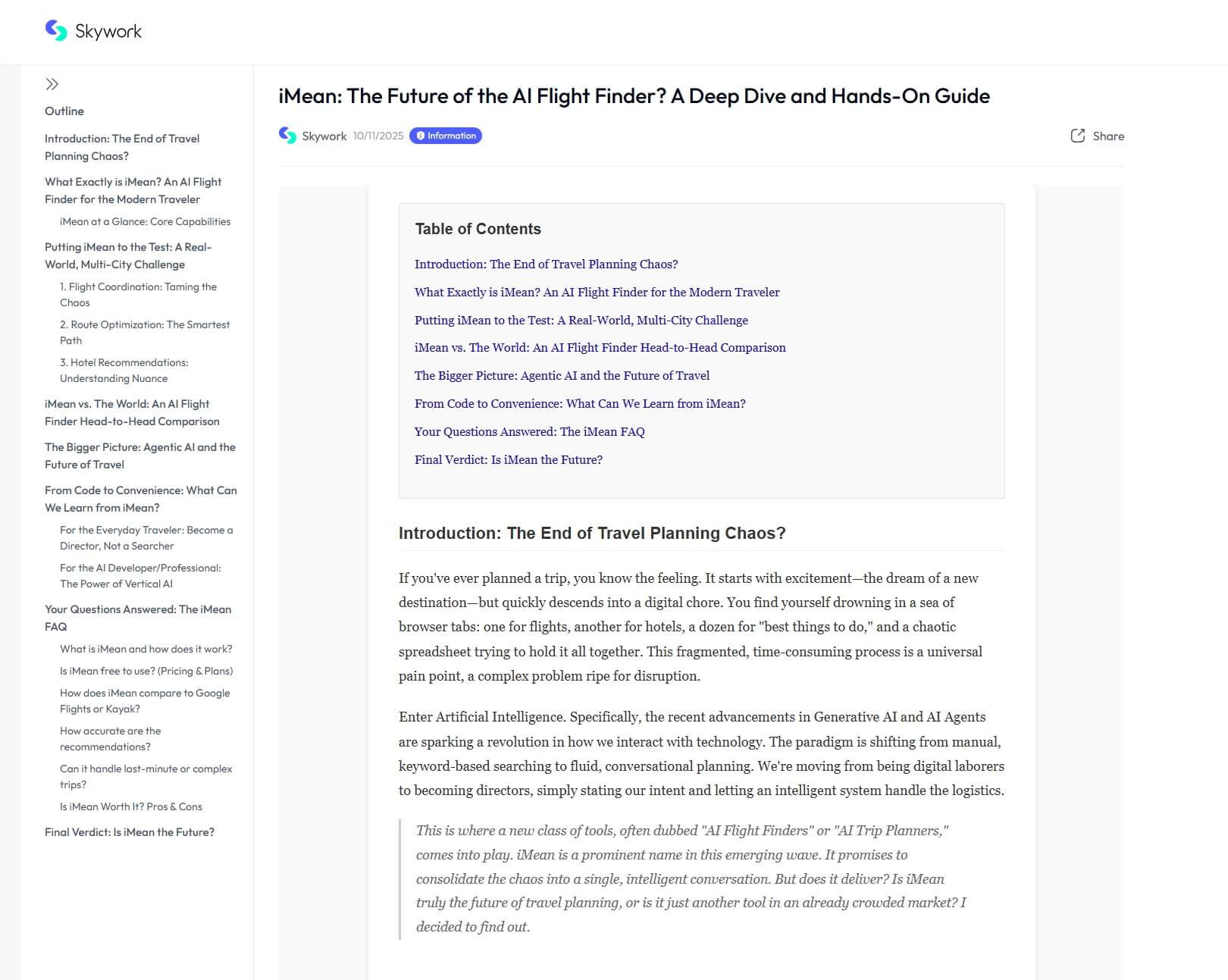
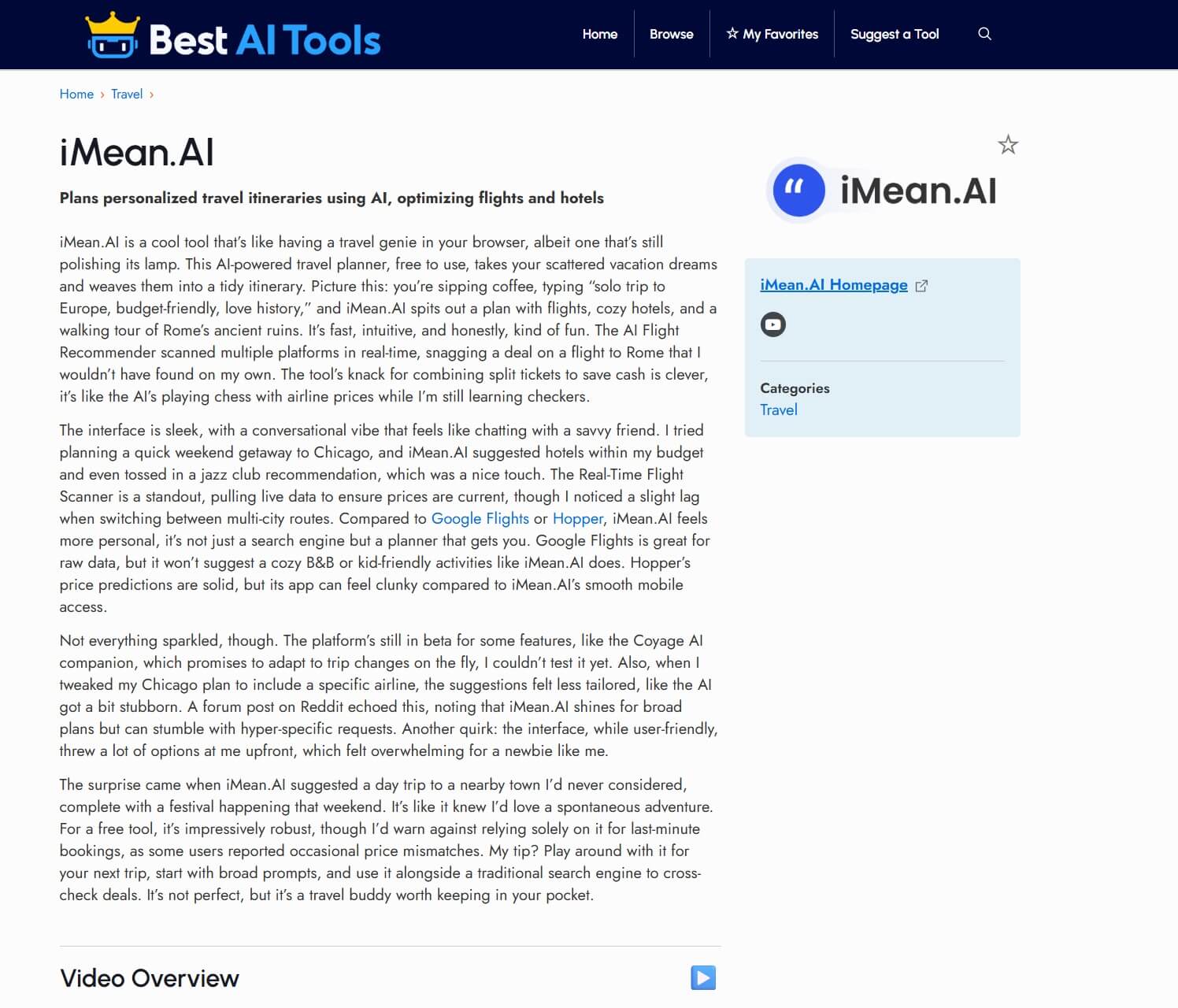
Discussion about iMean AI is less common on Reddit, which is typical for niche tools, but reviews on AI tool directories and smaller forums follow a different pattern. Users tend to focus on how natural the planning process feels. Many mention that it’s easier to start with rough ideas and refine them to valid and realistic itineraries through chatting with the trip planner. However, it may take minutes to generate a complete itinerary include everything.
Feature Comparison with Pros and Cons: Wanderlog vs iMean AI
Planning Flow: How the Planning Process Actually Feels
Wanderlog is built around a structure. Users can add what they are interested in to this structure, and the detailed routes are totally up to themselves. It works best when travelers already have a sense of where they’re going and what they want to do. The limitation is that the tool doesn’t do much to help shape ideas, which makes users still need to spend a lot of time and energy to complete the whole itinerary.
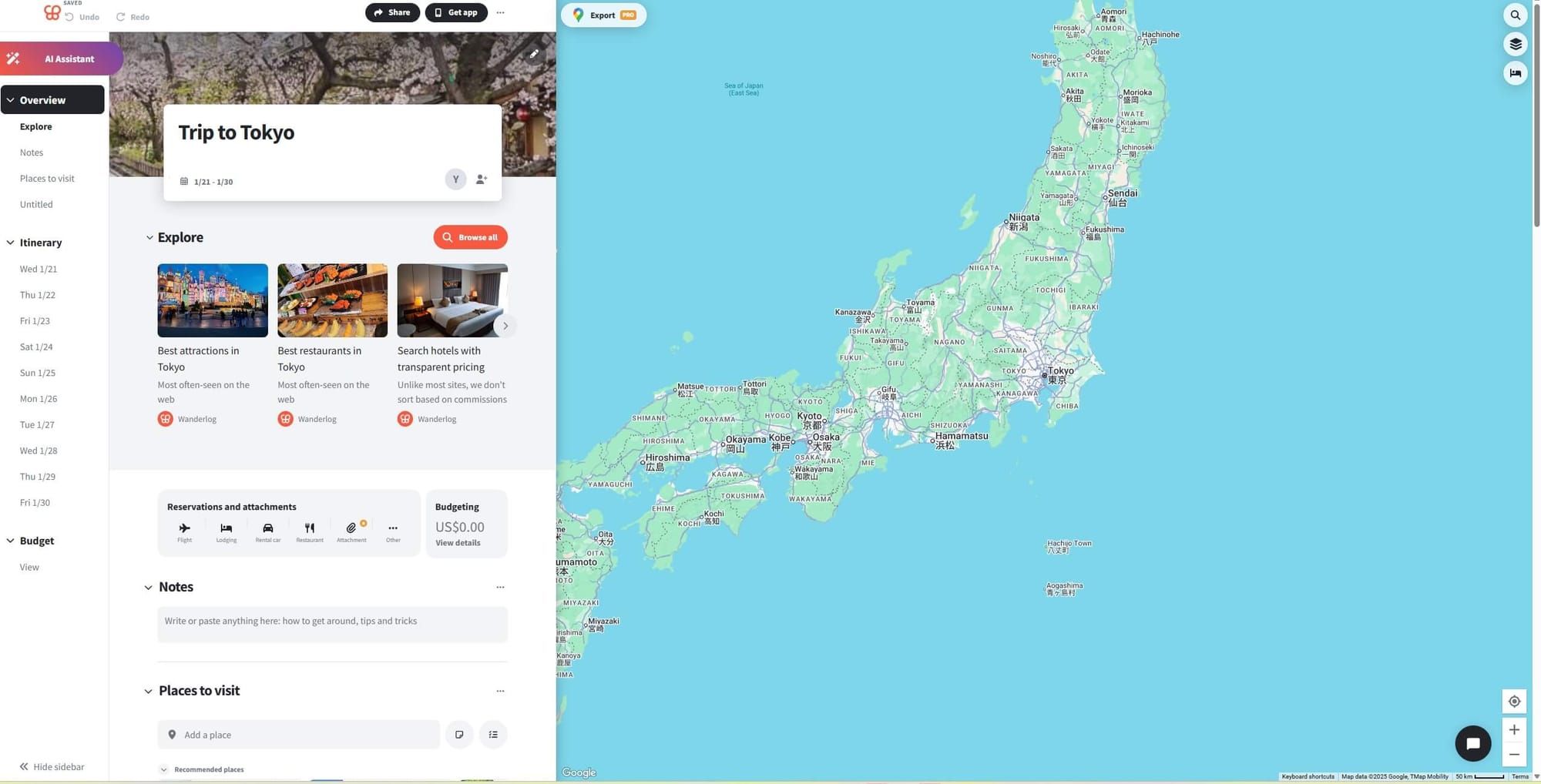
iMean AI approaches planning differently. It’s designed for people who are kind of "lazy". Once you tell iMean AI your requirements(dates, budget range, or general preferences, etc.), it gradually turns into a concrete itinerary. That conversational flow mirrors how many people actually think about travel. If you have no idea about the itinerary, iMean AI may just give suggestions and inspirations instead of giving an itinerary directly.
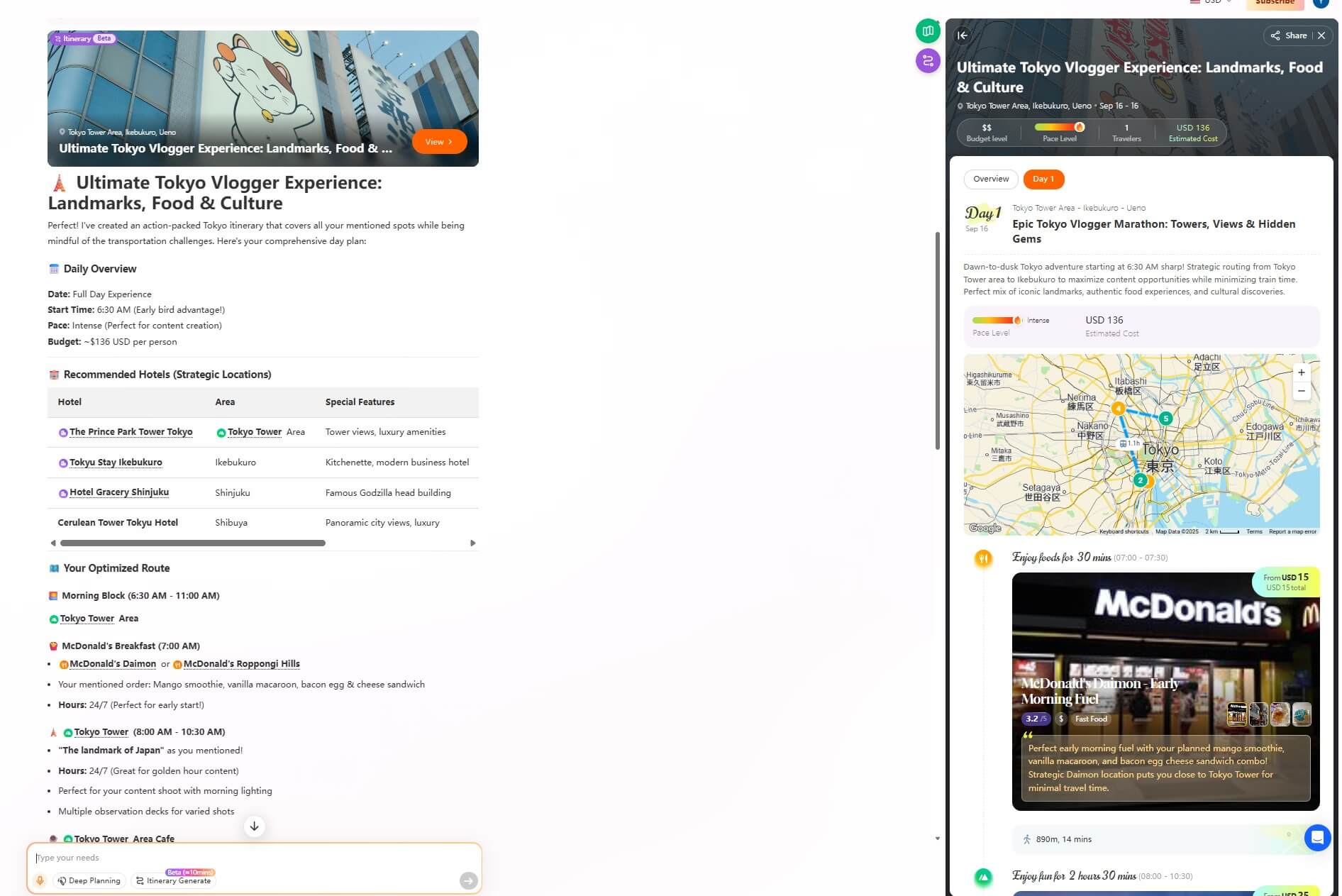
This difference helps explain why Wanderlog features appeal to planners who value autonomous flexibility, while iMean AI features resonate with users who value saving time and energy.
Decision Support: Which Tool Helps You Decide Faster
In term of product, decision support is where planning tools either help or step aside.Wanderlog is effective at displaying information you’ve already gathered. It keeps everything visible and easy to review, especially good for group trips. However, when travelers face choices like how to route a trip or how to balance pace, it largely leaves decision-making to them.
iMean AI is more involved at those points. It helps narrow options and frame trade-offs by chatting in a friendly tone. Personally speaking, doesn’t eliminate choice, but it reduces the cognitive load. In practice, this often leads to faster progress, especially for complex, multi-destination itineraries.
Looking at WanderLog, its clarity and organization stand out, while guidance is limited. For iMean AI's pros and cons, stronger decision support helps many users move forward, though it takes more time to generate itineraries.
Accuracy & Trust: How Confident the Recommendations Feel
Trust is difficult to measure, but easy to feel. With Wanderlog, accuracy depends almost entirely on user input. It’s stable and predictable, but it doesn’t evaluate whether a plan makes sense. The itineraries it arranges sometimes contain non-existent places, and users have to research the whole itinerary by themselves.
iMean AI is more objective by design. Routes tend to be geographically coherent, pace realistically, and suggestions are internally consistent but based on reality. That confidence matters, especially when planning unfamiliar destinations.
Flight & Hotel Planning in Real Travel Scenarios
Flights and hotels are often where planning becomes fragmented. Wanderlog works well once selections are made. It's just like a typical travel booking tool with search boxes and variables. During the exploration and comparison stage, its role is more limited. Booking hotels and flights on WanderLog is actually booked on Google, which may increase your budget for the limited range of hotels and flights.
iMean AI is reliable in comparing prices on the whole network, providing effective purchase links, and recommending the cheapest air tickets and hotels with reasons. However, if you value the process of your own exploration, then iMean AI may do too much.
Pricing Perspective Without the Sales Pitch
Pricing is part of any best travel planner 2026 discussion, but it’s often oversimplified. When people discuss Wanderlog pricing, they typically frame it in terms of organizational value. It costs $39.99/year to get unlimited attachments, offline access, and optimized routes, among other features. By the way, it can only keep accounts 3 times for free if you don't buy a WanderLog Pro.
With iMean AI pricing, the value proposition is different. It’s less about organizing information and more about reducing planning effort. iMean AI can be used for free every day, and the subscription fee is 6.99$ a month, with the same treatment as free use. For simple itineraries, that difference may not matter. As complexity increases, it becomes more noticeable. Pricing feels justified not by feature count, but by how much friction is removed from the process.
Who Each Tool Actually Works Best For
Wanderlog fits travelers who already know what they want and prefer to build itineraries manually. It’s well-suited for users who enjoy control and planning as part of the experience.iMean AI works better when plans are incomplete or in an evolving state. It’s handy for multi-destination trips or when priorities aren’t fully defined. For travelers who want help thinking through options rather than just recording them, it tends to be a better match.
Final Thoughts
A fair WanderLog vs iMean AI comparison doesn’t end with a universal recommendation. I don’t see that as competition in the traditional sense. I see it as a reflection of how differently people approach travel planning. Wanderlog supports structure, iMean AI supports uncertainty, as iMean AI is often more powerful in most situations, which makes it a good alternative to Wanderlog.
All in all, the right planner is the one who lets travelers focus less on planning itself and more on the experience they’re preparing for.
Recommended further reading:
 Aiden
Aiden
 Chloe
Chloe
 Chloe
Chloe
 Chloe
Chloe
 Aiden
Aiden